Veiled Empire (eBook)
416 Seiten
Cornell University Press (Verlag)
9781501702976 (ISBN)
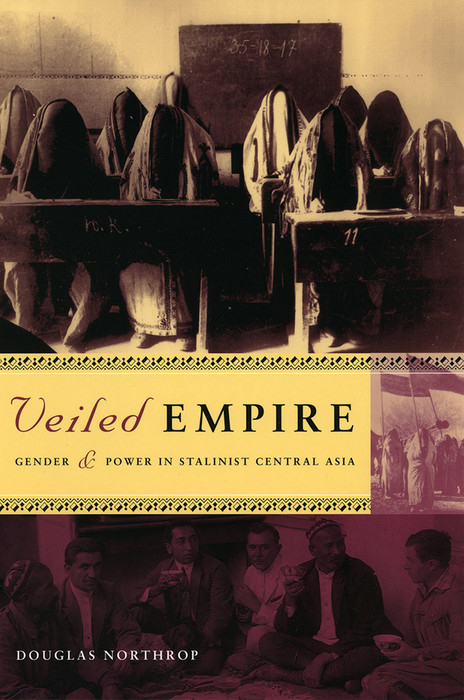
Drawing on extensive research in the archives of Russia and Uzbekistan, Douglas Northrop here reconstructs the turbulent history of a Soviet campaign that sought to end the seclusion of Muslim women. In Uzbekistan it focused above all on a massive effort to eliminate the heavy horsehair-and-cotton veils worn by many women and girls. This campaign against the veil was, in Northrop's view, emblematic of the larger Soviet attempt to bring the proletarian revolution to Muslim Central Asia, a region Bolsheviks saw as primitive and backward. The Soviets focused on women and the family in an effort to forge a new, 'liberated' social order.This unveiling campaign, however, took place in the context of a half-century of Russian colonization and the long-standing suspicion of rural Muslim peasants toward an urban, colonial state. Widespread resistance to the idea of unveiling quickly appeared and developed into a broader anti-Soviet animosity among Uzbeks of both sexes. Over the next quarter-century a bitter and often violent confrontation ensued, with battles being waged over indigenous practices of veiling and seclusion.New local and national identities coalesced around these very practices that had been placed under attack. Veils became powerful anticolonial symbols for the Uzbek nation as well as important markers of Muslim propriety. Bolshevik leaders, who had seen this campaign as an excellent way to enlist allies while proving their own European credentials as enlightened reformers, thus inadvertently strengthened the seclusion of Uzbek women-precisely the reverse of what they set out to do. Northrop's fascinating and evocative book shows both the fluidity of Central Asian cultural practices and the real limits that existed on Stalinist authority, even during the ostensibly totalitarian 1930s.
Douglas Northrop is Associate Professor of Modern Central Asian studies in the Department of History at the University of Michigan.
Drawing on extensive research in the archives of Russia and Uzbekistan, Douglas Northrop here reconstructs the turbulent history of a Soviet campaign that sought to end the seclusion of Muslim women. In Uzbekistan it focused above all on a massive effort to eliminate the heavy horsehair-and-cotton veils worn by many women and girls. This campaign against the veil was, in Northrop's view, emblematic of the larger Soviet attempt to bring the proletarian revolution to Muslim Central Asia, a region Bolsheviks saw as primitive and backward. The Soviets focused on women and the family in an effort to forge a new, liberated social order. This unveiling campaign, however, took place in the context of a half-century of Russian colonization and the long-standing suspicion of rural Muslim peasants toward an urban, colonial state. Widespread resistance to the idea of unveiling quickly appeared and developed into a broader anti-Soviet animosity among Uzbeks of both sexes. Over the next quarter-century a bitter and often violent confrontation ensued, with battles being waged over indigenous practices of veiling and seclusion. New local and national identities coalesced around these very practices that had been placed under attack. Veils became powerful anticolonial symbols for the Uzbek nation as well as important markers of Muslim propriety. Bolshevik leaders, who had seen this campaign as an excellent way to enlist allies while proving their own European credentials as enlightened reformers, thus inadvertently strengthened the seclusion of Uzbek women-precisely the reverse of what they set out to do. Northrop's fascinating and evocative book shows both the fluidity of Central Asian cultural practices and the real limits that existed on Stalinist authority, even during the ostensibly totalitarian 1930s.
| Erscheint lt. Verlag | 1.10.2016 |
|---|---|
| Sprache | englisch |
| Themenwelt | Geschichte ► Allgemeine Geschichte ► Neuzeit (bis 1918) |
| Geisteswissenschaften ► Geschichte ► Regional- / Ländergeschichte | |
| Geisteswissenschaften ► Religion / Theologie ► Islam | |
| Sozialwissenschaften ► Politik / Verwaltung | |
| Sozialwissenschaften ► Soziologie ► Gender Studies | |
| ISBN-13 | 9781501702976 / 9781501702976 |
| Informationen gemäß Produktsicherheitsverordnung (GPSR) | |
| Haben Sie eine Frage zum Produkt? |
 PDF (Adobe DRM)
Kopierschutz: Adobe-DRM
Adobe-DRM ist ein Kopierschutz, der das eBook vor Mißbrauch schützen soll. Dabei wird das eBook bereits beim Download auf Ihre persönliche Adobe-ID autorisiert. Lesen können Sie das eBook dann nur auf den Geräten, welche ebenfalls auf Ihre Adobe-ID registriert sind.
Details zum Adobe-DRM
Dateiformat: PDF (Portable Document Format)
Mit einem festen Seitenlayout eignet sich die PDF besonders für Fachbücher mit Spalten, Tabellen und Abbildungen. Eine PDF kann auf fast allen Geräten angezeigt werden, ist aber für kleine Displays (Smartphone, eReader) nur eingeschränkt geeignet.
Systemvoraussetzungen:
PC/Mac: Mit einem PC oder Mac können Sie dieses eBook lesen. Sie benötigen eine
eReader: Dieses eBook kann mit (fast) allen eBook-Readern gelesen werden. Mit dem amazon-Kindle ist es aber nicht kompatibel.
Smartphone/Tablet: Egal ob Apple oder Android, dieses eBook können Sie lesen. Sie benötigen eine
Geräteliste und zusätzliche Hinweise
Buying eBooks from abroad
For tax law reasons we can sell eBooks just within Germany and Switzerland. Regrettably we cannot fulfill eBook-orders from other countries.
aus dem Bereich