


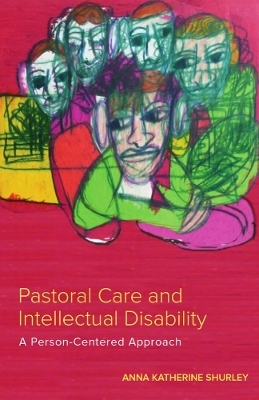
Pastoral Care and Intellectual Disability
A Person-Centered Approach
Seiten
2017
Baylor University Press (Verlag)
978-1-4813-0169-5 (ISBN)
Baylor University Press (Verlag)
978-1-4813-0169-5 (ISBN)
- Titel z.Zt. nicht lieferbar
- Versandkostenfrei
- Auch auf Rechnung
- Artikel merken
In a quest for pastoral care that is collaborative and fully inclusive, Anna Katherine Shurley turns to the psychology of D.W. Winnicott and to Karl Barth's theology of Christian vocation. From this combination, she crafts person-centred pastoral care for the body of Christ and all its members, with or without intellectual disabilities.
Every Christian is called to and gifted for ministry. The church can - and must - engage all of its members if it is to flourish fully. Far too often, persons with intellectual disabilities are excluded. While members with disability are often recipients of the church's ministry, they are seldom given the opportunity to reciprocate: persons with disability are not always fully empowered to minister.
In Pastoral Care and Intellectual Disability, Anna Katherine Shurley asserts the church's need for mutuality in pastoral care. While the shape of each person's vocation is unique, all members of the body of Christ are created for ministry with one another as partners in spiritual care. In a quest for pastoral care that is fundamentally collaborative and fully inclusive, Shurley turns to the psychology of D. W. Winnicott and to Karl Barth's theology of Christian vocation. From this combination, she crafts person-centered pastoral care for the body of Christ and all its members, with or without intellectual disabilities.
Person-centered pastoral care recognizes that people with intellectual disabilities can and must participate as partners in the church. Faith communities, Shurley suggests, can foster collaborative ministry by nurturing pastoral friendships among its membership. These sacred friendships are spaces in which people share their lives with one another as a truly collaborative practice of care. Through these pastoral friendships mediated by the presence of the Holy Spirit, all of God's children can live their particular vocations. By engaging person-centered practices of pastoral care, the church strengthens its witness and truly becomes a place of belonging for all people.
Every Christian is called to and gifted for ministry. The church can - and must - engage all of its members if it is to flourish fully. Far too often, persons with intellectual disabilities are excluded. While members with disability are often recipients of the church's ministry, they are seldom given the opportunity to reciprocate: persons with disability are not always fully empowered to minister.
In Pastoral Care and Intellectual Disability, Anna Katherine Shurley asserts the church's need for mutuality in pastoral care. While the shape of each person's vocation is unique, all members of the body of Christ are created for ministry with one another as partners in spiritual care. In a quest for pastoral care that is fundamentally collaborative and fully inclusive, Shurley turns to the psychology of D. W. Winnicott and to Karl Barth's theology of Christian vocation. From this combination, she crafts person-centered pastoral care for the body of Christ and all its members, with or without intellectual disabilities.
Person-centered pastoral care recognizes that people with intellectual disabilities can and must participate as partners in the church. Faith communities, Shurley suggests, can foster collaborative ministry by nurturing pastoral friendships among its membership. These sacred friendships are spaces in which people share their lives with one another as a truly collaborative practice of care. Through these pastoral friendships mediated by the presence of the Holy Spirit, all of God's children can live their particular vocations. By engaging person-centered practices of pastoral care, the church strengthens its witness and truly becomes a place of belonging for all people.
Anna Katherine Shurley is a Baptist minister who has served as a chaplain for children and adults with intellectual and developmental disabilities. She lives with her family in Gulfport, Mississippi, where she currently serves as Director of Youth and Family Ministries at Westminster Presbyterian Church.
Introduction
1. Collaborating: A Person-Centered Approach to Pastoral Care
2. Empowering: The Psychological Architecture of Person-Centered Pastoral Care
3. Calling: The Theology of Person-Centered Pastoral Care
4. Playing: Person-Centered Pastoral Care in Practice
5. Witnessing: Person-Centered Pastoral Care and the Church
| Erscheinungsdatum | 31.01.2018 |
|---|---|
| Reihe/Serie | Studies in Religion, Theology, and Disability |
| Verlagsort | Waco |
| Sprache | englisch |
| Maße | 139 x 215 mm |
| Gewicht | 181 g |
| Themenwelt | Religion / Theologie ► Christentum ► Kirchengeschichte |
| Religion / Theologie ► Christentum ► Moraltheologie / Sozialethik | |
| Religion / Theologie ► Christentum ► Pastoraltheologie | |
| Sozialwissenschaften ► Soziologie | |
| ISBN-10 | 1-4813-0169-1 / 1481301691 |
| ISBN-13 | 978-1-4813-0169-5 / 9781481301695 |
| Zustand | Neuware |
| Informationen gemäß Produktsicherheitsverordnung (GPSR) | |
| Haben Sie eine Frage zum Produkt? |
Mehr entdecken
aus dem Bereich

aus dem Bereich
eine andere Geschichte der Papststadt
Buch | Softcover (2024)
C.H.Beck (Verlag)
CHF 25,20
die Macht des Dunklen in unserer Zeit und wie wir ihr entgegentreten
Buch | Hardcover (2025)
Verlag Herder
CHF 27,90


