


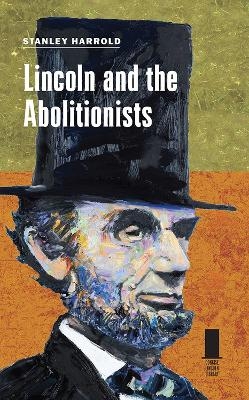
Lincoln and the Abolitionists
Seiten
2018
Southern Illinois University Press (Verlag)
978-0-8093-3641-8 (ISBN)
Southern Illinois University Press (Verlag)
978-0-8093-3641-8 (ISBN)
- Titel z.Zt. nicht lieferbar
- Portofrei ab CHF 40
- Auch auf Rechnung
- Artikel merken
Abraham Lincoln was not among those Americans who, decades before the Civil War, favoured immediate emancipation of all slaves inside the US. Those who did were the abolitionists - the men and women who sought freedom and equal rights for all African Americans. Stanley Harrold traces how, despite Lincoln's political distance from abolitionists, they influenced his evolving political orientation.
Abraham Lincoln has often been called the “Great Emancipator.” But he was not among those Americans who, decades before the Civil War, favored immediate emancipation of all slaves inside the United States. Those who did were the abolitionists—the men and women who sought freedom and equal rights for all African Americans. Stanley Harrold traces how, despite Lincoln’s political distance from abolitionists, they influenced his evolving political orientation before and during the Civil War.
While explaining how the abolitionist movement evolved, Harrold also clarifies Lincoln’s connections with and his separation from this often fiery group. For most of his life Lincoln regarded abolitionists as dangerous fanatics. Like many northerners during his time, Lincoln sought compromise with the white South regarding slavery, opposed abolitionist radicalism, and doubted that free black people could have a positive role in America. Yet, during the 1840s and 1850s, conservative northern Democrats as well as slaveholders branded Lincoln an abolitionist because of his sympathy toward black people and opposition to the expansion of slavery.
Lincoln’s election to the presidency and the onslaught of the Civil War led to a transformation of his relationship with abolitionists. Lincoln’s original priority as president had been to preserve the Union, not to destroy slavery. Nevertheless many factors—including contacts with abolitionists—led Lincoln to favor ending slavery. After Lincoln issued the Emancipation Proclamation in 1863 and raised black troops, many, though not all, abolitionists came to view him more favorably.
Providing insight into the stressful, evolving relationship between Lincoln and the abolitionists, and also into the complexities of northern politics, society, and culture during the Civil War era, this concise volume illuminates a central concern in Lincoln’s life and presidency.
Abraham Lincoln has often been called the “Great Emancipator.” But he was not among those Americans who, decades before the Civil War, favored immediate emancipation of all slaves inside the United States. Those who did were the abolitionists—the men and women who sought freedom and equal rights for all African Americans. Stanley Harrold traces how, despite Lincoln’s political distance from abolitionists, they influenced his evolving political orientation before and during the Civil War.
While explaining how the abolitionist movement evolved, Harrold also clarifies Lincoln’s connections with and his separation from this often fiery group. For most of his life Lincoln regarded abolitionists as dangerous fanatics. Like many northerners during his time, Lincoln sought compromise with the white South regarding slavery, opposed abolitionist radicalism, and doubted that free black people could have a positive role in America. Yet, during the 1840s and 1850s, conservative northern Democrats as well as slaveholders branded Lincoln an abolitionist because of his sympathy toward black people and opposition to the expansion of slavery.
Lincoln’s election to the presidency and the onslaught of the Civil War led to a transformation of his relationship with abolitionists. Lincoln’s original priority as president had been to preserve the Union, not to destroy slavery. Nevertheless many factors—including contacts with abolitionists—led Lincoln to favor ending slavery. After Lincoln issued the Emancipation Proclamation in 1863 and raised black troops, many, though not all, abolitionists came to view him more favorably.
Providing insight into the stressful, evolving relationship between Lincoln and the abolitionists, and also into the complexities of northern politics, society, and culture during the Civil War era, this concise volume illuminates a central concern in Lincoln’s life and presidency.
Stanley Harrold is a professor of history at South Carolina State University. He is the author of a number of books, the most recent being Border War: Fighting over Slavery before the Civil War. He is also a coauthor with Darlene Clark Hine and William C. Hine of The African-American Odyssey.
| Erscheinungsdatum | 15.03.2018 |
|---|---|
| Zusatzinfo | 10 illustrations |
| Verlagsort | Carbondale |
| Sprache | englisch |
| Maße | 127 x 203 mm |
| Gewicht | 315 g |
| Themenwelt | Geschichte ► Allgemeine Geschichte ► Neuzeit (bis 1918) |
| Geisteswissenschaften ► Geschichte ► Regional- / Ländergeschichte | |
| Geschichte ► Teilgebiete der Geschichte ► Militärgeschichte | |
| Sozialwissenschaften ► Politik / Verwaltung | |
| Sozialwissenschaften ► Soziologie ► Makrosoziologie | |
| ISBN-10 | 0-8093-3641-3 / 0809336413 |
| ISBN-13 | 978-0-8093-3641-8 / 9780809336418 |
| Zustand | Neuware |
| Informationen gemäß Produktsicherheitsverordnung (GPSR) | |
| Haben Sie eine Frage zum Produkt? |
Mehr entdecken
aus dem Bereich
aus dem Bereich
Geschichte einer wilden Handlung
Buch | Hardcover (2024)
C.H.Beck (Verlag)
CHF 47,60


