


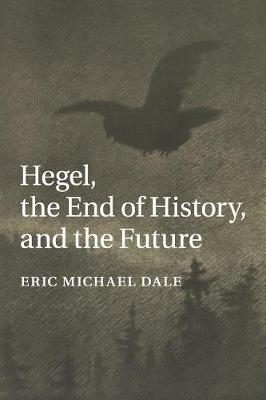
Hegel, the End of History, and the Future
Seiten
2017
Cambridge University Press (Verlag)
978-1-107-63922-5 (ISBN)
Cambridge University Press (Verlag)
978-1-107-63922-5 (ISBN)
This book offers an alternative understanding to the common interpretation of Hegel's 'end of history', drawing attention to those parts of his arguments which deserve to endure. Elegantly written, it will be of interest to advanced students and scholars of Hegel, continental philosophy and the philosophy of history.
In Phenomenology of Spirit (1806) Hegel is often held to have announced the end of history, where 'history' is to be understood as the long pursuit of ends towards which humanity had always been striving. In this, the first book in English to thoroughly critique this entrenched view, Eric Michael Dale argues that it is a misinterpretation. Dale offers a reading of his own, showing how it sits within the larger schema of Hegel's thought and makes room for an understanding of the 'end of history' as Hegel intended. Through an elegant analysis of Hegel's philosophy of history, Dale guides the reader away from the common misinterpretation of the 'end of history' to other valuable elements of Hegel's arguments which are often overlooked and deserve to endure. His book will be of great interest to scholars and advanced students of Hegel, the philosophy of history, and the history of political thought.
In Phenomenology of Spirit (1806) Hegel is often held to have announced the end of history, where 'history' is to be understood as the long pursuit of ends towards which humanity had always been striving. In this, the first book in English to thoroughly critique this entrenched view, Eric Michael Dale argues that it is a misinterpretation. Dale offers a reading of his own, showing how it sits within the larger schema of Hegel's thought and makes room for an understanding of the 'end of history' as Hegel intended. Through an elegant analysis of Hegel's philosophy of history, Dale guides the reader away from the common misinterpretation of the 'end of history' to other valuable elements of Hegel's arguments which are often overlooked and deserve to endure. His book will be of great interest to scholars and advanced students of Hegel, the philosophy of history, and the history of political thought.
Eric Michael Dale is Affiliated Faculty Professor in Philosophy at Emerson College, Boston. He has written many articles for journals such as Existenz: An International Journal in Philosophy, Religion, Politics, and the Arts; Animus: The Canadian Journal of Philosophy and Humanities; and IWM Post. He is also a former visiting fellow at the Institut für die Wissenschaften vom Menschen in Vienna.
Introduction; Part I. Hegel and the End of History: 1. The end of history as a question and a problem; 2. Hegel and Nietzsche; 3. Hegel and Engels; 4. Hegel and Kojève; Part II. Hegel and the Philosophy of History: 5. Herder and history; 6. Fichte and history; 7. Hegel and history; 8. The spirit and the end; 9. The present and the future.
| Erscheinungsdatum | 07.03.2022 |
|---|---|
| Verlagsort | Cambridge |
| Sprache | englisch |
| Maße | 154 x 230 mm |
| Gewicht | 400 g |
| Themenwelt | Geisteswissenschaften ► Philosophie ► Geschichte der Philosophie |
| Geisteswissenschaften ► Philosophie ► Philosophie der Neuzeit | |
| Sozialwissenschaften | |
| ISBN-10 | 1-107-63922-0 / 1107639220 |
| ISBN-13 | 978-1-107-63922-5 / 9781107639225 |
| Zustand | Neuware |
| Informationen gemäß Produktsicherheitsverordnung (GPSR) | |
| Haben Sie eine Frage zum Produkt? |
Mehr entdecken
aus dem Bereich
aus dem Bereich
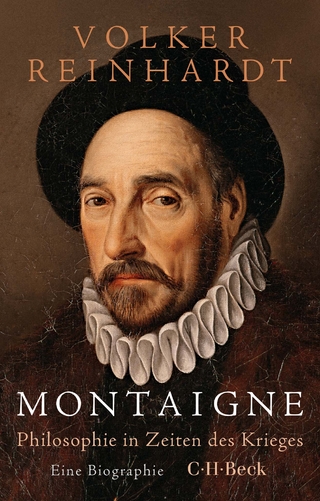
Philosophie in Zeiten des Krieges : eine Biographie
Buch | Softcover (2024)
C.H.Beck (Verlag)
CHF 24,90
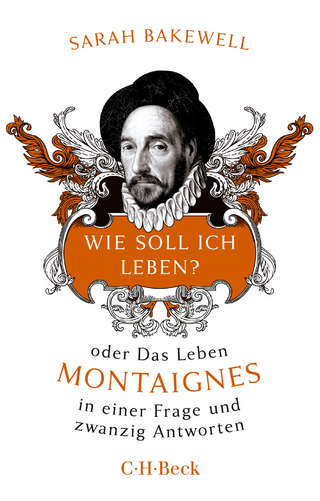
oder Das Leben Montaignes in einer Frage und zwanzig Antworten
Buch | Softcover (2023)
C.H.Beck (Verlag)
CHF 27,90


