


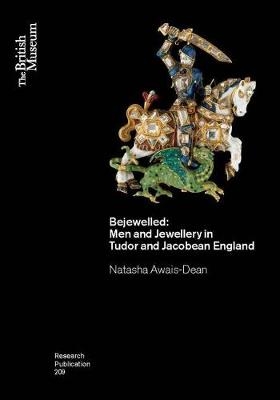
Bejewelled
Men and Jewellery in Tudor and Jacobean England
Seiten
2017
British Museum Press (Verlag)
978-0-86159-209-8 (ISBN)
British Museum Press (Verlag)
978-0-86159-209-8 (ISBN)
- Titel ist leider vergriffen;
keine Neuauflage - Artikel merken
Jewellery is often viewed as a feminine preoccupation, but in Tudor and Jacobean England men wore just as much jewellery as women. Bejewelled offers an in-depth discussion of the contexts in which jewellery was circulated from a male perspective, considering the jewels as valid items of material culture.
Jewellery is often viewed as a feminine preoccupation, but in Tudor and Jacobean England men wore just as much (if not more) jewellery as their female counterparts. Jewels themselves were valued not merely for their intrinsic monetary worth, but also for their ability to reflect status and lineage, as well as sustain social bonds and networks of reciprocity. Bejewelled offers an in-depth discussion of the contexts in which jewellery in Tudor and Jacobean England was circulated from a male perspective, considering the jewels as valid items of material culture worthy of study and attention, rather than as mere trifles of adornment. Amongst other subjects, the book analyses the social and historical contexts in which jewellery was acquired, owned and circulated, interrogating the meanings that these jewels had for their male owners.
The publication will highlight artefacts from the British Museum's collection, such as the magnificent Lyte Jewel from the Waddesdon Bequest and the sealing devices of Sir Thomas Smith and Sir Walter Ralegh, as well as lesser-known objects such as the rings of the serjeants-at-law and a group of bronze plaquettes. By including material that has been discovered in archaeological contexts, along with evidence from inventories and wills as well as portraits showing these jewels being worn, this publication seeks to reposition jewellery, presenting it not merely as a concern of the elite but as something that was owned, worn and valued by a range of men across English society.
Jewellery is often viewed as a feminine preoccupation, but in Tudor and Jacobean England men wore just as much (if not more) jewellery as their female counterparts. Jewels themselves were valued not merely for their intrinsic monetary worth, but also for their ability to reflect status and lineage, as well as sustain social bonds and networks of reciprocity. Bejewelled offers an in-depth discussion of the contexts in which jewellery in Tudor and Jacobean England was circulated from a male perspective, considering the jewels as valid items of material culture worthy of study and attention, rather than as mere trifles of adornment. Amongst other subjects, the book analyses the social and historical contexts in which jewellery was acquired, owned and circulated, interrogating the meanings that these jewels had for their male owners.
The publication will highlight artefacts from the British Museum's collection, such as the magnificent Lyte Jewel from the Waddesdon Bequest and the sealing devices of Sir Thomas Smith and Sir Walter Ralegh, as well as lesser-known objects such as the rings of the serjeants-at-law and a group of bronze plaquettes. By including material that has been discovered in archaeological contexts, along with evidence from inventories and wills as well as portraits showing these jewels being worn, this publication seeks to reposition jewellery, presenting it not merely as a concern of the elite but as something that was owned, worn and valued by a range of men across English society.
Natasha Awais Dean read Modern and Medieval Languages at the University of Cambridge after which she studied for an MA in History of Design at the Royal College of Art. She received her doctorate from Queen Mary, University of London. Natasha has curatorial experience from three national museums and now works on research grant management at King's College London. She is Features Editor of Jewellery History Today (Society of Jewellery Historians).
| Erscheinungsdatum | 16.04.2018 |
|---|---|
| Reihe/Serie | British Museum Research Publication ; 209 |
| Zusatzinfo | 160 |
| Verlagsort | London |
| Sprache | englisch |
| Maße | 210 x 297 mm |
| Themenwelt | Kunst / Musik / Theater ► Kunstgeschichte / Kunststile |
| Kunst / Musik / Theater ► Malerei / Plastik | |
| Sachbuch/Ratgeber ► Freizeit / Hobby ► Sammeln / Sammlerkataloge | |
| Geschichte ► Allgemeine Geschichte ► Neuzeit (bis 1918) | |
| Geisteswissenschaften ► Geschichte ► Regional- / Ländergeschichte | |
| Geschichte ► Teilgebiete der Geschichte ► Kulturgeschichte | |
| Sozialwissenschaften | |
| ISBN-10 | 0-86159-209-3 / 0861592093 |
| ISBN-13 | 978-0-86159-209-8 / 9780861592098 |
| Zustand | Neuware |
| Informationen gemäß Produktsicherheitsverordnung (GPSR) | |
| Haben Sie eine Frage zum Produkt? |
Mehr entdecken
aus dem Bereich
aus dem Bereich
Geschichte einer wilden Handlung
Buch | Hardcover (2024)
C.H.Beck (Verlag)
CHF 47,60


