



Ethnic Capital in a Japanese Brazilian Commune
Children of Nature
Seiten
2017
Lexington Books (Verlag)
978-1-4985-4484-9 (ISBN)
Lexington Books (Verlag)
978-1-4985-4484-9 (ISBN)
This study is an anthropological examination of an ethnic Japanese diaspora community living in an agricultural commune in Brazil. It analyzes the group’s search for identity, its place in the ethnic politics of Brazil, and its connections to transnational economic networks.
This is a book about the power ethnic capital and how it drives both the economics of, and the quest for identity in, a Japanese Brazilian commune. Adachi tells readers what this small diaspora community can teach us about how life “in the trenches” looks to those on the outskirts of the exploding transnational world economy. This book explores the various strategies locals use to compete with others with whom they are linked locally, nationally, and globally. Through the story of Kubo daily life, Adachi offers insights into important aspects of social and linguistic theory, as well as explicating how cross-border relations become more and more intertwined. In a sense, Kubo’s story, with its struggles to maintain its identity—even its survival—in an increasingly globalized world, encapsulates many of the problems now faced by smaller communities around the world, be they diasporic or regionally entrenched, or ethnically, racially, or religiously composed.
Adachi explores the motivations for racial and ethnic boundary-making based primarily on values and principles rather than purely physiological features by focusing on Kubo and its marketing of supposedly traditional Japanese cultural values, in spite of the commune being located in the interior of Brazil. To do this she incorporates notions from linguistic anthropology and sociolinguistics, including problems of language maintenance, the relationships between language and symbolic power, and the intricacies of language and gender. Doing so helps theorize the tensions between hybridity and purity entailed in the complexities of identity dynamics.
This is a book about the power ethnic capital and how it drives both the economics of, and the quest for identity in, a Japanese Brazilian commune. Adachi tells readers what this small diaspora community can teach us about how life “in the trenches” looks to those on the outskirts of the exploding transnational world economy. This book explores the various strategies locals use to compete with others with whom they are linked locally, nationally, and globally. Through the story of Kubo daily life, Adachi offers insights into important aspects of social and linguistic theory, as well as explicating how cross-border relations become more and more intertwined. In a sense, Kubo’s story, with its struggles to maintain its identity—even its survival—in an increasingly globalized world, encapsulates many of the problems now faced by smaller communities around the world, be they diasporic or regionally entrenched, or ethnically, racially, or religiously composed.
Adachi explores the motivations for racial and ethnic boundary-making based primarily on values and principles rather than purely physiological features by focusing on Kubo and its marketing of supposedly traditional Japanese cultural values, in spite of the commune being located in the interior of Brazil. To do this she incorporates notions from linguistic anthropology and sociolinguistics, including problems of language maintenance, the relationships between language and symbolic power, and the intricacies of language and gender. Doing so helps theorize the tensions between hybridity and purity entailed in the complexities of identity dynamics.
Nobuko Adachi is associate professor of anthropology at Illinois State University.
Chapter 1: Globalization and Localization: Theorizing Identity in Kubo
Chapter 2: Dancing Farmers: Everyday Life in Kubo
Chapter 3: Why Be Children of Nature?: The Development of the Nohon-shugi Ideology and History of the Kubo Commune
Chapter 4: “Is Our Women’s Language ‘Abrupt’ or ‘Rough?’”: Social Roles and Gendered Spheres
Chapter 5: “After all, she is not even an o-jo-san (lady from the city), but a gaijin (foreigner)!”: Identities and Diaspora
Chapter 6: “We are fine with someone marrying a non-Japanese as long as they live outside the farm”: Cultural Identity and Ethnic Capital
Chapter 7: Beyond Kubo
| Erscheinungsdatum | 25.02.2017 |
|---|---|
| Reihe/Serie | AsiaWorld |
| Zusatzinfo | 1 Maps |
| Sprache | englisch |
| Maße | 164 x 236 mm |
| Gewicht | 476 g |
| Themenwelt | Sozialwissenschaften ► Ethnologie |
| Sozialwissenschaften ► Soziologie | |
| ISBN-10 | 1-4985-4484-3 / 1498544843 |
| ISBN-13 | 978-1-4985-4484-9 / 9781498544849 |
| Zustand | Neuware |
| Informationen gemäß Produktsicherheitsverordnung (GPSR) | |
| Haben Sie eine Frage zum Produkt? |
Mehr entdecken
aus dem Bereich


aus dem Bereich
Prolegomena zu einer Geschichte der Magie
Buch | Hardcover (2025)
Matthes & Seitz Berlin (Verlag)
CHF 53,20
ethnographische Texte
Buch | Hardcover (2025)
Konstanz University Press (Verlag)
CHF 36,40
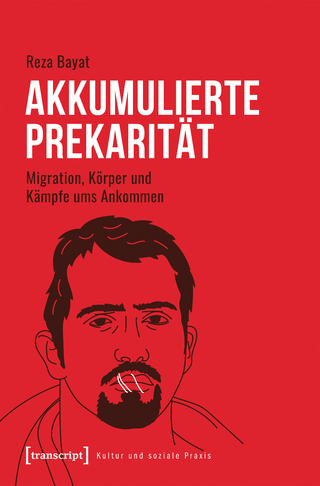
Migration, Körper und Kämpfe ums Ankommen
Buch | Softcover (2025)
transcript (Verlag)
CHF 62,95


