


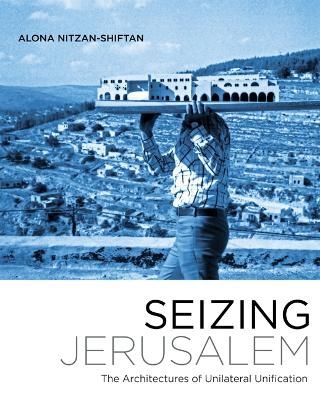
Seizing Jerusalem
The Architectures of Unilateral Unification
Seiten
2017
University of Minnesota Press (Verlag)
978-0-8166-9428-0 (ISBN)
University of Minnesota Press (Verlag)
978-0-8166-9428-0 (ISBN)
- Titel z.Zt. nicht lieferbar
- Versandkostenfrei
- Auch auf Rechnung
- Artikel merken
The first architectural history of post-1967 Jerusalem, revealing the ways architectural modernism and Zionism have intertwined to imagine and reshape the city
After seizing Jerusalem’s eastern precincts from Jordan at the conclusion of the Six-Day War in 1967, Israel unilaterally unified the city and plunged into an ambitious building program, eager to transform the very meaning of one of the world’s most emotionally charged urban spaces. The goal was as simple as it was controversial: to both Judaize and modernize Jerusalem.
Seizing Jerusalem chronicles how numerous disciplines, including architecture, landscape design, and urban planning, as well as everyone from municipal politicians to state bureaucrats, from Israeli-born architects to international luminaries such as Louis Kahn, Buckminster Fuller, and Bruno Zevi, competed to create Jerusalem’s new image. This decade-long competition happened with the Palestinian residents still living in the city, even as the new image was inspired by the city’s Arab legacy. The politics of space in the Holy City, still contested today, were shaped in this post-1967 decade not only by the legacy of the war and the politics of dispossession, but curiously also by emerging trends in postwar architectural culture.
Drawing on previously unexamined archival documents and in-depth interviews with architects, planners, and politicians, Alona Nitzan-Shiftan analyzes the cultural politics of the Israeli state and, in particular, of Jerusalem’s influential mayor, Teddy Kollek, whose efforts to legitimate Israeli rule over Jerusalem provided architects a unique, real-world laboratory to explore the possibilities and limits of modernist design-as built form as well as political and social action. Seizing Jerusalem reveals architecture as an active agent in the formation of urban and national identity, and demonstrates how contemporary debates about Zionism, and the crisis within the discipline of architecture over postwar modernism, affected Jerusalem’s built environment in ways that continue to resonate today.
After seizing Jerusalem’s eastern precincts from Jordan at the conclusion of the Six-Day War in 1967, Israel unilaterally unified the city and plunged into an ambitious building program, eager to transform the very meaning of one of the world’s most emotionally charged urban spaces. The goal was as simple as it was controversial: to both Judaize and modernize Jerusalem.
Seizing Jerusalem chronicles how numerous disciplines, including architecture, landscape design, and urban planning, as well as everyone from municipal politicians to state bureaucrats, from Israeli-born architects to international luminaries such as Louis Kahn, Buckminster Fuller, and Bruno Zevi, competed to create Jerusalem’s new image. This decade-long competition happened with the Palestinian residents still living in the city, even as the new image was inspired by the city’s Arab legacy. The politics of space in the Holy City, still contested today, were shaped in this post-1967 decade not only by the legacy of the war and the politics of dispossession, but curiously also by emerging trends in postwar architectural culture.
Drawing on previously unexamined archival documents and in-depth interviews with architects, planners, and politicians, Alona Nitzan-Shiftan analyzes the cultural politics of the Israeli state and, in particular, of Jerusalem’s influential mayor, Teddy Kollek, whose efforts to legitimate Israeli rule over Jerusalem provided architects a unique, real-world laboratory to explore the possibilities and limits of modernist design-as built form as well as political and social action. Seizing Jerusalem reveals architecture as an active agent in the formation of urban and national identity, and demonstrates how contemporary debates about Zionism, and the crisis within the discipline of architecture over postwar modernism, affected Jerusalem’s built environment in ways that continue to resonate today.
Alona Nitzan-Shiftan is associate professor and chair of the architecture program in the Faculty of Architecture and Town Planning at the Technion – Israel Institute of Technology.
Contents
Introduction
1. Encounters: Modern Architecture and Israeli Nationalism
2. Profession: East Jerusalem and the Emergence of the Sabra Architects
3. State: Facts on the Ground
4. City: Urban Beautification
5. Frontier: A Holy Testing Ground for a Discipline in Crisis
6. Project: The Western Wall Plaza
Conclusion
Notes
Index
| Erscheinungsdatum | 03.06.2017 |
|---|---|
| Reihe/Serie | A Quadrant Book |
| Zusatzinfo | 140 |
| Verlagsort | Minnesota |
| Sprache | englisch |
| Maße | 203 x 254 mm |
| Themenwelt | Kunst / Musik / Theater ► Kunstgeschichte / Kunststile |
| Sozialwissenschaften ► Politik / Verwaltung | |
| Technik ► Architektur | |
| ISBN-10 | 0-8166-9428-1 / 0816694281 |
| ISBN-13 | 978-0-8166-9428-0 / 9780816694280 |
| Zustand | Neuware |
| Informationen gemäß Produktsicherheitsverordnung (GPSR) | |
| Haben Sie eine Frage zum Produkt? |
Mehr entdecken
aus dem Bereich


aus dem Bereich
kleine Kulturgeschichte einer brillanten Allianz
Buch | Softcover (2025)
Iudicium (Verlag)
CHF 33,90


