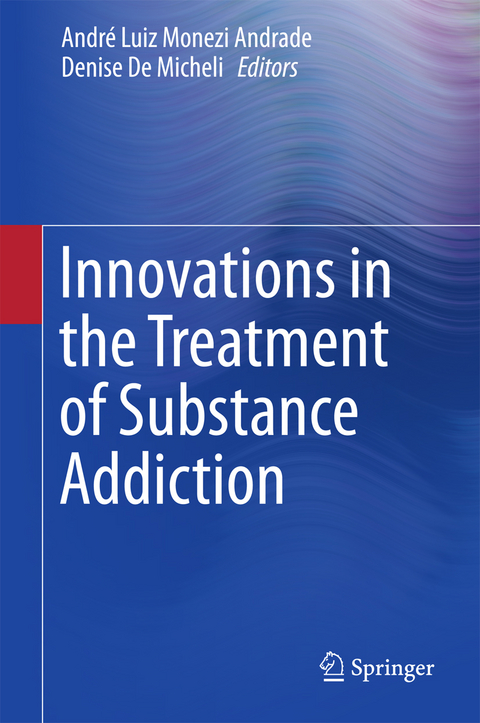
Innovations in the Treatment of Substance Addiction (eBook)
XV, 238 Seiten
Springer International Publishing (Verlag)
9783319431727 (ISBN)

Emerging approaches to treating addictions and minimizing relapse are spotlighted in this idea-packed volume, as alternatives or adjuncts to standard psychological and pharmacological therapies. Its biopsychosocial perspective delves into the causes and processes of chemical dependence, and the clinical characteristics it shares with other addictions (e.g., food, sex, gambling, online activities), to identify client needs that substance abuse may fulfill. Accordingly, the diverse modalities featured here address substance addiction on multiple levels, offering clients physical or mental stimulation and/or emotional relief as well as affording different degrees of autonomy. Methods can be mixed and matched to reinforce treatment goals, and clinicians can tailor treatment to individual issues and interests to assure clients nuanced and meaningful care.
Included in the coverage:
· Use of herbal medicine to treat drug addiction.
· EMDR therapy and the treatment of substance abuse and addiction.
· Evaluating the change processes in drug users' interventions.· Web-based interventions for substance abuse.
· Physical exercise and treatment of addiction.
· Mindfulness to reduce the anxiety during the abstinence
· Neurofeedback to deal with craving and anxiety symptoms
Psychologists, psychiatrists, clinical social workers, and addiction counselors and educators will find Innovations in the Treatment of Substance Addiction a valuable sourcebook for understanding addiction-and intervention-in its wider context.
André Luiz Monezi Andrade obtained a bachelors degree in psychology at Universidade Positivo and a masters degree at Universidade Federal de São Paulo, and currently is finishing his doctoral studies at Universidade Federal de São Paulo focusing on neurobiology of addiction in adolescence. He is a professor in the Department of Psychology at Universidade Anhembi Morumbi with special focus on psychopathology and psychopharmacology in adolescents. /
Denise De Micheli obtained a bachelor's degree in psychology at Universidade Paulista and masters and doctoral degrees at the Universidade Federal de São Paulo. A professor in the Department of Psychobiology at Universidade Federal de São Paulo, she also serves as chief of the Interdisciplinary Centre of Studies in Neuroscience Adolescent Health and Education and is a member of the Association for Medical Education and Research in Substance Abuse.
Eroy Apericida da S
ilva obtained a bachelors degree in psychology by Universidade Paulistana and masters and doctoral degrees at the Universidade Federal de São Paulo. He is a professor in the Department of Psychology at the Universidade Federal de São Paulo, where he also serves as Chief of Cognitive Therapies on Substance Abuse at Unidade de Dependência de Drogas (UDED).André Luiz Monezi Andrade obtained a bachelors degree in psychology at Universidade Positivo and a masters degree at Universidade Federal de São Paulo, and currently is finishing his doctoral studies at Universidade Federal de São Paulo focusing on neurobiology of addiction in adolescence. He is a professor in the Department of Psychology at Universidade Anhembi Morumbi with special focus on psychopathology and psychopharmacology in adolescents. / Denise De Micheli obtained a bachelor's degree in psychology at Universidade Paulista and masters and doctoral degrees at the Universidade Federal de São Paulo. A professor in the Department of Psychobiology at Universidade Federal de São Paulo, she also serves as chief of the Interdisciplinary Centre of Studies in Neuroscience Adolescent Health and Education and is a member of the Association for Medical Education and Research in Substance Abuse. Eroy Apericida da Silva obtained a bachelors degree in psychology by Universidade Paulistana and masters and doctoral degrees at the Universidade Federal de São Paulo. He is a professor in the Department of Psychology at the Universidade Federal de São Paulo, where he also serves as Chief of Cognitive Therapies on Substance Abuse at Unidade de Dependência de Drogas (UDED).
Substance use disorder: an overview.- Neural basis of drug addiction.- Traditional pharmacotherapy of substance abuse.- New pharmacotherapies for treating substance abuse.- Using phytotherapy to treat substance abuse: from efficacy to evidence.- Eye movement desensitization and reprocessing (EMOR) in substance abuse treatment.- Transcranial magnetic stimulation in the treatment of substance abuse.- A multidimensional approach to mindfulness in the treatment of substance use disorders.- Physical activity as a potential treatment for drug abuse.- Web-based interventions to treat substance abuse disorders.- Nutritional aspects of substance abuse.- Acupuncture and substance abuse.- Hypnosis and substance abuse.- Biofeedback therapy for substance abuse.- Yoga for substance abuse.
| Erscheint lt. Verlag | 6.10.2016 |
|---|---|
| Zusatzinfo | XV, 238 p. 17 illus. |
| Verlagsort | Cham |
| Sprache | englisch |
| Themenwelt | Geisteswissenschaften |
| Medizin / Pharmazie ► Medizinische Fachgebiete ► Psychiatrie / Psychotherapie | |
| Sozialwissenschaften ► Pädagogik ► Sozialpädagogik | |
| Schlagworte | acupuncture for drug addiction • Addictive disorders • alcoholism • alternative therapies for addiction • biofeedback therapy for drug addiction • drug abuse • EMDR for drug addiction • epidemiology of addiction • hypnosis for drug addicdtion • mindfulness-based intervention for drug addiction • neurobiology of addiction • nutritional interventions for drug addiction • pharmacologic interventions for substance addiction • phytotherapy for drug addiction • Psychopharmacology • substance abuse • substance addiction • transcranial magnetic stimulation for drug addiction • yoga for drug addiction |
| ISBN-13 | 9783319431727 / 9783319431727 |
| Informationen gemäß Produktsicherheitsverordnung (GPSR) | |
| Haben Sie eine Frage zum Produkt? |
 PDF (Wasserzeichen)
DRM: Digitales Wasserzeichen
Dieses eBook enthält ein digitales Wasserzeichen und ist damit für Sie personalisiert. Bei einer missbräuchlichen Weitergabe des eBooks an Dritte ist eine Rückverfolgung an die Quelle möglich.
Dateiformat: PDF (Portable Document Format)
Mit einem festen Seitenlayout eignet sich die PDF besonders für Fachbücher mit Spalten, Tabellen und Abbildungen. Eine PDF kann auf fast allen Geräten angezeigt werden, ist aber für kleine Displays (Smartphone, eReader) nur eingeschränkt geeignet.
Systemvoraussetzungen:
PC/Mac: Mit einem PC oder Mac können Sie dieses eBook lesen. Sie benötigen dafür einen PDF-Viewer - z.B. den Adobe Reader oder Adobe Digital Editions.
eReader: Dieses eBook kann mit (fast) allen eBook-Readern gelesen werden. Mit dem amazon-Kindle ist es aber nicht kompatibel.
Smartphone/Tablet: Egal ob Apple oder Android, dieses eBook können Sie lesen. Sie benötigen dafür einen PDF-Viewer - z.B. die kostenlose Adobe Digital Editions-App.
Buying eBooks from abroad
For tax law reasons we can sell eBooks just within Germany and Switzerland. Regrettably we cannot fulfill eBook-orders from other countries.
aus dem Bereich