


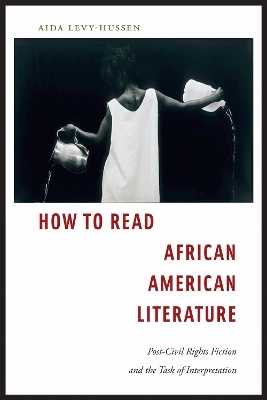
How to Read African American Literature
Post-Civil Rights Fiction and the Task of Interpretation
Seiten
2016
New York University Press (Verlag)
978-1-4798-8471-1 (ISBN)
New York University Press (Verlag)
978-1-4798-8471-1 (ISBN)
How to Read African American Literature offers a series of provocations to unsettle the predominant assumptions readers make when encountering post-Civil Rights black fiction. Foregrounding the large body of literature and criticism that grapples with legacies of the slave past, Aida Levy-Hussen's argument develops on two levels: as a textual analysis of black historical fiction, and as a critical examination of the reading practices that characterize the scholarship of our time.
Drawing on psychoanalysis, memory studies, and feminist and queer theory, Levy-Hussen examines how works by Toni Morrison, David Bradley, Octavia Butler, Charles Johnson, and others represent and mediate social injury and collective grief. In the criticism that surrounds these novels, she identifies two major interpretive approaches: "therapeutic reading" (premised on the assurance that literary confrontations with historical trauma will enable psychic healing in the present), and "prohibitive reading" (anchored in the belief that fictions of returning to the past are dangerous and to be avoided). Levy-Hussen argues that these norms have become overly restrictive, standing in the way of a more supple method of interpretation that recognizes and attends to the indirect, unexpected, inconsistent, and opaque workings of historical fantasy and desire. Moving beyond the question of whether literature must heal or abandon historical wounds, Levy-Hussen proposes new ways to read African American literature now.
Drawing on psychoanalysis, memory studies, and feminist and queer theory, Levy-Hussen examines how works by Toni Morrison, David Bradley, Octavia Butler, Charles Johnson, and others represent and mediate social injury and collective grief. In the criticism that surrounds these novels, she identifies two major interpretive approaches: "therapeutic reading" (premised on the assurance that literary confrontations with historical trauma will enable psychic healing in the present), and "prohibitive reading" (anchored in the belief that fictions of returning to the past are dangerous and to be avoided). Levy-Hussen argues that these norms have become overly restrictive, standing in the way of a more supple method of interpretation that recognizes and attends to the indirect, unexpected, inconsistent, and opaque workings of historical fantasy and desire. Moving beyond the question of whether literature must heal or abandon historical wounds, Levy-Hussen proposes new ways to read African American literature now.
Aida Levy-Hussen is an Associate Professor of English Literature and Language at the University of Michigan. She is the author of How to Read African American Literature: Post-Civil Rights Fiction and the Task of Interpretation (2016) and co-editor of The Psychic Hold of Slavery: Legacies in American Expressive Culture (2016)
| Erscheinungsdatum | 27.11.2016 |
|---|---|
| Verlagsort | New York |
| Sprache | englisch |
| Maße | 152 x 229 mm |
| Gewicht | 336 g |
| Themenwelt | Geisteswissenschaften ► Sprach- / Literaturwissenschaft ► Anglistik / Amerikanistik |
| Geisteswissenschaften ► Sprach- / Literaturwissenschaft ► Literaturwissenschaft | |
| Sozialwissenschaften ► Ethnologie | |
| Sozialwissenschaften ► Politik / Verwaltung | |
| Sozialwissenschaften ► Soziologie | |
| ISBN-10 | 1-4798-8471-5 / 1479884715 |
| ISBN-13 | 978-1-4798-8471-1 / 9781479884711 |
| Zustand | Neuware |
| Informationen gemäß Produktsicherheitsverordnung (GPSR) | |
| Haben Sie eine Frage zum Produkt? |
Mehr entdecken
aus dem Bereich



aus dem Bereich
Poetik eines sozialen Urteils
Buch | Hardcover (2023)
De Gruyter (Verlag)
CHF 83,90


