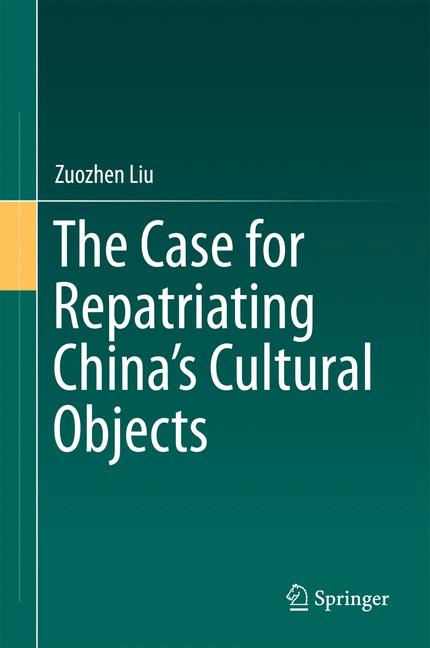
The Case for Repatriating China’s Cultural Objects (eBook)
XXIX, 179 Seiten
Springer Singapore (Verlag)
978-981-10-0597-8 (ISBN)
This book investigates China's demands for the repatriation of Chinese cultural relics 'lost' during the country's modern history. It addresses two main research questions: Can the original owners, or their rightful successors, of cultural objects looted, stolen, or illicitly exported before the adoption of the 1954 Hague Convention and the 1970 UNESCO Convention reclaim their cultural objects pursuant to remedies provided by international or national law? And what are the philosphical, ethical, and cultural considerations of identity underlying the international conventions protecting cultural objects and claims made for repatriating them? The first part of the book explores current positive legal regimes, while the second part focuses on the philosphical, ethical, and cultural considerations regarding repatriation of cultural objects. Consisting of seven chapters and an introduction, it outlines the loss of Chinese cultural relics in modern history and the normative framework for the protection of cultural heritage. It presents case studies designed to assess the possibility of seeking legal remedies for restitution under contemporary legal regimes and examines the cultural and ethical issues underpinning the international conventions protecting cultural heritage and claims for the repatriation of cultural heritage. It also discusses issues of cultural identity, the right to cultural identity and heritage, multiculturalism, the politics of recognition, cosmopolitanism, the right to cultural heritage, and other related issues. The concluding chapter answers the two research questions and offers suggestions for future research.
Introduction.- The Loss of Cultural Relics in Modern Chinese History.- Law and Ethics of Cultural Objects.- Restitution through International Adjudication: Cases Studies of Looted Cultural Objects.- Restitution through Civil Litigation: A Case Study of the Dunhuang Manuscripts.- Cultural Identity: The Politics of Recognition.- Why Lost Cultural Relics Matter in China.- Conclusions and Recommendations.
| Erscheint lt. Verlag | 25.2.2016 |
|---|---|
| Zusatzinfo | XXIX, 179 p. |
| Verlagsort | Singapore |
| Sprache | englisch |
| Themenwelt | Geisteswissenschaften |
| Recht / Steuern ► EU / Internationales Recht | |
| Sozialwissenschaften | |
| Technik | |
| Schlagworte | Cosmopolitanism • cultural heritage • Cultural Identity • International Law • Lost Cultural Relics • Multiculturalism • Nationalism • National Law • Opium War • Sino-Japanese War • The politics of recognition |
| ISBN-10 | 981-10-0597-4 / 9811005974 |
| ISBN-13 | 978-981-10-0597-8 / 9789811005978 |
| Informationen gemäß Produktsicherheitsverordnung (GPSR) | |
| Haben Sie eine Frage zum Produkt? |
 PDF (Wasserzeichen)
DRM: Digitales Wasserzeichen
Dieses eBook enthält ein digitales Wasserzeichen und ist damit für Sie personalisiert. Bei einer missbräuchlichen Weitergabe des eBooks an Dritte ist eine Rückverfolgung an die Quelle möglich.
Dateiformat: PDF (Portable Document Format)
Mit einem festen Seitenlayout eignet sich die PDF besonders für Fachbücher mit Spalten, Tabellen und Abbildungen. Eine PDF kann auf fast allen Geräten angezeigt werden, ist aber für kleine Displays (Smartphone, eReader) nur eingeschränkt geeignet.
Systemvoraussetzungen:
PC/Mac: Mit einem PC oder Mac können Sie dieses eBook lesen. Sie benötigen dafür einen PDF-Viewer - z.B. den Adobe Reader oder Adobe Digital Editions.
eReader: Dieses eBook kann mit (fast) allen eBook-Readern gelesen werden. Mit dem amazon-Kindle ist es aber nicht kompatibel.
Smartphone/Tablet: Egal ob Apple oder Android, dieses eBook können Sie lesen. Sie benötigen dafür einen PDF-Viewer - z.B. die kostenlose Adobe Digital Editions-App.
Buying eBooks from abroad
For tax law reasons we can sell eBooks just within Germany and Switzerland. Regrettably we cannot fulfill eBook-orders from other countries.
aus dem Bereich