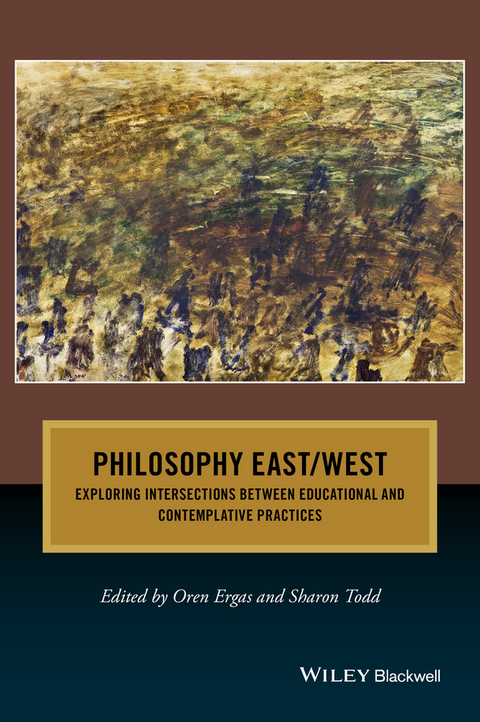
Philosophy East / West (eBook)
John Wiley & Sons (Verlag)
978-1-119-14731-2 (ISBN)
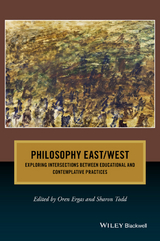
Philosophy East/West showcases new scholarship in the philosophy of education and contemplative studies, paying particular attention to the intersection of mindfulness, evidence-based science, and wisdom traditions.
- Moves beyond simplistic explanations of “Eastern” and “Western” to explore the complexity and diversity of various wisdom traditions
- Investigates the effect of mindfulness-based curricular interventions on current educational theory and practice
- Uses insights from important Western philosophers—including Heidegger, Levinas, and Foucault—to situate contemplative practice within contemporary educational theory
- Emphasizes the importance of transcultural and intercultural approaches in the philosophy of education
Oren Ergas lectures at the School of Education at the Hebrew University and at a number of teacher colleges in Israel. His research focuses on curricular and pedagogical aspects of contemplative education. His work has been published widely in peer-reviewed journals and books, including Critical Studies in Education, Paideusis, The Journal of Transformative Education, The Routledge International Handbook for Education, Religion and Values (2013) and New Social Foundations: Education in Post-Secular Society (2015).
Sharon Todd is Professor of Education at Maynooth University, Ireland. She has written extensively on ethical relations, the politics of education, feminism, and issues of cultural difference and social justice. She is the author of Toward an Imperfect Education: Facing Humanity, Rethinking Cosmopolitanism (2009) and Learning from the Other: Levinas, Psychoanalysis and Ethical Possibilities in Education (2003) and is the co-editor of Re-imagining Educational Relationships: Ethics, Politics and Practices (Wiley, 2014).
Philosophy East/West showcases new scholarship in the philosophy of education and contemplative studies, paying particular attention to the intersection of mindfulness, evidence-based science, and wisdom traditions. Moves beyond simplistic explanations of Eastern and Western to explore the complexity and diversity of various wisdom traditions Investigates the effect of mindfulness-based curricular interventions on current educational theory and practice Uses insights from important Western philosophers including Heidegger, Levinas, and Foucault to situate contemplative practice within contemporary educational theory Emphasizes the importance of transcultural and intercultural approaches in the philosophy of education
Oren Ergas lectures at the School of Education at the Hebrew University and at a number of teacher colleges in Israel. His research focuses on curricular and pedagogical aspects of contemplative education. His work has been published widely in peer-reviewed journals and books, including Critical Studies in Education, Paideusis, The Journal of Transformative Education, The Routledge International Handbook for Education, Religion and Values (2013) and New Social Foundations: Education in Post-Secular Society (2015). Sharon Todd is Professor of Education at Maynooth University, Ireland. She has written extensively on ethical relations, the politics of education, feminism, and issues of cultural difference and social justice. She is the author of Toward an Imperfect Education: Facing Humanity, Rethinking Cosmopolitanism (2009) and Learning from the Other: Levinas, Psychoanalysis and Ethical Possibilities in Education (2003) and is the co-editor of Re-imagining Educational Relationships: Ethics, Politics and Practices (Wiley, 2014).
Notes on Contributors vii
Introduction 1
Oren Ergas and Sharon Todd
1 On the Contemporary Applications of Mindfulness: Some Implications for Education 9
Terry Hyland
2 Contemplative Pedagogy and Mindfulness: Developing Creative Attention in an Age of Distraction 29
Aislinn O'Donnell
3 The Deeper Teachings of Mindfulness-Based 'Interventions' as a Reconstruction of 'Education' 47
Oren Ergas
4 Heidegger East and West: Philosophy as Educative Contemplation 68
David Lewin
5 Experiencing Change, Encountering the Unknown: An Education in 'Negative Capability' in Light of Buddhism and Levinas 90
Sharon Todd
6 Technologies of Self and the Cultivation of Virtues 107
Robert Hattam and Bernadette Baker
7 Intercultural Philosophy and the Nondual Wisdom of 'Basic Goodness': Implications for Contemplative and Transformative Education 129
Claudia Eppert, Daniel Vokey, Tram Truong Anh Nguyen, and Heesoon Bai
8 Reuniting Virtue and Knowledge 152
Tom Culham
9 Improvisation and Meditation in the Academy: Parallel Ordeals, Insights, and Openings 172
Edward Sarath
Index 000
Introduction
OREN ERGAS AND SHARON TODD
This book addresses two interrelated themes that have emerged both from within philosophy and from within education. The first has to do with reading across philosophical traditions in order to address what educational and contemplative practices have to say to one another; the second concerns the recent ‘contemplative turn’ in education, with its focus on mindfulness and other forms of mind/body work that are incorporated into the curriculum based on scientific research, on the one hand, and their spiritual origins, on the other.
Contemplative practices can be broadly defined as ‘the ways that human beings, across cultures and across time, have found to concentrate, broaden, and deepen conscious awareness as the gateway to cultivating their full potential and to leading more meaningful and fulfilling lives’ (Roth, 2006, p. 1788). The interpretative space that this particular definition opens may be an appropriate way of capturing the diversity and complexity that characterises a current social arena in which contemplative practices are increasingly being incorporated into educational settings in Western industrialised countries (Barbezat and Bush, 2014; Ergas, 2014; Gunnlaugson, Sarath, Scott and Bai, 2014; Hart, 2004; Hyland, 2011; MLERN, 2012; Palmer and Zajonc, 2010; Roeser and Peck, 2009; Roth, 2006; Shapiro, Brown and Astin, 2011). It is this diversity that stands at the heart of this book that locates what might be justly paraphrased as ‘the varieties of contemplative practice in and as education’ as a dense intersection point. At this intersection several strands, dualisms and categorisations are brought to bear as ‘West’ meets ‘East’, wisdom traditions meet science, individual meets society, self meets world, mindfulness meets mindlessness, spirituality meets secularity and more.
Contemplative educational thought takes us back to the roots of philosophy of education as well as to the roots of East-Asian wisdom traditions. It is found in the Delphic ideal of ‘know thyself’ and in its application within the Socratic dialogue, that Pierre Hadot (1995) interpreted as a ‘spiritual practice’ in which philosophy was considered a pedagogy and a ‘way of life’. It is similarly found in Buddhism—what Robert Thurman understands primarily as an ‘Educational tradition’ (2006, p. 1769) in which the cultivation of a contemplative mind based on meditative practice constituted an integral part of the curriculum. Thurman claimed that, ‘For liberal education to fulfill its responsibility, the teaching of contemplative skills is a necessity, not a luxury’ (p. 1767). Our interest is to examine how the above Western and East-Asian strands might be understood as a fruitful intersection that can shed light on such possibility that in recent years seems to be moving from theory into actual practice and from philosophy into education.
Analytic philosopher Owen Flanagan (2011) notes three different philosophical styles that work across the borders of Western philosophy and Eastern wisdom traditions. The first is a comparative approach in which philosophical approaches are merely compared and contrasted, with little exploration of how they might mutually inform each other. The second is a fusion approach whereby different philosophical notions are integrated into a whole. This, he cautions, can sometimes (although not always) lead to a disrespect of the very differences that constitute the respective positions under discussion. The third style is a cosmopolitan one. Here, Flanagan notes that doing this kind of philosophical work implicates the author in a critical and ironic openness to all positions, including one's own: ‘the cosmopolitan is a listener and a speaker … he or she compares and contrasts, is willing to try fusings of silly and safe sorts, but mostly likes living at the intersection of multiple spaces of meaning, waiting and seeing and watching whatever happens happen’ (2011, p. 2).
It is this living in the interstitial space of meaning that informs the approach undertaken in this book. And although the essays would not necessarily embrace the call to ‘irony’ invoked by Flanagan, they nonetheless offer a vision of what Eppert, Vokey, Nguyen and Bai in this book call ‘intercultural’ philosophy. It is precisely an exploration of the intersections between educational practices informed by Western philosophical traditions and the contemplative practices informed by Eastern wisdom traditions that characterise the orientation of the articles collected here. Offering a range of perspectives that cut across analytic and continental traditions within philosophy of education and bridging these with Buddhist, yogic, and Daoist philosophies of contemplative practices, this book opens up possibilities for reframing our attention to mind/body as a central aspect of, and a site of resistance to, ‘doing’ education.
Philosophically speaking, then, the challenge becomes how not to typecast ‘Eastern’ and ‘Western’ thought as unified categories in the first place (Eppert and Wang, 2008). Using these two broad terms can hide a richness of differences within and not only between them. There is no ‘essence’ of Eastern wisdom traditions. Although there are some interrelated threads that form a constellation of elements that are recognisable across traditions, these threads are not interchangeable across those traditions. Like threads on a loom, they are woven in varying patterns to create differently textured tapestries. Not only is the weave different for each, but the thread itself also changes appearance in its varying creations. We find, for instance, notions of ‘nonduality’ as ways of capturing our interdependence and interconnectedness with the world, yet these expressions take on different forms whether we are talking about Shambhala Buddhism, Daoism, Vedanta or Theravada Buddhism (Loy, 1988). It is these different nuances that the papers explore collectively in relation to—and not so much in distinction from—Western philosophical and educational concerns. Similarly, the fetishisation of Western philosophy into ontological dualisms and epistemological certainties does little justice to the kinds of pursuits that Western philosophers have indeed been preoccupied with, from the ancient Greeks through to Foucault and Deleuze. Again, the work of Pierre Hadot is noteworthy here in emphasising philosophy's relation to life, which grants to philosophy its particularly educational character. In this ‘Western’ conception there is no border between the thoughtfulness occasioned by the life of the mind and the orientation one has to the world in the life of the body; knowledge is not disconnected from virtue, insight from compassion, or wisdom from ethics.
It is this broader and richer conception of philosophy that has led the articles collected here to employ a different kind of language. Instead of using words such as evaluation, assessment, and appraisal as comparative terms between ‘Eastern’ and ‘Western’ thought, the essays instead turn to resonance, significance, and implication. This alternative lexicon allows for a more complex picture of the intersections to emerge from reading across the traditions, ones that occasion a learning from each other, as opposed to one reigning over the other in some hierarchal game of philosophical—and educational—value.
Turning to the second theme of this issue, the ‘contemplative turn’, it is important to note that contemplation has been no stranger to 20th century curriculum theory and philosophy of education (Huebner, 1999; Miller, 1994; Palmer, 1983, Pinar and Grumet, 1976; Weil, 1956). Despite these rich and compelling accounts, and despite the depth of the traditions from which they have sprung, contemplative practices such as meditation have been quite a rare phenomenon within public schools and/or higher education institutions. Since around the turn of the millennium, however, there has been a dramatic shift in this domain, as various contemplative practices have been gradually moved from the margins to the mainstream of social discourse.
There may be several reasons for this current shift. Sociologists suggest the alienation of living in a technologically saturated information-age and capitalist regime that push individuals and groups to search for an antidote, alongside the deepening pull of a teleological quest for meaning (Heelas and Woodhead, 2005; Wexler, 2000; Wexler and Hotam, 2015). Notwithstanding these possibilities, what seems to be almost unquestionable at this point in time is that one of the most prominent forces in the making of this current ‘turn’ has been the unique, impregnated, and controversial, intersection between mindfulness practice—originating in Buddhism—and modern science.
This change has been mostly bolstered by the success of Jon Kabat-Zinn's (1990) Mindfulness-Based Stress Reduction—a skilful rendition of a Buddhist meditational practice applied toward medical ends. Kabat-Zinn's work began in 1979, taking some time until its impact has captured the interest of the scientific community, a point from which this interest has been rising dramatically. Documenting the number of peer-reviewed scientific research on mindfulness may serve as testimony to the ‘contemplative...
| Erscheint lt. Verlag | 9.12.2015 |
|---|---|
| Reihe/Serie | Journal of Philosophy of Education |
| Journal of Philosophy of Education | Journal of Philosophy of Education |
| Sprache | englisch |
| Themenwelt | Geisteswissenschaften ► Philosophie ► Allgemeines / Lexika |
| Geisteswissenschaften ► Philosophie ► Geschichte der Philosophie | |
| Geisteswissenschaften ► Philosophie ► Philosophie der Neuzeit | |
| Sozialwissenschaften ► Pädagogik ► Allgemeines / Lexika | |
| Sozialwissenschaften ► Pädagogik ► Bildungstheorie | |
| Schlagworte | Bildungswesen • Buddhism • contemplative pedagogy • contemplative studies • contemporary educational theory • Daoism • Education • Education & Public Policy • Foucault • Heidegger • intercultural philosophy • Kabat-Zinn • Levinas • Mindfulness • Pädagogik • Pädagogik u. Politik • Pädagogik • Pädagogik u. Politik • Philosophie • Philosophie der Bildung u. Erziehung • Philosophy • Philosophy of education • Theorie der Pädagogik • Theorie der Pädagogik • Theory of Education |
| ISBN-10 | 1-119-14731-X / 111914731X |
| ISBN-13 | 978-1-119-14731-2 / 9781119147312 |
| Informationen gemäß Produktsicherheitsverordnung (GPSR) | |
| Haben Sie eine Frage zum Produkt? |
 EPUB (Adobe DRM)
Kopierschutz: Adobe-DRM
Adobe-DRM ist ein Kopierschutz, der das eBook vor Mißbrauch schützen soll. Dabei wird das eBook bereits beim Download auf Ihre persönliche Adobe-ID autorisiert. Lesen können Sie das eBook dann nur auf den Geräten, welche ebenfalls auf Ihre Adobe-ID registriert sind.
Details zum Adobe-DRM
Dateiformat: EPUB (Electronic Publication)
EPUB ist ein offener Standard für eBooks und eignet sich besonders zur Darstellung von Belletristik und Sachbüchern. Der Fließtext wird dynamisch an die Display- und Schriftgröße angepasst. Auch für mobile Lesegeräte ist EPUB daher gut geeignet.
Systemvoraussetzungen:
PC/Mac: Mit einem PC oder Mac können Sie dieses eBook lesen. Sie benötigen eine
eReader: Dieses eBook kann mit (fast) allen eBook-Readern gelesen werden. Mit dem amazon-Kindle ist es aber nicht kompatibel.
Smartphone/Tablet: Egal ob Apple oder Android, dieses eBook können Sie lesen. Sie benötigen eine
Geräteliste und zusätzliche Hinweise
Buying eBooks from abroad
For tax law reasons we can sell eBooks just within Germany and Switzerland. Regrettably we cannot fulfill eBook-orders from other countries.
aus dem Bereich