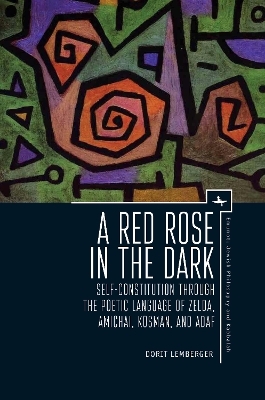
A Red Rose in the Dark
Academic Studies Press (Verlag)
978-1-61811-493-8 (ISBN)
How can we characterize the uniqueness of poetic language? How can we describe the evasive enchantment of the paradox that is created by both universal and autobiographical expression? How does ordinary language function aesthetically while motivating the reader to acknowledge himself, and to reveal how far his thinking belongs to the present, the future, or the past?
Ludwig Wittgenstein, the central founder of the linguistic turn and the inspiration of countless works, inspires the search of this book for various linguistic functions: Dialogic, aesthetic and mystical. The search investigates four Modern Hebrew poets: Zelda, Yehuda Amichai, Admiel Kosman, and Shimon Adaf based on their family resemblance of intertextuality in their language-games. The book resists social-cultural categorizations as religious vs. secular poetry or Mizrahi vs. Ashkenazi literature, and instead, focuses on Wittgenstein's aspects, suggesting universal interpretation of these corpuses.
As a lecturer in the unit of interdisciplinary studies in Bar-Ilan University, Dorit Lemberger's researches exemplify the relevance and importance of linguistic concepts to Hebrew literature and Jewish philosophy. Also, I use psychoanalytic insights in order to show the common linguistic ground of literature and psychoanalysis, as 'talking-cure'.
Preface
Chapter One
Poetic Grammar: Three Aspects of Aesthetic Judgment
1. Examination and Judgment of Aesthetic Language: The Fundamental Tension
2. The First Aspect: A Poetic Work as Driving Reflective Introspection
3. The Second Aspect: Conscious Change as the Key to Aesthetic Judgment
4. The Third Aspect: Showing What Cannot Be Said
Summation
Chapter Two
Dialogical Grammar: Variations of Dialogue in Wittgenstein’s Methodology as Ways of Self-Constitution
1. “Family Resemblance” between the Platonic Dialogue and Wittgenstein’s Methodology
1.1. Wittgenstein’s Critique of Socrates
1.2. Similarities between Wittgensteinian and Socratic Dialogue
1.3. Language as a Medium of Thought: Soliloquy as Ordinary Language
1.4. Reflective Dialogue: Dialogue between Sense-Perception and Image
2. Wittgensteinian Dialogical Grammar in the Philosophical Investigations: Rhetorical, Conversational, Reflective
2.1. Dialogism in the Philosophical Investigations: “A Surveyable Representation”
2.2. Aspects of Dialogism
2.3. Dialogue as Technique
2.4. Conversational Dialogue
2.5. Reflective Dialogue
Chapter Three
Self-Constitution through Mystical Grammar: The Urge and Its Expressions
Three Channels of Mystical Grammar
1. Preliminary Considerations: Theology as Grammar and the Metaphysical Subject
2. The Mystical-Religious Channel: The Religious Aspect of Mystical Grammar
3. Who Is Experiencing? The Paradox of the I and the “Solution” of the Mystic Subject
4. I as Object—I as Subject: From James to Wittgenstein
5. From Perfectionism to Confession: Work on Oneself
Chapter Four
Zelda: The Complex Self-Constitution of the Believer
1. Expression and Conversion between Everyday and Poetic Grammar
2. Dialogic Grammar: Internal and External Observations
3. Mystical Grammar: Perfectionism and Metaphysics as Zelda’s Varieties of Religious Experience
Chapter Five
Yehuda Amichai: Amen and Love
1. The Poetics of Change: The Grammaticalization of Experience
2. Dialogic Grammar: The Importance of Otherness
3. Reconstruction of the Subject: The Mystical Grammar of Open Closed Open
3.1. The Mechanism of Change as the Key to Perfectionism
3.2. The Conception of an Individual God: God as Change and as Interlocutor
3.3. The Encounter with Biblical Word-Games as the Key to the Reconstruction of the Self
3.4. The Refashioning of Religious Rituals as an Expression of Intersubjective Change of the Self
Chapter Six
Admiel Kosman: We Reached God
The Popping Self
1. The Poetic Grammar of Revolution: The New Believer
1.1. How to Do Things with Words: The Weekly Torah Portion
1.2. When All the Words Are Finished—All Is Intoxicated from Clarity
2. Dialogical Grammar: Self-Constitution as Conversational Process
3. Mystical Grammar: Private Pain and Manifestation of the Other
Chapter Seven
Shimon Adaf: Poetry as Philosophy and Philosophy as Poetry
The Nobility of Pain
1. Icarus Monologue: The Poetic Grammar of Hybrid Imagination
2. What I Thought Shadow Is the Real Body: The Dialogical Grammar of Place, Time, and Memory
2.1. Poetry as a Chronological and Thematic Point of Departure
2.2. The Subject as the Limit of the World
3. Aviva-No: The Grammar of Mourning
4. The Way Music Speaks
Summation: “As if I Could Read the Darkness”
Index
| Erscheinungsdatum | 02.06.2016 |
|---|---|
| Reihe/Serie | Emunot: Jewish Philosophy and Kabbalah |
| Übersetzer | Edward Levin |
| Zusatzinfo | Illustrations |
| Verlagsort | Brighton |
| Sprache | englisch |
| Maße | 155 x 234 mm |
| Themenwelt | Geisteswissenschaften ► Religion / Theologie ► Judentum |
| Geisteswissenschaften ► Sprach- / Literaturwissenschaft ► Anglistik / Amerikanistik | |
| Geisteswissenschaften ► Sprach- / Literaturwissenschaft ► Literaturwissenschaft | |
| Geisteswissenschaften ► Sprach- / Literaturwissenschaft ► Sprachwissenschaft | |
| Sozialwissenschaften ► Soziologie ► Spezielle Soziologien | |
| ISBN-10 | 1-61811-493-X / 161811493X |
| ISBN-13 | 978-1-61811-493-8 / 9781618114938 |
| Zustand | Neuware |
| Informationen gemäß Produktsicherheitsverordnung (GPSR) | |
| Haben Sie eine Frage zum Produkt? |
aus dem Bereich