Zum Hauptinhalt springen
Nicht aus der Schweiz? Besuchen Sie lehmanns.de
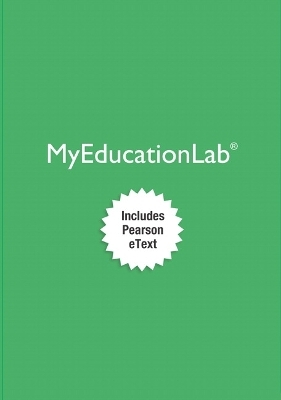
MyLab Education with Pearson eText Access Code for Adolescent Development for Educators - Allison Ryan, Timothy Urdan, Eric Anderman

MyLab Education with Pearson eText Access Code for Adolescent Development for Educators

Media-Kombination
512 Seiten
2016
Pearson
978-0-13-449784-6 (ISBN)
CHF 111,00 inkl. MwSt
  • Versand in 10-20 Tagen
  • Versandkostenfrei
  • Auch auf Rechnung
  • Artikel merken
NOTE: Before purchasing, check with your instructor to ensure you select the correct ISBN. Several versions of Pearson's MyLab & Mastering products exist for each title, and registrations are not transferable. To register for and use Pearson's MyLab & Mastering products, you will also need a Course ID, which your instructor will provide. Used books, rentals, and purchases made outside of Pearson If purchasing or renting from companies other than Pearson, the access codes for Pearson's MyLab & Mastering products may not be included, may be incorrect, or may be previously redeemed. Check with the seller before completing your purchase. This access code card provides access to the MyEducationLab® with Enhanced Pearson eText. An adolescent development text written for educators. The existing textbooks on adolescent development are predominantly written for undergraduate psychology majors and have little to say about what the theories and research mean for teachers in schools working with adolescent students. The key feature that guided the development of this book and that sets it apart from other textbooks on adolescent development is the focus on application of concepts to educational settings and the practical implications for teachers. From reviews of the text: “This text conveys the experience of classroom teachers with many concrete examples, realistic vignettes, and helpful guidelines for what educators can do. The content is organized around many real-world issues and educational applications of the adolescent experience. The research support is comprehensive and current.” Lynda Randall, CSU Fullerton “The biggest strengths [of this text] are the focus on educators and how they can facilitate growth and development and enhance learning among adolescents. I believe this is an excellent text for educators...” Farah Ibrahim, University of Colorado Denver “I love the organization and the pull back to the classroom application, especially that it is woven in versus saved for the end of each chapter. That is very appealing to me as it will be to any current teacher who feels that some books are too rooted in theory. . . . This is much more accessible that most textbooks, and it has much more likelihood of being read and read carefully by students in the class. It seems more practical and meaningful versus a book that merely mentions the classroom applications.” Steve Kucinski, Ohio State University & Otterbein University “The key strengths of the chapters and the book overall is the focus on educators. . . . I like the clear, consistent writing style throughout all of the chapters.” M Cecil Smith, West Virginia University Personalize learning with MyEducationLab® MyEducationLab is an online homework, tutorial, and assessment program designed to work with the text to engage students and improve results. Within its structured environment, students see key concepts demonstrated through real classroom video footage, practice what they learn, test their understanding, and receive feedback to guide their learning and ensure they master key learning outcomes.

Brief Table of Contents

Chapter 1: Introduction to Adolescence
Chapter 2: Physical Development
Chapter 3: Cognitive and Intellectual Development
Chapter 4: Social and Moral Development
Chapter 5: Identity and Self-Perceptions
Chapter 6: Families
Chapter 7: Technology and Media
Chapter 8: Peers
Chapter 9: Motivation, Classrooms and Schools
Chapter 10: Sexuality and Romantic Relationships
Chapter 11: Mental Health, Coping Strategies, and Problems
Chapter 12: Moving into Adulthood


Detailed Table of Contents Chapter 1: Introduction to Adolescence

INTRODUCTION
DEFINING ADOLESCENCE
THE LIVES OF ADOLESCENTS
FRAMEWORKS FOR CONCEPTUALIZING ADOLESCENT DEVELOPMENT
STRUCTURE OF THE BOOK

Chapter 2: Physical Development

INTRODUCTION
PHYSIOLOGICAL DEVELOPMENT IN PUBERTY
DEVELOPMENT OF THE BRAIN DURING ADOLESCENCE
HOW PHYSICAL DEVELOPMENT AFFECTS SOCIAL AND COGNITIVE CHANGE
BODY IMAGE AND EATING DISORDERS
PHYSICAL HEALTH AND WELL-BEING
ADOLESCENT HEALTH AND SCHOOL HEALTH SERVICES
RECOMMENDATIONS FOR EDUCATORS

Chapter 3: Cognitive and Intellectual Development

INTRODUCTION
PIAGET’S THEORY OF COGNITIVE DEVELOPMENT: IMPLICATIONS FOR ADOLESCENTS
VYGOTSKY’S THEORY OF COGNITIVE DEVELOPMENT
INTEGRATING PIAGET AND VYGOTSKY
ADOLESCENT COGNITIVE DEVELOPMENT IN THE 21ST CENTURY
MEMORY
INTELLIGENCE
METACOGNITION
LIMITATIONS OF ADOLESCENTS’ COGNITIVE ABILITIES
RECOMMENDATIONS FOR EDUCATORS

Chapter 4: Social and Moral Development

INTRODUCTION
MORAL DEVELOPMENT DURING
PERSPECTIVE TAKING
RELIGIOSITY DURING ADOLESCENCE
VOLUNTEERING AND SERVICE LEARNING
ACADEMIC CHEATING
RECOMMENDATIONS FOR EDUCATORS

Chapter 5: Identity and Self-Perceptions

INTRODUCTION
THEORIES, CONCEPTUALIZATIONS, AND DEFINITIONS OF IDENTITY
GENDER IDENTITY
ETHNIC AND CULTURAL IDENTITY
RECOMMENDATIONS FOR EDUCATORS

Chapter 6: Families

INTRODUCTION
CHANGING CIRCUMSTANCES OF ADOLESCENTS AND FAMILIES IN SOCIETY
THE FAMILY SYSTEM DURING ADOLESCENCE
PARENTING STYLES
ATTACHMENT AND AUTONOMY
CONFLICT WITH PARENTS
PARENTAL INVOLVEMENT IN ADOLESCENT LEARNING
RECOMMENDATIONS FOR EDUCATORS

Chapter 7: Technology and Media

INTRODUCTION
TECHNOLOGY AND MEDIA USE
MEDIA AND ADOLESCENT DEVELOPMENT
MEDIA EFFECTS
SOCIAL MEDIA
RECOMMENDATIONS FOR EDUCATORS

Chapter 8: Peers

INTRODUCTION
FRIENDS
PEER GROUPS
CROWDS
POPULARITY
BULLYING, AGGRESSION AND VICTIMIZATION
SUPPORTING STUDENTS’ PEER RELATIONSHIPS AT SCHOOL
RECOMMENDATIONS FOR EDUCATORS

Chapter 9: Motivation, Classrooms and Schools

INTRODUCTION
MOTIVATION
CLASSROOMS
SOCIOECONOMIC STATUS, ETHNICITY AND SCHOOLING
RECOMMENDATIONS FOR EDUCATORS

Chapter 10: Sexuality and Romantic Relationships

INTRODUCTION
WHAT IS HEALTHY SEXUAL DEVELOPMENT?
RATES OF SEXUAL ACTIVITY
ROMANTIC RELATIONSHIPS IN ADOLESCENCE
WHERE ADOLESCENTS GET THEIR INFORMATION ABOUT SEX
PROBLEMS ASSOCIATED WITH ADOLESCENT SEXUAL BEHAVIOR
RECOMMENDATIONS FOR EDUCATORS

Chapter 11: Mental Health, Coping Strategies, and Problems

INTRODUCTION
INTERNALIZING DISORDERS COMMON AMONG ADOLESCENTS
EXTERNALIZING DISORDERS MOST COMMON DURING ADOLESCENCE
SUBSTANCE USE ABUSE AMONG ADOLESCENTS
RECOMMENDATIONS FOR EDUCATORS

Chapter 12: Moving into Adulthood

INTRODUCTION
EMERGING ADULTHOOD
TRANSITIONS INTO COLLEGE
TRANSITIONS INTO THE WORKFORCE
TRANSITIONS INTO THE MILITARY
RECOMMENDATIONS FOR EDUCATORS

Erscheint lt. Verlag 20.9.2016
Sprache englisch
Maße 152 x 228 mm
Gewicht 23 g
Themenwelt Sozialwissenschaften Pädagogik
ISBN-10 0-13-449784-8 / 0134497848
ISBN-13 978-0-13-449784-6 / 9780134497846
Zustand Neuware
Informationen gemäß Produktsicherheitsverordnung (GPSR)
Haben Sie eine Frage zum Produkt?
Mehr entdecken
aus dem Bereich
100 Lehr- und Lernmethoden

von Andreas Schubiger; Joe Gerig; Harald Graschi; Susan Rosen

Spiel (2025)
hep verlag
CHF 34,95
With Puppets, In Precursive Letters (British English edition)

von Sue Lloyd; Sara Wernham

Media-Kombination (2026)
Jolly Phonics
CHF 1.269,95
In Precursive Letters (British English edition)

von Sue Lloyd; Sara Wernham

Media-Kombination (2026)
Jolly Phonics
CHF 1.109,95