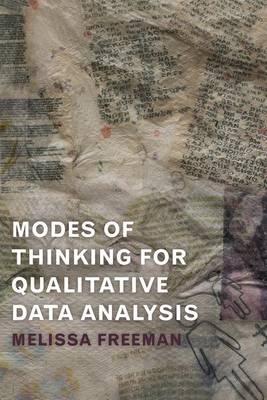
Modes of Thinking for Qualitative Data Analysis
Left Coast Press Inc (Verlag)
978-1-62958-179-8 (ISBN)
- Titel erscheint in neuer Auflage
- Artikel merken
Melissa Freeman is Professor of Qualitative Research Methodologies in the College of Education at The University of Georgia.
Contents
List of Tables and Figures
Preface
Introduction
Why Focus on Analysis?
Thinking, not Thought
Brief Introduction to the Modes of Thinking
Modes of Thinking for Qualitative Data Analysis
The Modes of Thinking in Dynamic Relation
Categorical Thinking
Introduction to Categorical Thinking
Characteristics of Categorical Thinking
Categorical Thinking in Practice
Deciding on Categorical Thinking for Analysis
Narrative Thinking
Introduction to Narrative Thinking
Characteristics of Narrative Thinking
Narrative Thinking in Practice
Deciding on Narrative Thinking for Analysis
Dialectical Thinking
Introduction to Dialectical Thinking
Characteristics of Dialectical Thinking
Dialectical Thinking in Practice
Deciding on Dialectical Thinking for Analysis
Poetical Thinking
Introduction to Poetical Thinking
Characteristics of Poetical Thinking
Poetical Thinking in Practice
Deciding on Poetical Thinking for Analysis
Diagrammatical Thinking
Introduction to Diagrammatical Thinking
Characteristics of Diagrammatical Thinking
Diagrammatical Thinking in Practice
Deciding on Diagrammatical Thinking for Analysis
Teaching Qualitative Analysis
On Diversity
On Tradition
On Reflexive Dialogical Practice
Final Thoughts
List of Tables and Figures
Table 1.1: Modes of Thinking for Qualitative Data Analysis page xx
Table 4.1: Two Approaches to Dialectical Thinking in Practice page xx
Figure 1.1: Modes of Thinking in Dynamic Relation page xx
Figure 2.1: Connecting Categories to Concepts page xx
Figure 3.1: Dimensions of Plot page xx
Figure 4.1: Dialectical Friction and Emergence page xx
Figure 5.1: Poetics as Infinite Dialogue page xx
Figure 6.1: A Phenomenon Becoming page xx
| Erscheinungsdatum | 06.05.2016 |
|---|---|
| Zusatzinfo | 2 Tables, black and white; 6 Line drawings, black and white |
| Verlagsort | Walnut Creek |
| Sprache | englisch |
| Maße | 152 x 229 mm |
| Gewicht | 230 g |
| Themenwelt | Sozialwissenschaften ► Pädagogik ► Bildungstheorie |
| Sozialwissenschaften ► Soziologie ► Empirische Sozialforschung | |
| ISBN-10 | 1-62958-179-8 / 1629581798 |
| ISBN-13 | 978-1-62958-179-8 / 9781629581798 |
| Zustand | Neuware |
| Informationen gemäß Produktsicherheitsverordnung (GPSR) | |
| Haben Sie eine Frage zum Produkt? |
aus dem Bereich