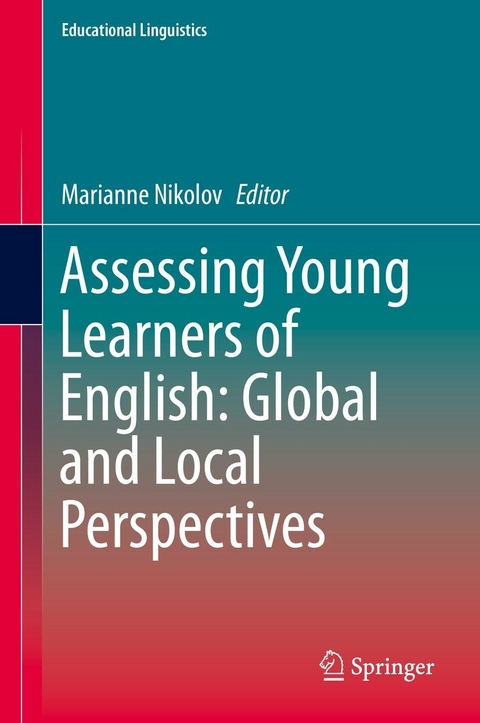
Assessing Young Learners of English: Global and Local Perspectives (eBook)
XII, 338 Seiten
Springer-Verlag
978-3-319-22422-0 (ISBN)
This volume documents international, national, and small-scale testing and assessment projects of English language education for young learners, across a range of educational contexts. It covers three main areas: age-appropriate ‘can do statements’ and task types for teaching and testing learners between the ages of 6 to 13; innovative approaches to self-assessment, diagnostic testing, self- perception, and computer-based testing; and findings on how young learners perform on vocabulary, listening, speaking, pronunciation, and reading comprehension tests in European and Asian contexts.
Early language learning has become a major trend in English language education around the globe. As a result of the spread of teaching English to a growing number of young children, assessment of and for learning have emerged as key issues. In line with this development, there is a clear and emerging need to make early language programs accountable and to assess both the progress children makeover time and to quantify their achievement at various stages of development. This volume informs stakeholders about the realistic goals of early language learning, their efficiency, and how much progress children make over time.
Acknowledgment 6
Contents 8
Contributors 10
List of Acronyms 12
Trends, Issues, and Challenges in Assessing Young Language Learners 14
1 Introduction 14
2 Main Trends in Early Language Learning and Assessment 15
2.1 The Social Dimension 15
2.2 An Inkblot Test or a Puzzle: ‘The Younger The Better’ vs. ‘The Slower’, or How and Why? 16
2.3 Research on Early Language Learning and Teaching 17
3 Challenges in Early Language Learning, Teaching, and Assessment 19
3.1 The Construct and Frameworks of Assessment 19
3.2 National, International and Local Testing Projects 21
3.3 International Language Tests for Young Language Learners 22
3.4 Assessment for Learning 22
3.5 What Tests Are Used and How 23
4 How This Volume Contributes to a Better Understanding of the Challenges in Young Learners’ Assessment and to Advancing the Field 24
5 Areas for Further Research and Implications for Practice 26
References 27
Do Developments in Assessment Represent the ‘Coming of Age’ of Young Learners English Language Teaching Initiatives? The International Picture 31
1 Introduction 31
2 The History So Far 32
3 Developments and Research in EYL Assessment Up Until the Early Twenty-First Century 33
4 Recent General Educational Assessment Movements and Their Influence on EYL Assessment 35
4.1 Standards-Based Assessment 35
4.2 Assessment Using Specified Performance Criteria to Determine Levels 36
4.3 Issues with the Common European Framework of Reference in Assessing EYLs 37
4.4 Assessment for Learning 38
5 Analysis of Data on the Current State of the Art in YLs Assessment 40
5.1 The Cambridge English Survey of Teachers’ Practices in Assessment 40
5.2 The British Council Survey of Policy and Practice in Primary ELT 41
5.3 Findings from the Surveys 42
5.3.1 An Update on Teacher Preparation and Supply 42
5.3.2 Teachers’ Growing Understanding of Assessment of Young Learners’ English 43
5.3.3 National Policies and Assessment 44
5.3.4 Standards-Setting and the Growing Role of the CEFR 45
5.3.5 Assessment as an Official Requirement in YL Teaching in Primary School 45
5.3.6 Means of End of Primary School Assessment 46
5.3.7 Consequences and Lack of Consequences from End of Primary School Assessment 47
5.3.8 Transitions Between School Levels 48
6 Limitations 49
7 Implications for Practice 50
8 Need for Future Research 50
Appendices 51
Appendix A: Countries from Which a Minimum of Five Responses to the Cambridge Survey Were Obtained 51
Appendix B: Countries and Regions from Which Responses to the British Council Survey Were Obtained 51
References 52
The “Global Scale of English Learning Objectives for Young Learners”: A CEFR-Based Inventory of Descriptors 54
1 Introduction 54
2 The Heterogeneous Reality of TEYL and the Characteristics of Young Learners 57
2.1 The Need for Standardisation in TEYL 57
2.2 Who Are Young Language Learners? 58
3 Project Background: The CEFR and the Global Scale of English 60
3.1 The CEFR: A Starting Point 60
3.2 A Numerical Scale of English Proficiency 62
4 The Development of Learning Objectives 63
4.1 The Pool of Learning Objectives 64
4.2 The Rating of Learning Objectives 68
4.3 The Psychometric Analysis 69
5 Final Considerations 71
Appendices 72
Appendix A: Summary Statistics of Survey Answers by Selected Teachers (Tables 3, 4, and 5) 72
Appendix B: Summary Statistics of Survey Answers by Selected Expert Raters (Tables 6, 7, 8, 9, and 10) 73
References 74
A Framework for Young EFL Learners’ Diagnostic Assessment: ‘Can Do Statements’ and Task Types 76
1 Introduction 76
2 Contextualizing the Project in Recent Educational Assessment Trends 77
3 The Context of the Project 78
4 The Diagnostic Assessment Project 80
4.1 Aims and Phases 81
4.2 The Framework 81
4.3 Findings on EFL Teachers’ Assessment Practices in Early Language Programs in Hungary 85
5 ‘Can Do Statements’, Topics, Types of Texts and Tasks for Diagnostic Tests for Children Between the Ages of 6 and 12 87
5.1 Can Do Statements 87
5.2 Language Learning Strategies 88
5.3 Target Culture–Related Areas 91
5.4 Themes and Topics 91
5.5 Types of Texts 92
5.6 Task Types Appropriate for Diagnostic Assessment of Young Learners 93
5.6.1 Listening Comprehension 93
5.6.2 Speaking 94
5.6.3 Reading Comprehension 96
5.6.4 Writing 97
6 Conclusions and the Way Forward 98
References 99
Examining Content Representativeness of a Young Learner Language Assessment: EFL Teachers’ Perspectives 104
1 Introduction 104
2 Literature Review 106
3 Content Validation of TOEFL Primary 107
4 Method 108
4.1 Participants 108
4.2 Rating Materials 109
4.3 Instrument 109
4.4 Procedures 110
4.5 Content Alignment Judgments 111
4.6 Analysis 111
5 Results 112
5.1 Results of the Content Relevance Ratings 112
5.2 Results of the Importance of the KSAs Assessed 113
6 Discussion 114
7 Limitations and Suggestions for Future Research 116
8 Conclusion 116
References 117
Developing and Piloting Proficiency Tests for Polish Young Learners 119
1 Introduction 119
2 Language Test Development for Young Learners – Challenges 120
3 Context and Research Questions 125
3.1 The Context of the Study 125
3.2 Research Questions 126
4 Method 126
4.1 Participants 126
4.2 Materials 126
5 Results 134
5.1 Pre-pilot Stage: Cognitive Laboratories 134
5.2 Key Outcomes from Cognitive Laboratories – Problematic Tasks 135
5.3 Cognitive Interviews – The Benefits 136
5.4 Pilot Procedure 137
6 Results of Pilot Study 139
7 The Final Test 143
8 Conclusions 143
9 Need for Future Research 144
Appendix 145
References 146
The Development and Validation of a Computer-Based Test of English for Young Learners: Cambridge English Young Learners 148
1 Introduction 148
2 Why Develop Computer-Based Tests for Young Learners? 149
3 Methodological Issues in the Validation of Computer-Based Tests for Young Learners 151
3.1 The Case for Comparability Studies 151
3.2 Are Young Learners Different? 152
4 Development and Validation of the CB Version of Cambridge English Young Learners Tests 153
4.1 Trial Methodology 153
4.2 Candidate Profile in This Study 154
4.3 Data Analysis 156
5 Trial Results: Quantitative 159
5.1 Relationship Between PB and CB Scores 160
5.2 Variables Explaining Candidate Performance in PB and CB Tests 160
5.2.1 Country 162
5.2.2 Age 162
5.2.3 Gender, Years of Instruction, Computer Preference 163
5.2.4 Frequency of Computer Use, Reason for Computer Use, Type of Computer at Home 164
5.2.5 Type of Computer Used at the Exam 168
6 Trial Results: Qualitative 169
6.1 Candidate and Parental Testimonial Feedback 169
6.1.1 CB YLE Is Innovative 170
6.1.2 CB YLE Is Fun and Motivating 172
6.1.3 CB YLE Tests Are at the Right Level of Difficulty 173
6.1.4 CB YLE Helps Students Learn English 173
6.1.5 CB YLE is Child-friendly 173
6.1.6 CB YLE Is Made by Cambridge English 174
6.1.7 CB YLE Is Environment-friendly 175
6.1.8 CB YLE Helps Checking Language Learning Progress 176
6.1.9 CB YLE Helps Candidates With Special Educational Needs 176
6.2 Observer Feedback 176
6.2.1 CB YLE Is Enjoyable 177
6.2.2 CB YLE Is Engaging 177
6.2.3 CB YLE Is Best on Tablet 177
6.2.4 CB YLE May not Be Everyone’s Choice 179
6.2.5 CB YLE Is Popular 182
6.2.6 CB YLE Trials Offered a Positive Experience 182
6.2.7 Conclusion 184
7 Limitations and Future Research 185
Appendix A: Candidate Questionnaire (English Version) 186
Appendix B: CB YLE Observer Checklist 190
Appendix C: Effect Plots from Regression Analyses (Figs. 7, 8, 9, 10, and 11) 194
References 197
Learning EFL from Year 1 or Year 3? A Comparative Study on Children’s EFL Listening and Reading Comprehension at the End of Primary Education 200
1 Introduction 201
2 Political and Theoretical Background 201
2.1 The Political Background and Curricula: Germany 201
2.2 Foreign Language Listening and Reading Competences in This Study 202
2.3 Mono- and Multilingual Backgrounds of Children in the Study 203
3 Prior Research Findings on Receptive EFL Competences in Primary Education 203
3.1 Prior Research Findings on Listening Competences in Early Foreign Language Learning 204
3.2 Prior Research Findings on Reading Competences in Early Foreign Language Learning 205
3.3 Prior Research Finding on Receptive Foreign Language Competences of Mono- and Multilingual Children in Primary Education 207
4 Research Design 209
4.1 Research Questions and Hypotheses 209
4.2 Design and Participants 210
4.3 Measures 211
4.4 Data Analysis 212
5 Results 212
6 Conclusion and Outlook 217
References 218
A Longitudinal Study of a School’s Assessment Project in Chongqing, China 222
1 Introduction 222
2 Method 225
2.1 Participants 225
2.2 Instruments 225
2.2.1 The Course Books 226
2.2.2 The Tests 226
2.2.3 The Interview 227
2.3 Procedures 227
3 Results 227
3.1 The Test Papers 227
3.1.1 Components 227
3.1.2 Item Formats 228
3.1.2.1 Oral Section 228
3.1.2.2 Listening Section 230
3.1.2.3 Comprehensive Skills Section 231
3.1.3 Language Areas Tested 232
3.2 Students’ Performance 234
3.2.1 Difficulty of Test Papers 234
3.2.2 Score Distribution in Different Bands 234
3.2.3 Mean Scores in Different Classes 235
3.3 Teachers’ Views on the Tests and Test Results 236
3.3.1 The Use of Oral Test 236
3.3.2 The Use of Listening Tests 238
3.3.3 The Use of Comprehensive Skills Tests 238
3.3.4 Language Areas Assessed in the Tests 240
3.3.5 Test Quality 241
3.3.5.1 Validity 241
3.3.5.2 Reliability 241
3.3.6 Factors Influencing the Performance of Students 243
3.3.6.1 Textbooks 243
3.3.6.2 Teachers and Activities 243
3.3.6.3 Motivation 244
4 Conclusions 246
4.1 Implications for Practice 246
4.2 Limitations and Future Directions 247
Appendix 1 248
Interview Questions 248
References 248
Individual Learner Differences and Young Learners’ Performance on L2 Speaking Tests 251
1 Introduction 251
2 Context of the Present Study 254
3 A Study on the Relationship of Young L2 Learners’ Motivation and Self-concept with Performance on Speaking Tests 254
3.1 Aims 255
3.2 Sample 255
3.3 Methodology 255
3.4 Results and Discussion 257
3.4.1 Motivation and L2 Self-concept 257
3.4.2 Oral Performance in Grades 5–8 259
3.4.2.1 Task Achievement 259
3.4.2.2 Vocabulary 261
3.4.2.3 Accuracy 262
3.4.2.4 Fluency 263
3.4.3 Interaction of Motivation and L2 Self-concept with Oral Performance 264
4 Conclusions 265
5 Limitations of the Study and Future Directions 266
6 Implications for Practice 266
References 266
The Role of Individual Differences in the Development of Listening Comprehension in the Early Stages of Language Learning 270
1 Introduction 271
2 Literature Review 272
2.1 Early Foreign Language Learning and Teaching 272
2.2 Listening Comprehension 274
2.3 Individual Differences 275
3 The Study 277
3.1 A Model of Individual Differences in Listening Comprehension 277
3.2 Aim of the Study 278
4 Method 279
4.1 Participants 279
4.2 Measures and Procedure 279
5 Results 281
5.1 Development in Listening Comprehension 281
5.2 Components of Individual Differences 281
5.3 Relationships Between Variables of First Assessment and Listening Comprehension Achievement 284
5.4 Relationships Between Variables of the First Assessment and English Marks 287
6 Conclusion 290
6.1 Implications and Direction for Further Research 291
References 291
Self-Assessment of and for Young Learners’ Foreign Language Learning 297
1 Introduction 297
2 Two Approaches to SA for Young Learners 299
2.1 Self-Assessment of Learning 299
2.1.1 SA as Assessment of Learning Among Adult Learners 299
2.1.2 SA as Assessment of Learning Among Young Learners 301
2.1.2.1 Interpretation-Related Issues in Young Learners’ SA of Learning 301
2.1.2.2 Measurement-Related Issues in Young Learners’ SA of Learning 304
2.2 Self-Assessment for Learning 306
2.2.1 SA as Assessment for Learning Among Adult Learners 307
2.2.2 SA as Assessment for Learning Among Young Learners 309
3 Types of Major SAs 311
3.1 Domain Setting 312
3.2 Scale Setting 314
3.3 Goal Setting 315
3.4 Focus of Assessment 316
3.5 Method of Assessment 317
4 Conclusion and Implications 317
References 318
Relationships between Peer- and Self-Assessment and Teacher Assessment of Young EFL Learners’ Oral Presentations 322
1 Introduction 323
2 Observational Learning in Social Learning Theory 323
2.1 Learning Through Modeling 324
2.2 Functions of Reinforcement 324
3 PA and SA in L1 and L2 Contexts 325
3.1 Reviews of PA and SA 325
3.2 Combination of PA and SA 326
3.3 PA and SA with Young Learners 327
4 Research Method 328
4.1 Setting and Participants 328
4.2 The Teacher and the Students 328
4.3 The Classroom Atmosphere 329
4.4 PA and SA Procedures 329
4.5 Data Sources 331
4.6 Data Analysis 332
4.6.1 Rubric Data 332
4.6.2 Questionnaires 333
4.6.3 Open-Ended Question 333
5 Results 333
5.1 Agreement of PA, SA, and Teacher Assessment 333
5.2 Mutual Reinforcement Functions of PA and SA 335
5.2.1 Informative Function 335
5.2.2 Motivational Reinforcement 337
5.2.3 Cognitive Reinforcement 338
6 Discussion 339
6.1 Limitations and Suggestions for Future Research 341
References 341
| Erscheint lt. Verlag | 29.10.2015 |
|---|---|
| Reihe/Serie | Educational Linguistics | Educational Linguistics |
| Zusatzinfo | XII, 338 p. 82 illus., 34 illus. in color. |
| Verlagsort | Cham |
| Sprache | englisch |
| Themenwelt | Geisteswissenschaften |
| Sozialwissenschaften ► Pädagogik ► Schulpädagogik / Grundschule | |
| Schlagworte | age-appropriate can do statements • assessment of young language learners • computer-based language testing • Diagnostic Testing • early language learning • early learners of English as a foreign language • empirical studies on teaching and testing EFL • empirical studies on young EFL learners • English language pedagogy and testing • English reading comprehension tests • goals of early English language teaching • language testing in Asian context • Language testing in Europe • Learning and Instruction • national testing projects for young language learners • Reading comprehension tests • self-assessment of language learners • TESOL TEFL programs for young learners • test development and validation for early english • vocabulary testing |
| ISBN-10 | 3-319-22422-0 / 3319224220 |
| ISBN-13 | 978-3-319-22422-0 / 9783319224220 |
| Informationen gemäß Produktsicherheitsverordnung (GPSR) | |
| Haben Sie eine Frage zum Produkt? |
 PDF (Wasserzeichen)
DRM: Digitales Wasserzeichen
Dieses eBook enthält ein digitales Wasserzeichen und ist damit für Sie personalisiert. Bei einer missbräuchlichen Weitergabe des eBooks an Dritte ist eine Rückverfolgung an die Quelle möglich.
Dateiformat: PDF (Portable Document Format)
Mit einem festen Seitenlayout eignet sich die PDF besonders für Fachbücher mit Spalten, Tabellen und Abbildungen. Eine PDF kann auf fast allen Geräten angezeigt werden, ist aber für kleine Displays (Smartphone, eReader) nur eingeschränkt geeignet.
Systemvoraussetzungen:
PC/Mac: Mit einem PC oder Mac können Sie dieses eBook lesen. Sie benötigen dafür einen PDF-Viewer - z.B. den Adobe Reader oder Adobe Digital Editions.
eReader: Dieses eBook kann mit (fast) allen eBook-Readern gelesen werden. Mit dem amazon-Kindle ist es aber nicht kompatibel.
Smartphone/Tablet: Egal ob Apple oder Android, dieses eBook können Sie lesen. Sie benötigen dafür einen PDF-Viewer - z.B. die kostenlose Adobe Digital Editions-App.
Buying eBooks from abroad
For tax law reasons we can sell eBooks just within Germany and Switzerland. Regrettably we cannot fulfill eBook-orders from other countries.
aus dem Bereich