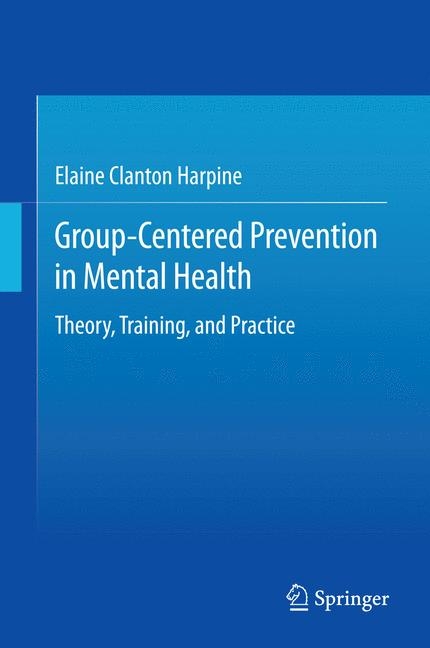
Group-Centered Prevention in Mental Health (eBook)
165 Seiten
Springer International Publishing (Verlag)
978-3-319-19102-7 (ISBN)
This book presents the concept of group-centered prevention and provides explanations and exercises for learning the method and teaching it to others. Detailed studies offer evidence for the continuing importance of prevention in mental well-being and distinguishes group-centered prevention from other group interventions by its ability to resolve incipient mental health issues and emotional problems. Case examples with adults, children, couples, and others demonstrate successful uses of group-centered techniques as well as illustrate the problems that arise in group settings. The book's ready-to-apply training exercises give prospective group leaders practice in starting new groups, fostering cohesion, integrating therapeutic factors into sessions, and other core skills.
Featured topics include:
- Group-centered prevention in contrast with other group interventions.
- Characteristics of effective leaders in group-centered prevention.
- Benefits of prevention groups as opposed to those gained in counseling and therapy.
- Key constructs of self-efficacy and intrinsic motivation in group-centered prevention.
- Stages of development in new groups.
- Formats for developing training exercises.
Group-Centered Prevention in Mental Health is an essential resource for scientist-practitioners, clinicians, and researchers as well as graduate students in such disciplines as school psychology, social work, and public health. Its educational uses span classroom, workshop, and training settings across the health and healing disciplines.
Elaine Clanton Harpine, Ph.D., is a motivational psychologist specializing in group-centered motivational program design. She has 43 years of experience designing and conducting motivational prevention programs for children and youth. Dr. Clanton Harpine earned her doctorate in Educational Psychology, Counseling from the University of Illinois, Urbana-Champaign.
Her research for the past 13 years has focused on using group-centered interventions with at-risk readers. Dr. Clanton Harpine designed the motivational reading program called, Camp Sharigan, which she has used extensively in her work and research. She also designed the Reading Orienteering Club after-school prevention program and 4-Step Method for teaching at-risk children to read. Her research with these programs has been published in psychological journals and reported through presentations at the American Psychological Association's annual conventions.
In recent years, Dr. Clanton Harpine has been teaching Group Therapy and Counseling, Lifespan Development and Human Growth and Development at the University of South Carolina Aiken and is continuing her research with group-centered prevention. She is the editor for the 'Prevention Corner' column, which appears quarterly in The Group Psychologist. She was selected for inclusion in Who's Who of American Women, 2006-2014, for her work with children in inner-city neighborhoods and at-risk communities.
Elaine Clanton Harpine, Ph.D., is a motivational psychologist specializing in group-centered motivational program design. She has 43 years of experience designing and conducting motivational prevention programs for children and youth. Dr. Clanton Harpine earned her doctorate in Educational Psychology, Counseling from the University of Illinois, Urbana-Champaign.Her research for the past 13 years has focused on using group-centered interventions with at-risk readers. Dr. Clanton Harpine designed the motivational reading program called, Camp Sharigan, which she has used extensively in her work and research. She also designed the Reading Orienteering Club after-school prevention program and 4-Step Method for teaching at-risk children to read. Her research with these programs has been published in psychological journals and reported through presentations at the American Psychological Association's annual conventions.In recent years, Dr. Clanton Harpine has been teaching Group Therapy and Counseling, Lifespan Development and Human Growth and Development at the University of South Carolina Aiken and is continuing her research with group-centered prevention. She is the editor for the “Prevention Corner” column, which appears quarterly in The Group Psychologist. She was selected for inclusion in Who’s Who of American Women, 2006-2014, for her work with children in inner-city neighborhoods and at-risk communities.
Chapter 1. What Is Group-Centered Prevention?.- Chapter 2. What Is the Role of Group Dynamics?.- Chapter 3. Why Is Group Process Important in Group Prevention?.- Chapter 4. How Can a Group Best Achieve Cohesive Group Interaction?.- Chapter 5. Are Prevention Groups Therapeutic?.- Chapter 6. Is Intrinsic Motivation Better Than Extrinsic Motivation?.- Chapter 7. Is Self-Efficacy More Important than Self-Esteem?.- Chapter 8. Are There Stages of Development with a New Group?.- Chapter 9. What Kind of Training does a Group-Centered Preventionist Need?.
| Erscheint lt. Verlag | 21.7.2015 |
|---|---|
| Zusatzinfo | XVII, 165 p. 1 illus. |
| Verlagsort | Cham |
| Sprache | englisch |
| Themenwelt | Geisteswissenschaften |
| Medizin / Pharmazie ► Medizinische Fachgebiete ► Psychiatrie / Psychotherapie | |
| Sozialwissenschaften ► Pädagogik ► Sozialpädagogik | |
| Schlagworte | Assigned character roles in group-centered prevention • Cohesive group interaction • Community-based conflict prevention • Effective interactions in group-centered prevention • Extrinsic motivation in group-centered prevention • Group-centered prevention and marriage counseling • Group centered prevention in family settings • Group centered prevention in health and medical settings • Group-centered prevention in school settings • Group-centered prevention training for counselors • Group process and group prevention • Intrinsic motivation in group-centered prevention • Leadership in group-centered prevention • Learning and counseling in group-centered prevention • Monopolizing members in group-centered prevention • Reluctant members in group-centered prevention • Self-efficacy in group-centered prevention • Self-esteem in group-centered prevention • Therapeutic factors in group-centered prevention • Uncooperative members in group-centered prevention |
| ISBN-10 | 3-319-19102-0 / 3319191020 |
| ISBN-13 | 978-3-319-19102-7 / 9783319191027 |
| Informationen gemäß Produktsicherheitsverordnung (GPSR) | |
| Haben Sie eine Frage zum Produkt? |
 PDF (Wasserzeichen)
DRM: Digitales Wasserzeichen
Dieses eBook enthält ein digitales Wasserzeichen und ist damit für Sie personalisiert. Bei einer missbräuchlichen Weitergabe des eBooks an Dritte ist eine Rückverfolgung an die Quelle möglich.
Dateiformat: PDF (Portable Document Format)
Mit einem festen Seitenlayout eignet sich die PDF besonders für Fachbücher mit Spalten, Tabellen und Abbildungen. Eine PDF kann auf fast allen Geräten angezeigt werden, ist aber für kleine Displays (Smartphone, eReader) nur eingeschränkt geeignet.
Systemvoraussetzungen:
PC/Mac: Mit einem PC oder Mac können Sie dieses eBook lesen. Sie benötigen dafür einen PDF-Viewer - z.B. den Adobe Reader oder Adobe Digital Editions.
eReader: Dieses eBook kann mit (fast) allen eBook-Readern gelesen werden. Mit dem amazon-Kindle ist es aber nicht kompatibel.
Smartphone/Tablet: Egal ob Apple oder Android, dieses eBook können Sie lesen. Sie benötigen dafür einen PDF-Viewer - z.B. die kostenlose Adobe Digital Editions-App.
Buying eBooks from abroad
For tax law reasons we can sell eBooks just within Germany and Switzerland. Regrettably we cannot fulfill eBook-orders from other countries.
aus dem Bereich