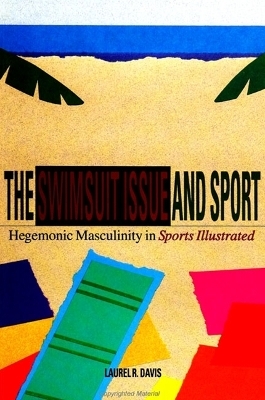
The Swimsuit Issue and Sport
State University of New York Press (Verlag)
978-0-7914-3391-1 (ISBN)
- Titel ist leider vergriffen;
keine Neuauflage - Artikel merken
This study of the Sports Illustrated swimsuit issue demonstrates how the magazine encourages individual and institutional practices that create and maintain inequality. Laurel Davis illustrates how the interactions of media production, media texts, media consumption, and social context influence meaning. Individuals' interpretations of and reactions to the magazine are influenced by their views about gender and sexuality, views that have been shaped by their social experiences. Based on extensive interviews with Sports Illustrated producers and consumers, as well as analysis of every swimsuit issue from the first in 1964 to those of the 1990s, the book argues that Sports Illustrated uses the swimsuit issue to secure a large male audience by creating a climate of hegemonic masculinity. This practice produces considerable profit but on the way to the bank tramples women, gays, lesbians, people of color, and residents of the postcolonialized world.
Laurel R. Davis is Assistant Professor of Sociology at Springfield College.
Acknowledgments
Chapter 1 Introduction
Feminist Analysis with a Twist
Studying the Mass Media
Getting at the Meaning of the Swimsuit Issue
Chapter 2 Sports Illustrated's Swimsuit Issue: The Rise To Popularity And Profitability
History of the Swimsuit Issue
Popularity of the Swimsuit Issue
Profitability of the Swimsuit Issue
Chapter 3 The Basic Content: "Ideally Beautiful And Sexy Women For Men"
The Basic Content: Ideal Women's Bodies
The Ideal Readers: Men
Denotative versus Connotative Level Meaning
Factors That Encourage Denotative Level Consensus
Recognizing the Power of Producers and the Text
Chapter 4 The Struggle Over Public Sexuality
Debating the Degree of Sexual Meaning
Debating the Morality of Public Displays of Sexuality
Chapter 5 A Vehicle For Public Declarations of Heterosexual Identity
It's about Heterosexuality
Securing Heterosexual Status through Consumption
Using Heterosexual Status to Secure Masculine Status
Chapter 6 Profiting From The Masculinity Crisis
The Masculinity Crisis and Response to the Crisis
Fashioning Sports Illustrated as a Men's Magazine
Critiques of the Sports Illustrated Strategy
Chapter 7 The Struggle Over Gender
Men Who Identify with Hegemonic Masculinity
Women Who Identify with Hegemonic Femininity
Men Who Do Not Identify with Hegemonic Masculinity
Feminists Who Criticize Hegemonic Masculinity and Femininity
Backlash against the Feminist Readings
Chapter 8 Hegemonic Masculinity Built On The Backs Of People Of Color
Racism as a Central Component of Hegemonic Femininity
Racism as a Central Component of Hegemonic Masculinity
Chapter 9 Hegemonic Masculinity Built On The Backs Of "The (Post)Colonialized Other"
The Hegemonic Masculine Subject as Actual and Media Tourist
"The (Post)Colonialized Other" as Exotic Spectacle for the Hegemonic Masculine Subject
The Hegemonic Masculine Subject as Colonizer of "the (Post)Colonialized Other"
Chapter 10 Conclusion
Appendix A Sports Illustrated's Swimsuit Issues (From 1964 To 1991 And 1996)
Appendix B Non-Academic Media Material Related To The Swimsuit Issues
Appendix C Interview Schedules For Producers, Consumers, And Librarians
Appendix D Recruitment Of, And Information About, The Interviewed Producers And Consumers
Notes
References
Index
| Erscheint lt. Verlag | 6.3.1997 |
|---|---|
| Reihe/Serie | SUNY series on Sport, Culture, and Social Relations |
| Verlagsort | Albany, NY |
| Sprache | englisch |
| Gewicht | 417 g |
| Themenwelt | Sozialwissenschaften ► Ethnologie |
| Sozialwissenschaften ► Soziologie | |
| ISBN-10 | 0-7914-3391-9 / 0791433919 |
| ISBN-13 | 978-0-7914-3391-1 / 9780791433911 |
| Zustand | Neuware |
| Informationen gemäß Produktsicherheitsverordnung (GPSR) | |
| Haben Sie eine Frage zum Produkt? |
aus dem Bereich