


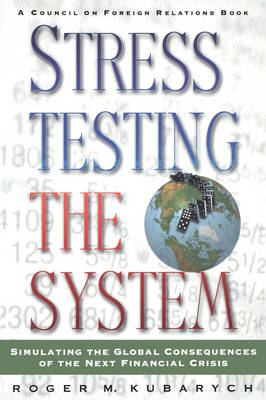
Stress Testing the System
Seiten
2001
Brookings Institution (Verlag)
978-0-87609-271-2 (ISBN)
Brookings Institution (Verlag)
978-0-87609-271-2 (ISBN)
In January 2000, the Council on Foreign Relations Project on Financial Vulnerabilities conducted a simulation in which a crisis envelops financial markets around the world. This book describes the simulation - how it worked, what was decided and its implications for real-world policymaking.
What if you took seventy-five of the most experienced professionals in the fields of finance, economics, foreign policy, and national security and confronted them with two dozen policy problems triggered by a massive contraction in the stock markets? That is the premise of Stress Testing the System: Simulating the Global Consequences of the Next Financial Crisis. Based on a policy simulation that was conducted before the September 11,2001 attacks and is now even more relevant, Council Fellow Roger Kubarych draws several key lessons: government policymakers need to dedicate time and resources to identifying the principal vulnerabilities of financial and political systems-and anticipating their possible consequences. While it won't help them predict a crisis, playing out a variety of low-probability, high-cost events will leave leaders better prepared when one occurs. Kubarych notes that policymakers' first priority in a financial crisis is to stabilize markets-all other problems are subordinate.
This book is more than a revealing account of the lessons and implications of time- and crisis-pressured decision making: it is an instructive guide to organizing business and financial "war-gaming." Kubarych provides an insider's look at the collaboration among great minds that led to a successfully crafted scenario played out with real-world accuracy.
What if you took seventy-five of the most experienced professionals in the fields of finance, economics, foreign policy, and national security and confronted them with two dozen policy problems triggered by a massive contraction in the stock markets? That is the premise of Stress Testing the System: Simulating the Global Consequences of the Next Financial Crisis. Based on a policy simulation that was conducted before the September 11,2001 attacks and is now even more relevant, Council Fellow Roger Kubarych draws several key lessons: government policymakers need to dedicate time and resources to identifying the principal vulnerabilities of financial and political systems-and anticipating their possible consequences. While it won't help them predict a crisis, playing out a variety of low-probability, high-cost events will leave leaders better prepared when one occurs. Kubarych notes that policymakers' first priority in a financial crisis is to stabilize markets-all other problems are subordinate.
This book is more than a revealing account of the lessons and implications of time- and crisis-pressured decision making: it is an instructive guide to organizing business and financial "war-gaming." Kubarych provides an insider's look at the collaboration among great minds that led to a successfully crafted scenario played out with real-world accuracy.
| Erscheint lt. Verlag | 1.8.2001 |
|---|---|
| Zusatzinfo | Illustrations |
| Verlagsort | Washington DC |
| Sprache | englisch |
| Maße | 229 x 152 mm |
| Gewicht | 312 g |
| Themenwelt | Sozialwissenschaften ► Politik / Verwaltung ► Staat / Verwaltung |
| Wirtschaft ► Volkswirtschaftslehre ► Finanzwissenschaft | |
| Wirtschaft ► Volkswirtschaftslehre ► Makroökonomie | |
| ISBN-10 | 0-87609-271-7 / 0876092717 |
| ISBN-13 | 978-0-87609-271-2 / 9780876092712 |
| Zustand | Neuware |
| Informationen gemäß Produktsicherheitsverordnung (GPSR) | |
| Haben Sie eine Frage zum Produkt? |
Mehr entdecken
aus dem Bereich


aus dem Bereich
Organisationen steuern, Strukturen schaffen, Prozesse gestalten
Buch | Softcover (2024)
Rehm Verlag
CHF 53,20


