


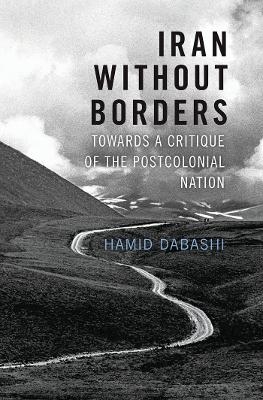
Iran Without Borders
Towards a Critique of the Postcolonial Nation
Seiten
2016
Verso Books (Verlag)
978-1-78478-068-5 (ISBN)
Verso Books (Verlag)
978-1-78478-068-5 (ISBN)
- Titel z.Zt. nicht lieferbar
- Portofrei ab CHF 40
- Auch auf Rechnung
- Artikel merken
A history of the cosmopolitan forces that made contemporary Iran
"No ruling regime," writes Hamid Dabashi, "could ever have a total claim over the idea of Iran as a nation, a people." For decades, the narrative about Iran has been dominated by a false binary, in which the traditional ruling Islamist regime is counterposed to a modern population of educated, secular urbanites. However, Iran has for many centuries been a nation forged from a diverse mix of influences, most of them non-sectarian and cosmopolitan.
In Iran Without Borders, the acclaimed cultural critic and scholar of Iranian history Hamid Dabashi traces the evolution of this worldly culture from the eighteenth century to the present day, journeying through social and intellectual movements, and the lives of writers, artists and public intellectuals who articulated the idea of Iran on a transnational public sphere. Many left their homeland-either physically or emotionally-and imagined it from places as far-flung as Istanbul, Cairo, Calcutta, Paris, or New York, but together they forged a nation as worldly as it is multifarious.
"No ruling regime," writes Hamid Dabashi, "could ever have a total claim over the idea of Iran as a nation, a people." For decades, the narrative about Iran has been dominated by a false binary, in which the traditional ruling Islamist regime is counterposed to a modern population of educated, secular urbanites. However, Iran has for many centuries been a nation forged from a diverse mix of influences, most of them non-sectarian and cosmopolitan.
In Iran Without Borders, the acclaimed cultural critic and scholar of Iranian history Hamid Dabashi traces the evolution of this worldly culture from the eighteenth century to the present day, journeying through social and intellectual movements, and the lives of writers, artists and public intellectuals who articulated the idea of Iran on a transnational public sphere. Many left their homeland-either physically or emotionally-and imagined it from places as far-flung as Istanbul, Cairo, Calcutta, Paris, or New York, but together they forged a nation as worldly as it is multifarious.
Hamid Dabashi is the Hagop Kevorkian Professor of Iranian Studies and Comparative Literature at Columbia University. He is the author of, among other works, Iran: A People Interrupted.
| Erscheint lt. Verlag | 9.8.2016 |
|---|---|
| Verlagsort | London |
| Sprache | englisch |
| Maße | 140 x 210 mm |
| Gewicht | 440 g |
| Themenwelt | Sachbuch/Ratgeber ► Geschichte / Politik ► Allgemeines / Lexika |
| Geschichte ► Allgemeine Geschichte ► Neuzeit (bis 1918) | |
| Geisteswissenschaften ► Geschichte ► Regional- / Ländergeschichte | |
| Sozialwissenschaften ► Politik / Verwaltung | |
| Sozialwissenschaften ► Soziologie ► Spezielle Soziologien | |
| ISBN-10 | 1-78478-068-5 / 1784780685 |
| ISBN-13 | 978-1-78478-068-5 / 9781784780685 |
| Zustand | Neuware |
| Informationen gemäß Produktsicherheitsverordnung (GPSR) | |
| Haben Sie eine Frage zum Produkt? |
Mehr entdecken
aus dem Bereich



aus dem Bereich
Geschichte einer wilden Handlung
Buch | Hardcover (2024)
C.H.Beck (Verlag)
CHF 47,60


