


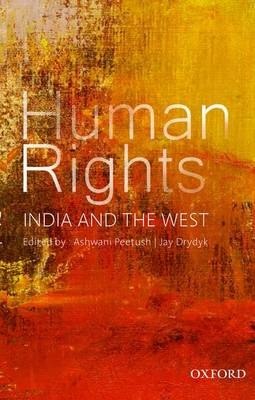
Human Rights
India and the West
Seiten
2015
OUP India (Verlag)
978-0-19-945352-8 (ISBN)
OUP India (Verlag)
978-0-19-945352-8 (ISBN)
The subject of human rights in a pluralistic world is critical. Drawing on the vast traditions of India and the West, this volume is unique in providing interdisciplinary essays that range from theoretical, philosophical, normative, social, legal, and political issues in the conceptualization and application of a truly global understanding of human rights.
The idea of human rights has raised both hope and concern. The hope is for universality, that every person matters, and matters equally, and therefore that everyone has equal rights. The concern is that human rights are a Trojan horse concealing implicit attacks on non-Western cultures and values. Even though a delegate from India was included in the committee that drafted the Universal Declaration of Human Rights, Western thinking was regarded as the paradigm, and only a minority of the countries that now exist voted on the Declaration in 1948.
An important contribution to resolving this conflict can be made by exploring the insights and rich resources offered for an intercultural understanding of human rights that come from India.
This volume offers pioneering essays that approach the question from theoretical, social, legal and political perspectives, contributing to a global understanding of human rights. The contributors develop new methodologies for examining what all may learn- including the West from Indian articulations of human rights.
The idea of human rights has raised both hope and concern. The hope is for universality, that every person matters, and matters equally, and therefore that everyone has equal rights. The concern is that human rights are a Trojan horse concealing implicit attacks on non-Western cultures and values. Even though a delegate from India was included in the committee that drafted the Universal Declaration of Human Rights, Western thinking was regarded as the paradigm, and only a minority of the countries that now exist voted on the Declaration in 1948.
An important contribution to resolving this conflict can be made by exploring the insights and rich resources offered for an intercultural understanding of human rights that come from India.
This volume offers pioneering essays that approach the question from theoretical, social, legal and political perspectives, contributing to a global understanding of human rights. The contributors develop new methodologies for examining what all may learn- including the West from Indian articulations of human rights.
Ashwani Peetush is Associate Professor of Philosophy at Wilfrid Laurier University in Waterloo, Ontario. Jay Drydyk is Professor of Philosophy at Carleton University, Ottawa.
PART I THEORETICAL ISSUES; SONIA SIKKA; NIGEL DESOUZA; JAY DRYDYK; SUMI MADHOK; PART II NORMATIVE SOURCES AND INTELLECTUAL TRADITIONS; SHASHI MOTILAL; GORDON DAVIS; SHYAM RANGANATHAN; ASHWANI PEETUSH; PART III SOCIAL PRACTICES AND APPLIED CONTEXTS; BINDU PURI; GOPIKA SOLANKI; AMAR KHODAY; NIRAJA GOPAL JAYAL
| Zusatzinfo | 9 maps |
|---|---|
| Verlagsort | New Delhi |
| Sprache | englisch |
| Maße | 149 x 225 mm |
| Gewicht | 530 g |
| Themenwelt | Recht / Steuern ► EU / Internationales Recht |
| Recht / Steuern ► Öffentliches Recht ► Verfassungsrecht | |
| Sozialwissenschaften ► Politik / Verwaltung | |
| ISBN-10 | 0-19-945352-7 / 0199453527 |
| ISBN-13 | 978-0-19-945352-8 / 9780199453528 |
| Zustand | Neuware |
| Informationen gemäß Produktsicherheitsverordnung (GPSR) | |
| Haben Sie eine Frage zum Produkt? |
Mehr entdecken
aus dem Bereich


aus dem Bereich
Staatsrecht, Verwaltungsrecht, Verwaltungsprozessrecht und …
Buch | Softcover (2025)
Vahlen (Verlag)
CHF 51,65
Buch | Softcover (2025)
Alpmann und Schmidt (Verlag)
CHF 17,95


