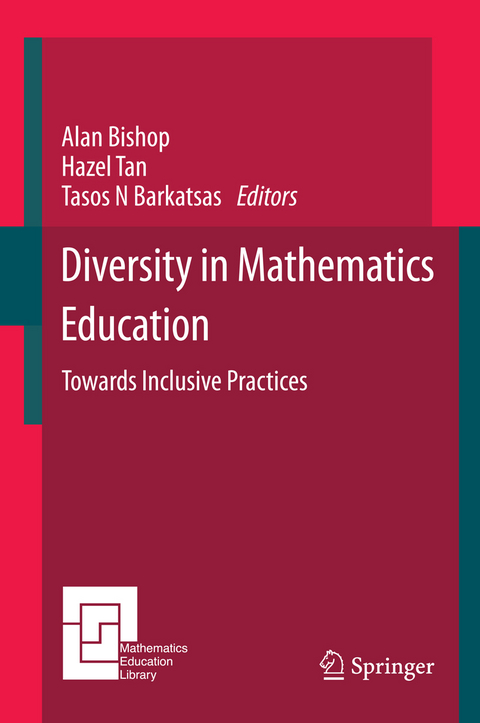
Diversity in Mathematics Education (eBook)
XVIII, 262 Seiten
Springer International Publishing (Verlag)
978-3-319-05978-5 (ISBN)
This book presents a research focus on diversity and inclusivity in mathematics education. The challenge of diversity, largely in terms of student profiles or contextual features, is endemic in mathematics education, and is often argued to require differentiation as a response. Typically different curricula, text materials, task structures or pedagogies are favoured responses, but huge differences in achievement still result. If we in mathematics education seek to challenge that status quo, more research must be focussed not just on diversity but also on the inclusivity, of practices in mathematics education.
The book is written by a group of experienced collaborating researchers who share this focus. It is written for researchers, research students, teachers and in-service professionals, who recognise both the challenges but also the opportunities of creating and evaluating new inclusive approaches to curriculum and pedagogy - ones that take for granted the positive values of diversity. Several chapters report new research in this direction.
The authors are part of, or have visited with, the mathematics education staff of the Faculty of Education at Monash University, in Melbourne, Australia. The chapters all focus on the ideas of development in both research and practice, recognising that the current need is for new inclusive approaches. The studies presented are set in different contexts, including Australia, China, the United States, and Singapore.
Emeritus Professor Alan Bishop was Professor of Education and Associate Dean at Monash University between 1992-2002 after spending the earlier part of his life in the UK. He edited (from 1978 to 1990) the international research journal Educational Studies in Mathematics, published by Kluwer (now Springer), and he is Managing Editor of the research book series Mathematics Education Library, also published by Springer (1980 - present). He was the Chief Editor of two International Handbooks of Mathematics Education (1996 and 2002) published by Springer, and joint Editor of the Third International Handbook of Mathematics Education (2012) also published by Springer. He was the sole Editor of the Handbook on Mathematics Education, published by Routledge (2003).
Hazel Tan is a lecturer in the Faculty of Education at Monash University. She has recently completed her PhD investigating factors influencing senior secondary mathematics students' interactions with advanced calculators. She has taught senior secondary mathematics for many years, and was the Head of Mathematics Department in a Singaporean school. Hazel has also worked in the Educational Technology Division of Singapore's Ministry of Education, spearheading the pedagogical use of technologies in education. Her research interests are in the area of teaching and learning secondary mathematics with technologies and related teacher education, comparative education and gender issues in mathematics education.
Anastasios N. Barkatsas is a Senior Lecturer, Master of Teaching Practice (Secondary) Program Manager and Graduate Diploma in Education (Primary) Program Director, at the School of Education, RMIT University, Australia. He has been a Senior Research Fellow at the Centre for Educational Research of the Hellenic Republic (Greece) and a Senior Research Fellow at the Pedagogical Institute (now the Institute for Educational Policy) of the Hellenic Republic. He has also been a Visiting Scholar and Adjunct Professor at the National University of Athens. Dr Barkatsas was the Statistical Advisor for Higher Degrees by Research at the Faculty of Education, Monash University, 2011-2013 and he is interested in applications of multivariate statistics in education. He is currently the Chief Quantitative Analyst for the WIFI study of the 'Third Wave Project', an international research consortium which coordinates research studies into the harnessing of values in mathematics education. Dr Barkatsas has also been Head of Mathematics, Science and IT, Head of Curriculum, Deputy Principal and Acting Principal in various secondary Colleges in Melbourne. Dr Barkatsas has published numerous international journal articles, books, book chapters, and refereed conference papers. He is an Editorial Board member and Special Quantitative Research and Statistical Modelling Advisor, Journal of International Research in Early Childhood Education (IRECE) and an Editorial Board Member, GAZI Journal of Education (GAZIJE).
Emeritus Professor Alan Bishop was Professor of Education and Associate Dean at Monash University between 1992-2002 after spending the earlier part of his life in the UK. He edited (from 1978 to 1990) the international research journal Educational Studies in Mathematics, published by Kluwer (now Springer), and he is Managing Editor of the research book series Mathematics Education Library, also published by Springer (1980 - present). He was the Chief Editor of two International Handbooks of Mathematics Education (1996 and 2002) published by Springer, and joint Editor of the Third International Handbook of Mathematics Education (2012) also published by Springer. He was the sole Editor of the Handbook on Mathematics Education, published by Routledge (2003).Hazel Tan is a lecturer in the Faculty of Education at Monash University. She has recently completed her PhD investigating factors influencing senior secondary mathematics students’ interactions with advanced calculators. She has taught senior secondary mathematics for many years, and was the Head of Mathematics Department in a Singaporean school. Hazel has also worked in the Educational Technology Division of Singapore’s Ministry of Education, spearheading the pedagogical use of technologies in education. Her research interests are in the area of teaching and learning secondary mathematics with technologies and related teacher education, comparative education and gender issues in mathematics education.Anastasios N. Barkatsas is a Senior Lecturer, Master of Teaching Practice (Secondary) Program Manager and Graduate Diploma in Education (Primary) Program Director, at the School of Education, RMIT University, Australia. He has been a Senior Research Fellow at the Centre for Educational Research of the Hellenic Republic (Greece) and a Senior Research Fellow at the Pedagogical Institute (now the Institute for Educational Policy) of the Hellenic Republic. He has also been a Visiting Scholar and Adjunct Professor at the National University of Athens. Dr Barkatsas was the Statistical Advisor for Higher Degrees by Research at the Faculty of Education, Monash University, 2011-2013 and he is interested in applications of multivariate statistics in education. He is currently the Chief Quantitative Analyst for the WIFI study of the ‘Third Wave Project’, an international research consortium which coordinates research studies into the harnessing of values in mathematics education. Dr Barkatsas has also been Head of Mathematics, Science and IT, Head of Curriculum, Deputy Principal and Acting Principal in various secondary Colleges in Melbourne. Dr Barkatsas has published numerous international journal articles, books, book chapters, and refereed conference papers. He is an Editorial Board member and Special Quantitative Research and Statistical Modelling Advisor, Journal of International Research in Early Childhood Education (IRECE) and an Editorial Board Member, GAZI Journal of Education (GAZIJE).
Introduction to the Book 6
Contents 9
Contributors 11
Author Biographies 12
Part-I 18
Surveying the Territory 18
Chapter 1 19
The Challenge of Reporting Research to Inform the Creation of Inclusive Mathematics Learning Environments 19
Introduction 19
A Perspective on the Numeracy and Mathematics that Students Might Learn 20
Examining Advice About Inclusiveness Drawn from a Particular Context 23
Making Specific Recommendations About Mathematics Education Pedagogy 25
Recognising the Challenges in such Advice 28
Conclusion 29
References 30
Chapter 2 32
Large-Scale Test Data: Making the Invisible Visible 32
Introduction 32
Early Developments 33
The USA 33
Australia 33
More about NAEP and NAPLAN 33
NAEP 33
Reporting NAEP Data 34
NAPLAN 34
Reporting the Data 35
Beyond NAEP and NAPLAN 35
Comparing the Design of NAPLAN, NAEP, TIMSS, and PISA 36
NAPLAN 36
NAEP 36
TIMSS and PISA 36
National Tests: Intended Benefits 37
Australia 37
USA 37
National Tests: Critics’ Concerns 38
What can be Learned from the NAPLAN and NAEP Tests? 38
Achievement in Mathematics Over Time 39
Main NAEP Results 1990–2011 39
Main NAPLAN Results for 2008–2012 40
Achievement in Mathematics of Different Student Groups 41
NAEP Achievement by Race/Ethnicity and Sex 41
NAPLAN Achievement by Sex, Language, and Indigeneity 42
Language Background 42
Boys/Girls 43
Indigeneity 44
Performance Differences on Items 45
Beyond Achievement—National Data on Affect and Instruction 47
Delving Further—Gender and Mathematics Confidence, Interest, and Achievement 48
The Limits of Large-Scale Assessments 49
Increasing the Usability of Datasets in Mathematics Education Research 50
What can Practitioners, Curriculum Developers, and Educational Systems Apply? 50
Set Clear Instructional Targets 50
Advance Mathematics Education Reform 51
Promote Equity Through Accountability 51
What can Researchers Apply? 51
Monitor Education Policy and Reform 51
Understand Relationships Between Student Opportunities and Outcomes 52
Inform Interventions 52
Counter Deficit Perspectives 53
Future Directions 53
References 54
Chapter 3 56
Impact of Geographical Location on Student Achievement: Unpacking the Complexity of Diversity 56
Introduction 56
The Australian Context 57
Impact of Geographical Location on Student Achievement 58
Factors Impacting Diversity Across Location 64
Attraction and Retention of Qualified Mathematics Teachers 66
Professional Development Opportunities 67
Student Learning Experiences 69
Composite Classes 70
Enhancing Greater Inclusivity 71
School Practices 71
Teacher Access to Professional Learning Communities 72
Concluding Comments 74
References 75
Chapter 4 77
Learners’ Preferred Mathematical Task Types: The Values Perspective 77
Introduction 77
Values 78
Mathematical Tasks 79
Research Design 81
Results and Discussion 82
Concluding Remarks 88
Appendix 1 90
Appendix 2 92
References 92
Chapter 5 94
Gender and Technology: A Case of Graphics Calculators in the Singaporean Mathematics Curriculum Context 94
Introduction 94
Background on Singaporean Mathematics Education Context 95
Calculator and Technology Use in Singaporean Mathematics Education 97
Gender Studies of Mathematics Education in Singapore 98
How Students Learn How to Use Technology 99
Methodology 101
Description of the Instrument 101
Measuring Students’ Mathematics and GC Competency Self-Ratings 101
Measuring Students’ Confidence of GC 102
Measuring Students’ Most-preferred Method of Learning How to Use the GC 102
Sample 104
Data Analyses 104
Analysis and Discussion 104
Students’ Mathematics and GC Competencies, and GC Confidence and Gender Differences 104
Students’ Most-Preferred Methods of Learning How to Use the GC, and Gender Differences 104
Students’ Perceived Usefulness of the Methods of Learning How to Use the GC 106
Implications and Conclusions 110
Are Students’ Learning Needs with Regard to GCs not Met? 110
Are There Higher Proportions of Female Students’ Needs not Met, Compared to Males? 111
What Kinds of Questions Should We Ask About Gender and Technology that Help Us to be More Inclusive? 111
References 113
Chapter 6 116
Surveying the Public: Revisiting Mathematics and English Stereotypes 116
Introduction 116
Explanations for Gender Differences in Performance in Mathematics 117
Additional Context for the Study 118
Mathematics and English Achievement 118
Generational Differences 119
Societal Expectations: Public Views about Mathematics and English 119
Canvassing Views from the General Public 120
Our Survey 121
Results 121
The Samples 121
Questions 1 and 2 122
Question 3: Who Are Better at Mathematics/English, Girls or Boys? 123
Explanations for “Who are Better at Mathematics”? 124
Explanations for “Who are Better at English”? 125
Question 4: Should Students Study Mathematics When No Longer Compulsory/Should Studying English be compulsory? 125
Explanations for Studying Mathematics When it is No Longer Compulsory 125
Explanations for Studying English to Be Compulsory 126
Questions 5 and 6 126
Explanations for Respondents Believing that Teachers Consider Boys to Be Better at Mathematics 127
Explanations from Those Respondents Believing that Teachers Consider Girls to Be Better at Mathematics 127
Explanations from Respondents Who Believed that Teachers Would Say that Girls are Better at English 127
Question 7: Is it More Important for Girls or Boys to Study Mathematics/to Be Good at English? 128
Questions 8 and 9: Questions Common to Both Surveys 129
Explanations for “Who Are Better at Computers, Boys or Girls? 130
Explanations for “Who Are More Suited to Working in the Computer Industry?” 131
Concluding Comments 132
References 133
Chapter 7 135
Commentary for Section 1: Linking Research and Practice in School Mathematics 135
References 138
Part II 139
Interrogating the Boundaries 139
Chapter 8 140
Diversity, Inclusion and Equity in Mathematics Classrooms: From Individual Problems to Collective Possibility 140
Introduction 140
Diversity and Equity 141
The Focus on the Individual Learner 142
Policy and Curriculum 144
Curriculum: Fact, Activity or Inquiry? 146
From Collectives to Communities 147
Building Learning Communities 150
Relational and Attentive Listening: The Key to Learning Communities? 152
References 154
Chapter 9 157
Ethics and the Challenges for Inclusive Mathematics Teaching 157
Introduction 157
Impetus for Writing about Ethics and Mathematics Learning 159
Helen’s Story 159
Jen’s Story 160
Carly’s Story 161
Philosophical and Psychological Antecedents of Ethical Development 162
Critical Mathematics Education: Democracy, Ethics and Morality, and Social Justice in the Mathematics Classroom 166
Classroom Opportunities to Incorporate Ethical Understanding 168
Financial Literacy Examples 168
Examples from other Mathematics Content Domains 170
Final Words 172
References 173
Chapter 10 176
Valuing Diversity in Mathematics Pedagogy Through the Volitional Nature and Alignment of Values 176
Introduction 176
Valuing in Mathematics Learning and Teaching 177
Values through Mathematics 178
Mathematics Through Values 179
Volitional Nature of Values 182
Values: Motivation or Will? 183
The Significance of Valuing When Facilitating Mathematics Learning and Teaching 184
Values Alignment in the Mathematics Classroom 185
Concluding Ideas 188
References 189
Chapter 11 193
Commentary For Section 2: Inclusive Practices in Mathematics Teaching—The Need for Noticing and Producing Relevant Differences 193
References 197
Part III 198
Towards Inclusive Practices 198
Chapter 12 199
(Dis)engagement and Exclusion in Mathematics Classrooms—Values, Labelling and Stereotyping 199
Introduction to Two ‘Disengaged’ Students 199
Introduction to This Chapter 199
Research on (Dis)engagement 200
(Dis)engagement and the Individual Learner 201
(Dis)engagement and the Ecosystem of the Student 202
Values, Beliefs and (Dis)engagement 203
Labelling, Stereotyping and Significant Others 206
A Relevant Research Study—Into the Classroom 208
Tom’s Interviews and Classroom Episodes 209
Matthew’s Interviews and Classroom Episodes 211
Implications for Research 214
Implications for Practice 215
Appendix 1 218
References 220
Chapter 13 224
Capturing Diversity in the Classroom: Uncovering Patterns of Difficulty with Simple Addition 224
Proficiency with Simple Addition 225
How Proficiency Develops 226
When Proficiency Develops 227
Capturing Diversity in Simple Addition Performance 228
Procedure 228
Results: Study 1 229
Results: Study 2 232
Results: Study 3 235
Discussion 235
Appendix 239
References 240
Chapter 14 243
Maximising Opportunities in Mathematics for All Students: Addressing Within-School and Within-Class Differences 243
Introduction 243
Aspirations for Education in Australia and the Australian Curriculum 243
Challenges Facing Australian Schools in Maximising Opportunities for All 245
Between- and Within-School Differences 246
Accommodating the Diversity of Readiness in School and Classroom Grouping Structures 246
Self-Fulfilling Prophesy Effects 249
Further Data on the Diversity in Classrooms 251
A Model of Teaching to Address Differences in the Preparedness of the Students 252
An Illustrative Example of Such Teaching 254
Introduction 254
Task 1: Writing a Sentence 254
Task 2: Fishing 255
Conclusion 255
References 256
Chapter 15 258
Commentary for Section 3: From Diversity to Practices: Addressing, Redressing and Taking Action 258
References 262
Index 263
| Erscheint lt. Verlag | 20.9.2014 |
|---|---|
| Reihe/Serie | Mathematics Education Library | Mathematics Education Library |
| Zusatzinfo | XVIII, 262 p. 32 illus., 15 illus. in color. |
| Verlagsort | Cham |
| Sprache | englisch |
| Themenwelt | Geisteswissenschaften |
| Sozialwissenschaften ► Pädagogik ► Schulpädagogik / Grundschule | |
| Schlagworte | Diversity as a Positive Resource • Gender and Technology • Geographical Location and Student Achievement • Inclusive Mathematics Learning Environments • Mathematics and English Stereotypes • Singaporean Mathematics |
| ISBN-10 | 3-319-05978-5 / 3319059785 |
| ISBN-13 | 978-3-319-05978-5 / 9783319059785 |
| Informationen gemäß Produktsicherheitsverordnung (GPSR) | |
| Haben Sie eine Frage zum Produkt? |
 PDF (Wasserzeichen)
DRM: Digitales Wasserzeichen
Dieses eBook enthält ein digitales Wasserzeichen und ist damit für Sie personalisiert. Bei einer missbräuchlichen Weitergabe des eBooks an Dritte ist eine Rückverfolgung an die Quelle möglich.
Dateiformat: PDF (Portable Document Format)
Mit einem festen Seitenlayout eignet sich die PDF besonders für Fachbücher mit Spalten, Tabellen und Abbildungen. Eine PDF kann auf fast allen Geräten angezeigt werden, ist aber für kleine Displays (Smartphone, eReader) nur eingeschränkt geeignet.
Systemvoraussetzungen:
PC/Mac: Mit einem PC oder Mac können Sie dieses eBook lesen. Sie benötigen dafür einen PDF-Viewer - z.B. den Adobe Reader oder Adobe Digital Editions.
eReader: Dieses eBook kann mit (fast) allen eBook-Readern gelesen werden. Mit dem amazon-Kindle ist es aber nicht kompatibel.
Smartphone/Tablet: Egal ob Apple oder Android, dieses eBook können Sie lesen. Sie benötigen dafür einen PDF-Viewer - z.B. die kostenlose Adobe Digital Editions-App.
Buying eBooks from abroad
For tax law reasons we can sell eBooks just within Germany and Switzerland. Regrettably we cannot fulfill eBook-orders from other countries.
aus dem Bereich