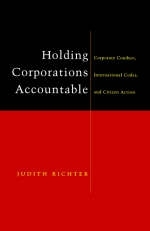
Holding Corporations Accountable (eBook)
256 Seiten
Zed Books (Verlag)
978-1-78360-266-7 (ISBN)
At a time when the gigantic transnationals have a huge impact on human health, the environment, working conditions and the economic prospects of nations, this book explores whether it is sufficient to continue to rely on industry self-regulation alone. Before widening her focus to the general issues, the author examines the now famous case of the infant food industry. Almost two decades after the introduction of the WHO/Unicef Code seeking to regulate the marketing of formula milk substitutes, an estimated one and a half million babies die unnecessarily every year as a result of formula feeding. How effective, therefore, has the Code been in changing industry behaviour? The author argues that a key question today is how to foster a political climate favourable to practical institutional arrangements for the better regulation of TNCs. Recognizing the tension between global governance on the one hand and the globalized free market on the other, she urges that close attention be given to corporate conduct and TNC compliance with what regulatory codes exist. A range of relevant questions is explored, including the roles of citizen action, national governments and international agencies. A host of public concerns - for example, job losses when industries migrate or the introduction of GM crops without public consultation - point to corporate regulation as a looming political issue. This book contributes to the debate about how powerful corporations can pay regard not only to the bottom line, but also take more seriously their social responsibilities.
At a time when the gigantic transnationals have a huge impact on human health, the environment, working conditions and the economic prospects of nations, this book explores whether it is sufficient to continue to rely on industry self-regulation alone.Before widening her focus to the general issues, the author examines the now famous case of the infant food industry. Almost two decades after the introduction of the WHO/Unicef Code seeking to regulate the marketing of formula milk substitutes, an estimated one and a half million babies die unnecessarily every year as a result of formula feeding. How effective, therefore, has the Code been in changing industry behaviour?The author argues that a key question today is how to foster a political climate favourable to practical institutional arrangements for the better regulation of TNCs. Recognizing the tension between global governance on the one hand and the globalized free market on the other, she urges that close attention be given to corporate conduct and TNC compliance with what regulatory codes exist. A range of relevant questions is explored, including the roles of citizen action, national governments and international agencies.A host of public concerns - for example, job losses when industries migrate or the introduction of GM crops without public consultation - point to corporate regulation as a looming political issue. This book contributes to the debate about how powerful corporations can pay regard not only to the bottom line, but also take more seriously their social responsibilities.
| Erscheint lt. Verlag | 10.4.2014 |
|---|---|
| Sprache | englisch |
| Themenwelt | Geisteswissenschaften |
| Naturwissenschaften | |
| Sozialwissenschaften ► Pädagogik | |
| Wirtschaft ► Betriebswirtschaft / Management ► Planung / Organisation | |
| Wirtschaft ► Volkswirtschaftslehre ► Makroökonomie | |
| ISBN-10 | 1-78360-266-X / 178360266X |
| ISBN-13 | 978-1-78360-266-7 / 9781783602667 |
| Informationen gemäß Produktsicherheitsverordnung (GPSR) | |
| Haben Sie eine Frage zum Produkt? |
 PDF (Adobe DRM)
Kopierschutz: Adobe-DRM
Adobe-DRM ist ein Kopierschutz, der das eBook vor Mißbrauch schützen soll. Dabei wird das eBook bereits beim Download auf Ihre persönliche Adobe-ID autorisiert. Lesen können Sie das eBook dann nur auf den Geräten, welche ebenfalls auf Ihre Adobe-ID registriert sind.
Details zum Adobe-DRM
Dateiformat: PDF (Portable Document Format)
Mit einem festen Seitenlayout eignet sich die PDF besonders für Fachbücher mit Spalten, Tabellen und Abbildungen. Eine PDF kann auf fast allen Geräten angezeigt werden, ist aber für kleine Displays (Smartphone, eReader) nur eingeschränkt geeignet.
Systemvoraussetzungen:
PC/Mac: Mit einem PC oder Mac können Sie dieses eBook lesen. Sie benötigen eine
eReader: Dieses eBook kann mit (fast) allen eBook-Readern gelesen werden. Mit dem amazon-Kindle ist es aber nicht kompatibel.
Smartphone/Tablet: Egal ob Apple oder Android, dieses eBook können Sie lesen. Sie benötigen eine
Geräteliste und zusätzliche Hinweise
Buying eBooks from abroad
For tax law reasons we can sell eBooks just within Germany and Switzerland. Regrettably we cannot fulfill eBook-orders from other countries.
aus dem Bereich