Oceans and Human Health (eBook)
John Wiley & Sons (Verlag)
978-1-118-82844-1 (ISBN)
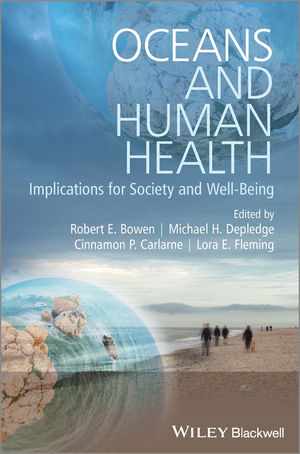
Human health and well-being are tied to the vitality of the global ocean and coastal systems on which so many live and rely. We engage with these extraordinary environments to enhance both our health and our well-being. But, we need to recognize that introducing contaminants and otherwise altering these ocean systems can harm human health and well-being in significant and substantial ways.
These are complex, challenging, and critically important themes. How the human relationship to the oceans evolves in coming decades may be one of the most important connections in understanding our personal and social well-being. Yet, our understanding of this relationship is far too limited.
This remarkable volume brings experts from diverse disciplines and builds a workable understanding of breadth and depth of the processes – both social and environmental – that will help us to limit future costs and enhance the benefits of sustainable marine systems. In particular, the authors have developed a shared view that the global coastal environment is under threat through intensified natural resource utilization, as well as changes to global climate and other environmental systems. All these changes contribute individually, but more importantly cumulatively, to higher risks for public health and to the global burden of disease.
This pioneering book will be of value to advanced undergraduate and postgraduate students taking courses in public health, environmental, economic, and policy fields. Additionally, the treatment of these complex systems is of essential value to the policy community responsible for these questions and to the broader audience for whom these issues are more directly connected to their own health and well-being.
“The seas across this planet and their effects on human society and its destiny are a fascinating subject for analysis and insights derived from intellectual inquiry. This diverse and complex subject necessarily requires a blending of knowledge from different disciplines, which the authors of this volume have achieved with remarkable success. “
. . .
“The following pages in this volume are written in a lucid and very readable style, and provide a wealth of knowledge and insightful analysis, which is a rare amalgam of multi-disciplinary perspectives and unique lines of intellectual inquiry. It is valuable to get a volume such as this, which appeals as much to a non-specialist reader as it does to those who are specialists in the diverse but interconnected subjects covered in this volume.”
(From the “Foreword” written by, R K Pachauri, Director General, TERI and Chairman, IPCC)
Robert E. Bowen
School for the Environment
University of Massachusetts Boston. USA
Cinnamon P. Carlarne
Michael E. Moritz College of Law
The Ohio State University. USA
Michael H. Depledge
European Centre for Environment and Human Health
University of Exeter Medical School. United Kingdom
Lora E. Fleming
European Centre for Environment and Human Health
University of Exeter Medical School. United Kingdom
Human health and well-being are tied to the vitality of the global ocean and coastal systems on which so many live and rely. We engage with these extraordinary environments to enhance both our health and our well-being. But, we need to recognize that introducing contaminants and otherwise altering these ocean systems can harm human health and well-being in significant and substantial ways. These are complex, challenging, and critically important themes. How the human relationship to the oceans evolves in coming decades may be one of the most important connections in understanding our personal and social well-being. Yet, our understanding of this relationship is far too limited. This remarkable volume brings experts from diverse disciplines and builds a workable understanding of breadth and depth of the processes both social and environmental that will help us to limit future costs and enhance the benefits of sustainable marine systems. In particular, the authors have developed a shared view that the global coastal environment is under threat through intensified natural resource utilization, as well as changes to global climate and other environmental systems. All these changes contribute individually, but more importantly cumulatively, to higher risks for public health and to the global burden of disease. This pioneering book will be of value to advanced undergraduate and postgraduate students taking courses in public health, environmental, economic, and policy fields. Additionally, the treatment of these complex systems is of essential value to the policy community responsible for these questions and to the broader audience for whom these issues are more directly connected to their own health and well-being. "e;The seas across this planet and their effects on human society and its destiny are a fascinating subject for analysis and insights derived from intellectual inquiry. This diverse and complex subject necessarily requires a blending of knowledge from different disciplines, which the authors of this volume have achieved with remarkable success."e; "e;The following pages in this volume are written in a lucid and very readable style, and provide a wealth of knowledge and insightful analysis, which is a rare amalgam of multi-disciplinary perspectives and unique lines of intellectual inquiry. It is valuable to get a volume such as this, which appeals as much to a non-specialist reader as it does to those who are specialists in the diverse but interconnected subjects covered in this volume."e; (From the "e;Foreword"e; written by, R K Pachauri, Director General, TERI and Chairman, IPCC)
Robert E. Bowen School for the Environment University of Massachusetts Boston. USA Cinnamon P. Carlarne Michael E. Moritz College of Law The Ohio State University. USA Michael H. Depledge European Centre for Environment and Human Health University of Exeter Medical School. United Kingdom Lora E. Fleming European Centre for Environment and Human Health University of Exeter Medical School. United Kingdom
List of Contributors vii
Foreword xi
About the Companion Website xiii
Section One: Coastal Seas, Human Health, and Well-Being: Setting the Stage
1 Influences of the Oceans on Human Health and Well-Being 3
2 Integrating Frameworks to Assess Human Health and Well-Being in Marine Environmental Systems 23
Section Two: Anthropogenic Drivers/Pressures and the State of Coastal Seas
3 Coastal Demography: Distribution, Composition, and Dynamics 49
4 The Seas, Ecosystem Services, and Human Well-Being 71
5 Measuring Social Value and Human Well-Being 113
Section Three: Impacts on Coastal Environments
6 The Impact of Climate Change on Coastal Ecosystems 141
7 Coastal Systems and Access to Safe and Potable Water 177
Section Four: Responses
8 Management-Driven Assessments of the Coastal Oceans 203
9 Globalization and Human Health: Regulatory Response and the Potential for Reform 231
Section Five: Common Conclusions and Horizon Scanning
10 Emerging Issues in Oceans and Human Health: Managing Uncertainty and New Knowledge 267
11 Final Thoughts and Future Actions 291
Index 299
"This book truly needs a wide readership, particularly among management, political, and public policy personnel. . . Summing Up: Highly recommended. All students, researchers/faculty, and professionals/practitioners." (Choice, 1 April 2015)
"By focusing on environmental issues, this book provides a remedy to make the common heritage a far healthier one." (Journal of Occupational & Environmental Medicine, 11 November 2014)
Chapter 1
Influences of the Oceans on Human Health and Well-Being
Benedict Wheeler1, Mathew P. White1, Lora E. Fleming1, Timothy Taylor1, Andrea Harvey1,2, and Michael H. Depledge1
1European Centre for Environment and Human Health, University of Exeter Medical School, Knowledge Spa, Royal Cornwall Hospital Trust, Truro, Cornwall, UK
2Plymouth Marine Laboratory, Plymouth, Devon, UK
1.1 Introduction
Oceans have attracted humans to their shores since ancient times. Over thousands of years, they have served as a source of food, provided livelihoods, and generated commerce, as well as being a means of disseminating people, and later, connecting civilizations, near and far. Their importance is reflected in many cultural practices, and is manifest in inspirational art.
Inevitably, the oceans influence our health and well-being. Damaged marine ecosystems arising from natural disasters or as a result of human exploitation, lead to negative consequences for human health and well-being [1–10].
“Health” in this context is usually defined as physical and physiologic health, which is lost or damaged following the emergence of disease or after injury. The impact of the oceans on health is typically assessed in relation to changes in the incidence of acute and chronic diseases. For instance, acute poisonings and infections associated with the consumption of seafood containing harmful algal bloom (HAB) toxins and microbial organisms result in acute disease episodes, while chronic diseases such as diabetes and cancer may occur after long-term exposure to persistent organic pollutants consumed in contaminated seafood. Drowning is, of course, also a well-recognized health threat associated with activities in or on our seas.
Unlike human health, the term “human well-being” is not one with a consensus definition. It is a concept used in a broad-ranging set of literatures without a precise, consensus definition. Rather, the term “well-being” is a concept or abstraction used to refer to whatever is assessed in an evaluation of a person's “life situation” or “being [11].” Within the pages of this book, the term is used in the following ways:
- economic vitality built upon the foundations of ecosystem service value and sustainable development practices;
- social and cultural integrity;
- psychological stability and strength; and/or
- human happiness.
The decline of well-being associated with some of the negative effects on physical and physiologic health noted earlier, is now widely accepted. There is also recognition of the negative impacts on mental health arising from ocean events, ranging from the aftermath of extreme weather events and tsunamis to the loss of ocean-derived livelihoods and cultural activities in coastal communities resulting from degradation of marine ecosystems, especially in relation to the collapse of fisheries.
The best known benefits to human health and well-being arising from interactions with the oceans are related to the consumption of seafood, rich in alpha omega fatty acids and nonterrestrial animal proteins and amino acids. Indirect benefits to health also arise from marine-derived pharmaceuticals and vitamins. However, alongside the promotion of physical health, there is increasing recognition of the value of coastal seas in promoting better mental health. Individual benefits include decreased vulnerability to depression and the fostering of broader societal “health” benefits related to employment, commerce, and even cultural and artistic activities. The importance of mental health and well-being was captured within the World Health Organization (WHO)'s definition of health, namely “a state of complete physical, mental and social well-being, and not merely the absence of disease or infirmity” [12]. Mental health and well-being also emerge as important outcomes in models of ecosystem services. The Millenium Ecosystem Assessment (2005), for instance, identifies “good social relations” and “freedom of choice and action” as key well-being outcomes [13]. Other ecosystem service approaches include similar psychological constructs in their definitions of well-being; for example “positive emotions” [14] and a “sense of place” [15]. These broader positive impacts of the oceans on human well-being, physical health, and coastal communities have only recently begun to be explored as part of a growing research effort exploring the significance of our interactions with the natural environment [16].
In this chapter, we review the growing body of evidence regarding the influence of interactions between humans and the oceans on health and well-being. Past research that has focused on risks and harms is discussed, but we especially focus on the explorations of the benefits of the oceans to both human health and well-being.
1.2 Interactions and routes of exposure
Human interactions with the oceans can be both direct (i.e., fishing or bathing) and indirect (i.e., human use of antibiotics resulting in the emergence of antibiotic-resistant organisms in coastal waters, seafood, and marine mammals; and the burning of fossil fuels leading to global climate change and sea-level rise). Although varying in terms of latency of exposure and effect (i.e., the time between exposure and observable impacts), almost all our interactions with the oceans have the potential to come back to help or hurt humans and other animals in unexpected ways, both now and in the future.
Many researchers suggest that for there to be effects of oceans on health and well-being, there must be exposure [15–18]. In general this is true, but it does overlook the fact that sometimes false perceptions or perceived threats that in reality do not exist can exert powerful influences on well-being, and ultimately health. For example, the belief that seafood might contain toxins, even when it does not, can still lead to anxiety, the avoidance of seafood consumption, and ultimately adverse health impacts.
In general, however, exposure is key, and may range from the visual and aural experiences of seeing and hearing the oceans to the direct physical contact with marine waters (e.g., through swimming and other water sports), the consumption of seafood from all levels of the marine food chain, and the inhalation of marine aerosols both in coastal areas and further inland. These exposures can be acute, sub-acute, and/or chronic (e.g., direct skin contact with an oil spill, inhalation of a HAB toxin during a bloom lasting days to months, and the daily consumption over many years of low levels of mercury-contaminated seafood, respectively). The nature of the timing and extent of exposures can lead to a wide range of acute and chronic diseases on the one hand, but paradoxically, potentially short and/or long term health and well-being benefits on the other. Finally, exposures and their subsequent health and well-being consequences also vary in relation to the underlying susceptibilities of individuals (e.g., increased vulnerabilities of the elderly, children, immunosuppressed, etc), and by the population density of people living on or near the coasts, particularly in low and middle income nations.
1.3 Risks
Many of the most important influences of the oceans on human health and well-being are increasingly driven by global environmental change (e.g., the frequency of occurrence of algal blooms; and human demographic change and associated discharges of pharmaceuticals and other pollutants). Of interest, climate change may be especially important in this regard (as is discussed later and in other chapters), often to the increasing detriment of human health and well-being. The most obvious effects of climate change include increased risks of drowning and physical trauma after coastal inundation associated with extreme weather events (e.g., hurricanes or cyclones); and in the longer term, increases in exposure to infectious diseases (e.g., cholera) and harmful algal blooms (e.g., red tides), reduced food security, and adverse mental health impacts [4]; all these are associated with sea-level and sea-temperature rise, and with more severe and frequent extreme weather and flooding events.
More indirect effects of global climate change that have yet to be fully explored, include ocean acidification (secondary to increasing carbon dioxide levels in the atmosphere), which adds to pressures on fisheries that are already stressed, and may result in increased risks of malnutrition and starvation as well as mental health impacts in fishing- and seafood-dependent communities [19]. Rising temperatures are already associated with geographic changes in the distribution, and possibly increasing frequencies of occurrence, of pathogenic microbes (e.g., bacteria living in the marine environment such as Vibrio cholera, which can cause illnesses [cholera] in humans) and harmful algal blooms (e.g., exuberant growth of algae which can produce potent natural toxins) [20]. The distribution and bioavailability of chemical pollutants are also changing as the climate changes. These effects are likely to be associated with the increasing degradation of coastal resources and infrastructure, prompting massive population migration of “climate-change refugees” and increasing conflict locally and internationally [21]. With regards to climate-driven migration, however, some researchers remain sceptical [22]. Migrants often tend to move within their own country or region,...
| Erscheint lt. Verlag | 3.4.2014 |
|---|---|
| Sprache | englisch |
| Themenwelt | Naturwissenschaften ► Biologie ► Ökologie / Naturschutz |
| Naturwissenschaften ► Geowissenschaften ► Hydrologie / Ozeanografie | |
| Sozialwissenschaften ► Politik / Verwaltung ► Staat / Verwaltung | |
| Technik | |
| Schlagworte | Brings • Coastal • connections • Contaminants • decades • earth sciences • Environmental Management, Policy & Planning • Environmental Studies • Environments • Evolves • Experts • extraordinary • Geowissenschaften • global ocean • Health • Human • important • introducing • many • Oceanography & Paleoceanography • Oceans • ocean systems • Ozeanographie • Ozeanographie u. Paläozeanographie • Ozeanographie u. Paläozeanographie • Relationship • Umweltforschung • Umweltmanagement • Umweltmanagement, Politik u. -Planung • vitality • WorkAble |
| ISBN-10 | 1-118-82844-5 / 1118828445 |
| ISBN-13 | 978-1-118-82844-1 / 9781118828441 |
| Informationen gemäß Produktsicherheitsverordnung (GPSR) | |
| Haben Sie eine Frage zum Produkt? |
 EPUB (Adobe DRM)
Kopierschutz: Adobe-DRM
Adobe-DRM ist ein Kopierschutz, der das eBook vor Mißbrauch schützen soll. Dabei wird das eBook bereits beim Download auf Ihre persönliche Adobe-ID autorisiert. Lesen können Sie das eBook dann nur auf den Geräten, welche ebenfalls auf Ihre Adobe-ID registriert sind.
Details zum Adobe-DRM
Dateiformat: EPUB (Electronic Publication)
EPUB ist ein offener Standard für eBooks und eignet sich besonders zur Darstellung von Belletristik und Sachbüchern. Der Fließtext wird dynamisch an die Display- und Schriftgröße angepasst. Auch für mobile Lesegeräte ist EPUB daher gut geeignet.
Systemvoraussetzungen:
PC/Mac: Mit einem PC oder Mac können Sie dieses eBook lesen. Sie benötigen eine
eReader: Dieses eBook kann mit (fast) allen eBook-Readern gelesen werden. Mit dem amazon-Kindle ist es aber nicht kompatibel.
Smartphone/Tablet: Egal ob Apple oder Android, dieses eBook können Sie lesen. Sie benötigen eine
Geräteliste und zusätzliche Hinweise
Buying eBooks from abroad
For tax law reasons we can sell eBooks just within Germany and Switzerland. Regrettably we cannot fulfill eBook-orders from other countries.
aus dem Bereich