


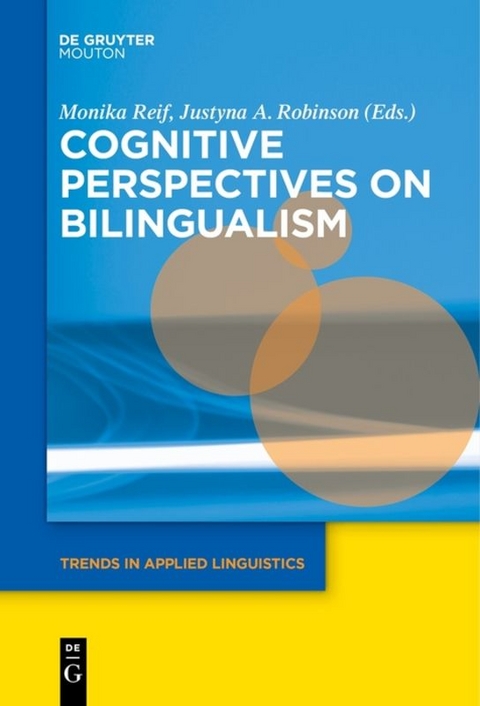
Cognitive Perspectives on Bilingualism
Seiten
Investigating the processes involved in bilingual language acquisition and use may contribute essentially to our understanding of the cognitive foundations of language. This volume focuses on the relationship between language, culture, and cognition by assessing differences and similarities between monolingual and bilingual speakers.
Only 15 years ago bilingualism was somewhat outside the main debates in cognitive linguistics. Cognitive linguistics had, to a large extent, taken for granted the fact that language is embodied in our experience. However, not much attention was given to questions of whether any changes to our language repertoire alter the way we perceive the world around us. A growing body of recent research suggests that one cannot understand the cognitive foundations of language without looking at bi- and multilingual speakers. In this vein, the present book aims to contribute to the existing debate of the relationship between language, culture and cognition by assessing differences and similarities between monolingual and bilingual language acquisition and use. In particular, it investigates the effect of conceptual-semantic and pragmatic properties of constructions on code choice and code switching, as well as the impact of bilingual and bicultural education on speakers’ cognitive development. This collective volume systematises, reviews, and promotes a range of theoretical perspectives and research techniques that currently inform work across the disciplines of bilingualism and code switching.
Only 15 years ago bilingualism was somewhat outside the main debates in cognitive linguistics. Cognitive linguistics had, to a large extent, taken for granted the fact that language is embodied in our experience. However, not much attention was given to questions of whether any changes to our language repertoire alter the way we perceive the world around us. A growing body of recent research suggests that one cannot understand the cognitive foundations of language without looking at bi- and multilingual speakers. In this vein, the present book aims to contribute to the existing debate of the relationship between language, culture and cognition by assessing differences and similarities between monolingual and bilingual language acquisition and use. In particular, it investigates the effect of conceptual-semantic and pragmatic properties of constructions on code choice and code switching, as well as the impact of bilingual and bicultural education on speakers’ cognitive development. This collective volume systematises, reviews, and promotes a range of theoretical perspectives and research techniques that currently inform work across the disciplines of bilingualism and code switching.
Justyna Robinson, University of Sussex, UK; Monika Reif, University of Koblenz-Landau, Germany.
| Reihe/Serie | Trends in Applied Linguistics [TAL] ; 17 |
|---|---|
| Verlagsort | New York |
| Sprache | englisch |
| Maße | 155 x 230 mm |
| Gewicht | 460 g |
| Themenwelt | Geisteswissenschaften ► Sprach- / Literaturwissenschaft ► Sprachwissenschaft |
| Sozialwissenschaften ► Pädagogik | |
| Schlagworte | Bilingualism/Biculturalism; Cognitive Linguistics; Language Acquisition; Code Switching/Mixing. • Spracherwerb • Zweisprachigkeit |
| ISBN-13 | 9781614515852 / 9781614515852 |
| Zustand | Neuware |
| Informationen gemäß Produktsicherheitsverordnung (GPSR) | |
| Haben Sie eine Frage zum Produkt? |
Mehr entdecken
aus dem Bereich


aus dem Bereich
Eine Wiederentdeckung
Buch | Softcover (2025)
Piper (Verlag)
CHF 19,55


