


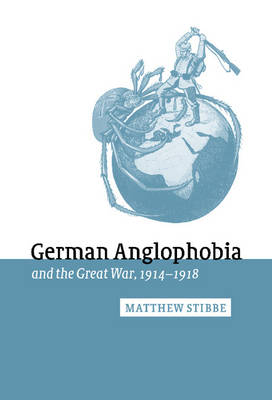
German Anglophobia and the Great War, 1914–1918
Seiten
2001
Cambridge University Press (Verlag)
978-0-521-78296-8 (ISBN)
Cambridge University Press (Verlag)
978-0-521-78296-8 (ISBN)
The first major study of German attitudes towards England during the Great War, 1914–18. This book focuses on the extremity of anti-English feeling in Germany, and on the attempt by writers, propagandists and cartoonists to redefine Britain as the chief enemy of the German people and their cultural heritage.
This is the first major study of German attitudes towsrds England during the Great War, 1914–18, continuing the story of Anglo-German antagonism where previous studies have ended. In particular it focuses on the extremity of anti-English feeling in Germany in the early years of the war, and on the attempt by writers, propagandists and cartoonists to redefine Britain as the chief enemy of the German people and their cultural heritage. New material is also offered concerning the development of an extreme rightist network in Munich and Berlin during the war years, which used anti-English feeling as a focus for attacking the supposedly defeatist government of Chancellor Bethmann-Hollweg. Such views formed the background to the disastrous decision to begin unrestricted submarine warfare against England in January 1917; and they also contributed to the ideological polarization of German politics at a crucial juncture in European and world history.
This is the first major study of German attitudes towsrds England during the Great War, 1914–18, continuing the story of Anglo-German antagonism where previous studies have ended. In particular it focuses on the extremity of anti-English feeling in Germany in the early years of the war, and on the attempt by writers, propagandists and cartoonists to redefine Britain as the chief enemy of the German people and their cultural heritage. New material is also offered concerning the development of an extreme rightist network in Munich and Berlin during the war years, which used anti-English feeling as a focus for attacking the supposedly defeatist government of Chancellor Bethmann-Hollweg. Such views formed the background to the disastrous decision to begin unrestricted submarine warfare against England in January 1917; and they also contributed to the ideological polarization of German politics at a crucial juncture in European and world history.
Acknowledgements; Introduction; 1. Unser gehasstester Feind: German Anglophobia and the 'spirit of 1914'; 2. The cultural war: German intellectuals and England; 3. German war aims and propaganda against England; 4. 'U-boat demagogy' and the crisis of Bethmann-Hollweg's chancellorship; 5. The submarine crisis deepens; 6. The Anglo-American powers and the collapse of the German empire; Epilogue; Notes; Bibliography; Index.
| Erscheint lt. Verlag | 3.5.2001 |
|---|---|
| Reihe/Serie | Studies in the Social and Cultural History of Modern Warfare |
| Zusatzinfo | 12 Halftones, unspecified |
| Verlagsort | Cambridge |
| Sprache | englisch |
| Maße | 152 x 229 mm |
| Gewicht | 590 g |
| Themenwelt | Geschichte ► Allgemeine Geschichte ► Neuzeit (bis 1918) |
| Geschichte ► Allgemeine Geschichte ► 1918 bis 1945 | |
| Geisteswissenschaften ► Geschichte ► Regional- / Ländergeschichte | |
| Geschichte ► Teilgebiete der Geschichte ► Kulturgeschichte | |
| Sozialwissenschaften ► Politik / Verwaltung ► Europäische / Internationale Politik | |
| ISBN-10 | 0-521-78296-1 / 0521782961 |
| ISBN-13 | 978-0-521-78296-8 / 9780521782968 |
| Zustand | Neuware |
| Informationen gemäß Produktsicherheitsverordnung (GPSR) | |
| Haben Sie eine Frage zum Produkt? |
Mehr entdecken
aus dem Bereich


aus dem Bereich
Geschichte einer wilden Handlung
Buch | Hardcover (2024)
C.H.Beck (Verlag)
CHF 47,60


