'I can enthusiastically recommend the Manual of Clinical Paramedic Procedures as the book that I wish had been available to me when I was studying to become a paramedic.'
From the foreword by Professor Malcolm Woollard, Chair, College of Paramedics; Professor in Pre-hospital and Emergency Care & Director, Pre-hospital, Emergency & Cardiovascular Care Applied Research Group, Coventry University
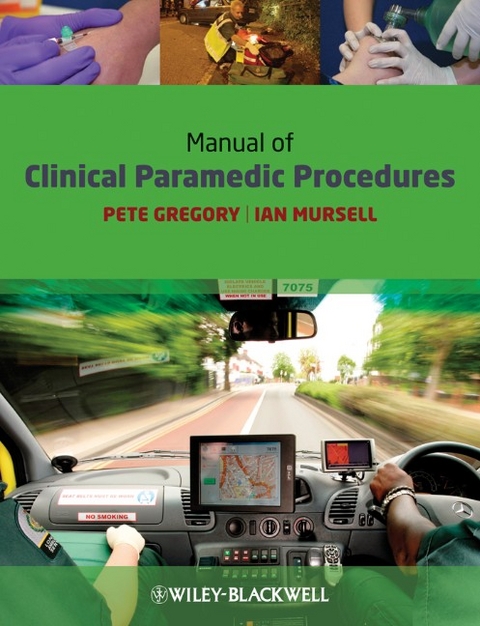
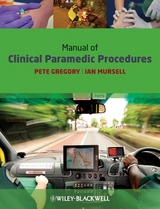
Clinical procedures are a fundamental aspect of care for practitioners working in pre-hospital settings. The Manual of Clinical Paramedic Procedures is written specifically to support the practice of paramedics, ambulance technicians, first responders and volunteer ambulance personnel. It presents up-to-date, evidence-based expert knowledge, enabling paramedics to deliver effective, patient-focused care.
This accessible handbook provides a comprehensive exploration of core competencies and skills, looking at topics including Aseptic Technique, Airway Management, Assisted Ventilation, Cardiopulmonary Resuscitation, Defibrillation and External Cardiac Pacing, Observations, Pain Assessment & Management, Respiratory Therapy, Spinal Management and Venepuncture. Each chapter provides the relevant anatomy & physiology, evidence-based rationales for each procedure, and contraindications of use.
Key features:
- The first UK text to explore clinical procedures for paramedics
- With further reading and illustrations throughout
- All procedures include the rationale for the action recommended
- Guides paramedics in the clinical application of evidence-based procedures
Pete Gregory is a Paramedic and Senior Lecturer in Paramedic Practice at Coventry University. He represents Coventry University at the Higher Education Ambulance Development Group and is research active with Coventry University’s Applied Research Group in Prehospital, Emergency and Cardiovascular Care.
Ian Mursell is Lecturer-Practitioner in Paramedic Practice with Coventry University and an Emergency Care Practitioner Clinical Facilitator with West Midlands Ambulance Service NHS Trust.
'I can enthusiastically recommend the Manual of Clinical Paramedic Procedures as the book that I wish had been available to me when I was studying to become a paramedic.' From the foreword by Professor Malcolm Woollard, Chair, College of Paramedics; Professor in Pre-hospital and Emergency Care & Director, Pre-hospital, Emergency & Cardiovascular Care Applied Research Group, Coventry University Clinical procedures are a fundamental aspect of care for practitioners working in pre-hospital settings. The Manual of Clinical Paramedic Procedures is written specifically to support the practice of paramedics, ambulance technicians, first responders and volunteer ambulance personnel. It presents up-to-date, evidence-based expert knowledge, enabling paramedics to deliver effective, patient-focused care. This accessible handbook provides a comprehensive exploration of core competencies and skills, looking at topics including Aseptic Technique, Airway Management, Assisted Ventilation, Cardiopulmonary Resuscitation, Defibrillation and External Cardiac Pacing, Observations, Pain Assessment & Management, Respiratory Therapy, Spinal Management and Venepuncture. Each chapter provides the relevant anatomy & physiology, evidence-based rationales for each procedure, and contraindications of use. Key features: The first UK text to explore clinical procedures for paramedics With further reading and illustrations throughout All procedures include the rationale for the action recommended Guides paramedics in the clinical application of evidence-based procedures
Pete Gregory is a Paramedic and Senior Lecturer in Paramedic Practice at Coventry University. He represents Coventry University at the Higher Education Ambulance Development Group and is research active with Coventry University's Applied Research Group in Prehospital, Emergency and Cardiovascular Care. Ian Mursell is Lecturer-Practitioner in Paramedic Practice with Coventry University and an Emergency Care Practitioner Clinical Facilitator with West Midlands Ambulance Service NHS Trust.
"Throughout its 19 chapters and 378 pages, there are excellent drawings and photographs which suggest the authors promote the old adage of a picture says a thousand words. Manual of Clinical Paramedic Procedures is an all encompassing procedure book promoting good." (Journal of Emergency Primary Health Care (JEPHC), August 2010)
"The content is both contemporary and reflective of evidence based practice. Written by paramedics for paramedics. A rarity indeed. A must read for all in the profession." (Journal of Paramedic Practice, July 2010)
Chapter 1
Airway management
Content
- Definition of airway management
- Concept of a stepwise approach
- Basic anatomy of the airway
- Basic airway management manoeuvres
- Basic airway adjuncts
- Advanced airway adjuncts and cricothyroidotomy
- Chapter key points
- References and Further reading
In emergency care, airway management is an essential first step as a means of achieving both oxygenation and ventilation. Failure to manage and maintain the airway can lead to neurological dysfunction and even death within minutes.1 This chapter discusses the concept of a stepwise approach to airway management and provides the rationale for the airway interventions currently available to the paramedic.
Definition of airway management
Airway management may be defined as the provision of a free and clear passageway for airflow. Obstruction of the airway may be partial or complete and may occur at any level from the nose to the trachea. In the unconscious patient, the most common site of airway obstruction is at the level of the pharynx2 and this obstruction has usually been attributed to posterior displacement of the tongue caused by reduced muscle tone. However, the cause of airway obstruction is often the soft palate and the epiglottis rather than the tongue.3,4 Obstruction may also be caused by vomit or blood, swelling of the airway (e.g. anaphylaxis), a foreign body, or laryngeal spasm.
Concept of a stepwise approach
Airway management techniques range from basic manual manoeuvres to the more complex techniques of tracheal intubation and cricothyroidotomy. Each technique comes with its own inherent risks and it is essential that the paramedic is aware of the problems and limitations of each technique. It is advocated that a stepwise approach that leads from the least invasive to the most invasive technique be adopted.1 The paramedic may choose to miss out certain steps based upon the needs of the patient, but a risk-benefit analysis should be undertaken to ensure that the most appropriate airway management technique is employed. It should be noted that measurement of airway adjuncts only provides a starting point for deciding on the appropriate size; it is essential to assess the effectiveness of any airway manoeuvre once undertaken.
Scenario
You are called to attend a 37-year-old female patient in cardiopulmonary arrest. On arrival you find that the patient is in the third trimester of pregnancy lying supine on the floor. What anatomical and physiological changes occur during pregnancy that may affect your airway management strategy? How would you manage the patient’s airway?
Basic anatomy of the airway
See Figure 1.1.
Safe airway management requires sound knowledge of the relevant anatomy. This section provides an overview of the nose, pharynx, larynx, trachea and main bronchi; the practitioner is advised to refer to an appropriate anatomy text book for a deeper description of the airway.
Nose
The nose can be divided into external and internal portions. The external portion provides a supporting structure of bone and cartilage for the overlying muscle and skin; it is lined with a mucous membrane. The bony framework of the external nose is formed by the frontal bone, nasal bones and maxillae.
The internal portion lies inferior to the nasal bone and superior to the mouth and contains both muscle and a mucous membrane. It is worth remembering that the internal nares extend in an anterior-posterior direction, especially when inserting a nasopharyngeal airway.
Mouth
The mouth is not strictly a part of the airway, but as many airway management interventions involve the mouth, it is worth reviewing basic anatomy. The mouth is formed by the cheeks, hard and soft palates, and the tongue.5 The lips surround the opening to the mouth and each lip is attached to its respective gum by the labial frenulum. The vestibule is the space between the cheeks or lips, and the teeth. The roof is formed by the hard and soft palates, whilst the tongue dominates the floor. The anterior portion of the tongue is free but connected to the underlying epithelium by the lingual frenulum. The border between the mouth and the oropharynx extends from the dangling uvula to the base of the tongue.6
Figure 1.1 Lateral wall of nasal cavity. Reproduced from Faiz, O. and Moffat, D. Anatomy at a Glance, 2nd edn, copyright 2006, with permission of Blackwell Publishing.
Pharynx
The pharynx is divided into three anatomical sections; the nasopharynx (extending from the internal nares to the posterior edge of the soft palate), the oropharynx (extending to the base of the tongue at the level of the hyoid bone) and the laryngopharynx (extending to the opening of the oesophagus).
Larynx
See Figures 1.2 and 1.3.
This is a very important structure in terms of airway management and it is essential to know the anatomy in depth. Basic anatomy is outlined here but it is recommended that revision should be undertaken with an appropriate anatomy text (see reference 5).
Figure 1.2 Cartilages of the larynx. Reproduced from Faiz, O. and Moffat, D. Anatomy at a Glance, 2nd edn, copyright 2006, with permission of Blackwell Publishing.
Figure 1.3 Larynx as viewed through a laryngoscope. Reproduced from Faiz, O. and Moffat, D. Anatomy at a Glance, 2nd edn, copyright 2006, with permission of Blackwell Publishing.
The larynx consists of nine cartilages; three paired and three single, as described below.
The epiglottis projects above the glottis and protects the larynx during swallowing. The thyroid cartilage forms most of the anterior and lateral surfaces of the larynx and tends to be more prominent in men. The cricoid cartilage is the ring-shaped cartilage that connects the larynx to the trachea. The three paired cartilages are found within the interior structure of the larynx and are the arytenoids, corniculate and cuneiform cartilages.
Trachea
See Figure 1.4.
The trachea is approximately 11–12 cm long and 2.5 cm in diameter. It is held open by ‘C’ shape cartilage, which is open posteriorly to allow for extension of the oesophagus during swallowing. The trachea bifurcates into the left and right main bronchi around the level of the 5th thoracic vertebra. The right main bronchus is larger in diameter than the left and extends at a steeper angle – an endotracheal tube that has been inserted too far is most likely to locate itself in the right side, as are foreign body obstructions.
Figure 1.4 Trachea and main bronchi. Reproduced from Faiz, O. and Moffat, D., Anatomy at a Glance 2nd edn, copyright 2006, with permission of Blackwell Publishing.
Basic airway management manoeuvres
Head tilt and chin lift
This manoeuvre has been the mainstay of basic airway management for nearly 50 years with few changes advocated since the early 1960s. The rescuer’s hand is placed on the patient’s forehead and the head gently tilted back; the fingertips of the other hand are placed under the point of the patient’s chin, which is gently lifted to stretch the anterior neck structures (Figure 1.5).
Jaw thrust
The jaw thrust is recommended where there is a risk of cervical spine injury but it may be used electively on any patient. Where there is no risk of spinal injury, the manoeuvre may be applied on its own or in conjunction with a head tilt manoeuvre.
The jaw thrust brings the mandible forwards and relieves obstruction by the soft palate and epiglottis. The practitioner places their index and other fingers behind the angle of the mandible and their thumbs on the mandible itself (Figure 1.6). The thumbs gently open the mouth whilst the fingers are used to apply pressure upwards and forwards. This movement causes the condyles of the mandible to sublux anteriorly in the temporomandibular joints. This displaces the mandible and tongue anteriorly, thereby clearing the airway.7
Figure 1.5 Head-tilt, chin-lift.
Figure 1.6 Jaw thrust.
THINK
Is there any circumstance where it would be permissible to perform a head tilt and chin lift manoeuvre in a patient with suspected cervical spine injury?
Basic airway adjuncts
Nasopharyngeal airway
See Figure 1.7.
The nasopharyngeal airway (NPA) is a simple airway adjunct that is used by a number of different healthcare disciplines. It has advantages over the oropharyngeal airway (OPA) in that it can be used in the presence of trismus, an intact gag reflex, or oral trauma.8 Despite these advantages, the NPA is used less frequently than the OPA.9,10
Figure 1.7 Nasopharyngeal airways.
Figure 1.8 Bevel of NPA against the...
| Erscheint lt. Verlag | 1.4.2013 |
|---|---|
| Sprache | englisch |
| Themenwelt | Medizin / Pharmazie ► Allgemeines / Lexika |
| Medizin / Pharmazie ► Gesundheitsfachberufe ► Rettungsassistent / -sanitäter | |
| Medizin / Pharmazie ► Medizinische Fachgebiete | |
| Medizin / Pharmazie ► Pflege | |
| Sozialwissenschaften ► Soziologie | |
| Schlagworte | Aspect • available • Book • Cardiovascular • Care • Clinical • Clinical Specialities • College • coventry university clinical • Foreword • fundamental • Group • Krankenpflege • malcolm • Manual • nursing • Nursing Special Topics • paramedic • Practitioners • prehospital • Procedures • Professor • Research • Settings • Spezialaufgaben i. d. klinischen Krankenpflege • Spezialthemen Krankenpflege • wish • woollard |
| ISBN-13 | 9781118687086 / 9781118687086 |
| Informationen gemäß Produktsicherheitsverordnung (GPSR) | |
| Haben Sie eine Frage zum Produkt? |
 EPUB (Adobe DRM)
Kopierschutz: Adobe-DRM
Adobe-DRM ist ein Kopierschutz, der das eBook vor Mißbrauch schützen soll. Dabei wird das eBook bereits beim Download auf Ihre persönliche Adobe-ID autorisiert. Lesen können Sie das eBook dann nur auf den Geräten, welche ebenfalls auf Ihre Adobe-ID registriert sind.
Details zum Adobe-DRM
Dateiformat: EPUB (Electronic Publication)
EPUB ist ein offener Standard für eBooks und eignet sich besonders zur Darstellung von Belletristik und Sachbüchern. Der Fließtext wird dynamisch an die Display- und Schriftgröße angepasst. Auch für mobile Lesegeräte ist EPUB daher gut geeignet.
Systemvoraussetzungen:
PC/Mac: Mit einem PC oder Mac können Sie dieses eBook lesen. Sie benötigen eine
eReader: Dieses eBook kann mit (fast) allen eBook-Readern gelesen werden. Mit dem amazon-Kindle ist es aber nicht kompatibel.
Smartphone/Tablet: Egal ob Apple oder Android, dieses eBook können Sie lesen. Sie benötigen eine
Geräteliste und zusätzliche Hinweise
Buying eBooks from abroad
For tax law reasons we can sell eBooks just within Germany and Switzerland. Regrettably we cannot fulfill eBook-orders from other countries.
aus dem Bereich