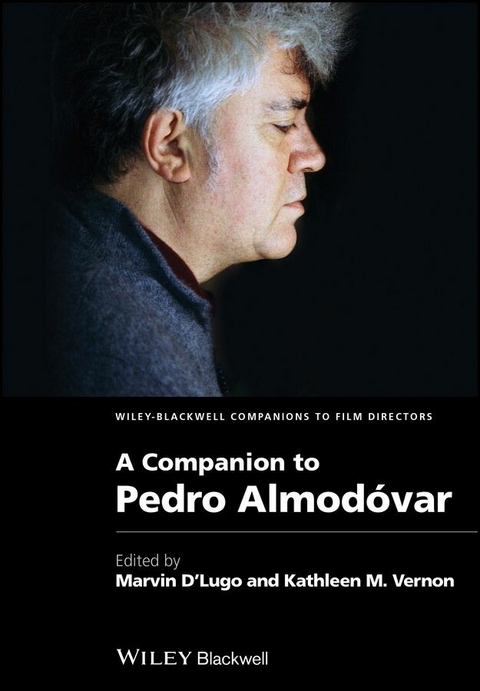
A Companion to Pedro Almodóvar (eBook)
John Wiley & Sons (Verlag)
978-1-118-32539-1 (ISBN)
Edited by leading authorities on the subject, and bringing together a stellar cast of contributors, this detailed appraisal of Pedro Almodóvar's unique cinematic art examines the themes, style, and aesthetics of his oeuvre and locates it in the context of the profound cultural transformations in Spain since the 1970s.
- Brings together a stellar cast of contributors from across the globe including recognized and established specialists as well as talented younger scholars
- Features contributions by Spanish film historians, where studies of Almodóvar's work have been underrepresented in the academic literature
- Deploys new approaches to the analysis of film authorship by exploring contextual issues such as Almodóvar's transnational appeal and the political dimensions of his works
- Traces the director's fruitful collaborations in the areas of art and design, fashion and music
Marvin D'Lugo is Professor of Spanish and Adjunct Professor of Screen Studies at Clark University, Massachusetts where he teaches courses on Spanish and Latin-American cinema. He has published a number of books including Pedro Almodóvar (2006) in the University of Illinois Press' Contemporary Film Directors series.
Kathleen M. Vernon is Associate Professor of Hispanic Languages and Literatures at the State University of New York at Stony Brook. She is author and editor of numerous studies on Spanish cinema and culture including Post-Franco, Postmodern: The Films of Pedro Almodóvar (1995).
A Companion to Pedro Almod var Marvin D Lugo and Kathleen M. Vernon give us the ideal companion to Pedro Almod var s films. Established and emerging writers offer a rainbow of insights for fans as well as academics. Jerry W. Carlson, Professor of Film Studies, The City College & Graduate Center CUNY Rarely has a contemporary film artist been treated to the kind of broad, rich discussion of their work that can be found in A Companion to Pedro Almod var. Richard Pe a, Professor of Film Studies, Columbia University Once the enfant terrible of Spain s youth culture explosion, the Movida, Pedro Almod var s distinctive film style and career longevity have made him one of the most successful and internationally known filmmakers of his generation. Offering a state-of-the-art appraisal of Almod var s cinema, this original collection is a searching analysis of his technique and cultural significance that includes work by leading authorities on Almod var as well as talented young scholars. Crucially included here are contributions by film historians from Almod var s native Spain, where he has been undervalued by the academic and critical establishment. With a balance between textual and contextual approaches, the book expands the scope of previous work on the director to explore his fruitful collaborations with fellow professionals in the areas of art design, fashion, and music as well as the growing reach of a global Almod var brand beyond Europe and the United States to Latin America and Asia. It also proposes a reevaluation of the political meanings and engagement of his cinema from the perspective of the profound cultural and historical upheavals that have transformed Spain since the 1970s.
Marvin D'Lugo is Professor of Spanish and Adjunct Professor of Screen Studies at Clark University, Massachusetts where he teaches courses on Spanish and Latin American cinema. He has published a number of books including Pedro Almodóvar (2006) in the University of Illinois Press' Contemporary Film Directors series. Kathleen M. Vernon is Associate Professor and Chair of the Department of Hispanic Languages and Literatures at the State University of New York at Stony Brook. She is author and editor of numerous studies on Spanish cinema and culture including Post-Franco, Postmodern: The Films of Pedro Almodóvar (1995).
A Companion to Pedro Almodóvar 5
Copyright 6
Contents 7
Notes on Contributors 10
Acknowledgments 17
Introduction: The Skin He Lives In 19
A Spotlight on the Self-Conscious Auteur 19
The Companion to Pedro Almodóvar 27
Notes 34
References 34
Part I Bio-Filmography 37
1 Almodóvar’s Self-Fashioning: The Economics and Aesthetics of Deconstructive Autobiography 39
Notes 54
References 55
2 Creative Beginnings in Almodóvar’s Work 57
Searching for His Own Voice 58
The Short Stories in Relatos 62
Epilogue 74
Notes 74
References 75
3 Almodóvar and Hitchcock: A Sorcerer’s Apprenticeship 77
Introduction: Self-Education via Hitchcock 77
Almodóvar’s Guilt Complex from Spellbound to Laberinto de pasiones 79
Casting and Close-ups in Entre tinieblas and Stage Fright 84
The Domestic Crime Scene Enlivened by Wallpaper: “Lamb to the Slaughter” and ¿Qué he hecho yo para merecer esto! 88
Looking through Objects and Almodóvar’s “MacGuffin”: From Dial M for Murder, The 39 Steps, Strangers on a Train, and Rear Window to Mujeres al borde de un ataque de nervios 93
Conclusions 100
Notes 102
References 104
4 A Life, Imagined and Otherwise: The Limits and Uses of Autobiography in Almodóvar’s Films 106
Inventing the Self: Autobiography between Fact and Fantasy 106
A Portrait of the Young Gay Man as a Star-to-be: Personal Experience into Cultural Mythologies 113
Notes 121
References 122
Part II Spanish Contexts 123
5 El Deseo’s “Itinerary”: Almodóvar and the Spanish Film Industry 125
Marks of Identity 127
Family Resemblance 129
The Back Story: Almodóvar 131
The Course of Things: El Deseo’s Other Films 132
Other Stories: Latin American Co-productions 136
Home Cinema 139
Conclusions 140
Acknowledgments 141
Notes 142
References 145
6 Almodóvar and Spanish Patterns of Film Reception 147
La ley del deseo 150
Kika 155
Hable con ella 161
Conclusions 165
Notes 167
References 168
7 Memory, Politics, and the Post-Transition in Almodóvar’s Cinema 171
From Novela Rosa to Film Noir: The Breakdown of the Transitional Paradigm 176
Carne trémula: The Irruption of History 178
Memory and the Redemption of Theater in Todo sobre mi madre 181
Reinterpreting the Past: La mala educación 185
Conclusions 188
Notes 191
References 191
8 The Ethics of Oblivion: Personal, National, and Cultural Memories in the Films of Pedro Almodóvar 194
Visual Palimpsests and Narrative Arrhythmias 200
Rhopography: Making the Apparently Trivial into a Movie Star 205
The Ethics of Makeup 211
Notes 214
References 216
Part III At the Limits of Gender 219
9 Our Rapists, Ourselves: Women and the Staging of Rape in the Cinema of Pedro Almodóvar 221
Specularizing Visions of Excess: Of Human Bondage, Petits Mortes, Parts Maudites, and Rape 223
Masters of Delusion 227
Immaterial Girls: Of Graves and Private Places 235
Notes 241
References 241
10 Paternity and Pathogens: Mourning Men and the Crises of Masculinity in Todo Sobre Mi Madre and Hable Con Ella 243
Notes 259
References 261
11 Domesticating Violence in the Films of Pedro Almodóvar 262
Notes 275
References 278
12 La piel que habito: A Story of Imposed Gender and the Struggle for Identity 280
Acknowledgments 294
Notes 294
References 295
Part IV Re-readings 297
13 Re-envoicements and Reverberations in Almodóvar’s Macro-Melodrama 299
Mastering Sound: Re-envoicing the Movida and Macro-Melodrama 299
Musical Substitutions and Intertexts in Laberinto de pasiones 304
Dubbing as Re-envoicement in Mujeres al borde de un ataque de nervios 306
The Maternal Voice in La flor de mi secreto 310
Macro-Melodrama in Hable con ella and Todo sobre mi madre 313
Retro-seriality in Los abrazos rotos: Reverberations in the Age of Audio Culture 317
Note 320
References 320
14 The Flower of His Secret: Carne trémula and the Mise en Scène of Desire 322
Acknowledgments 338
Notes 339
References 339
15 Scratching the Past on the Surface of the Skin: Embodied Intersubjectivity, Prosthetic Memory, and Witnessing in Almodóvar’s La mala educación 340
Introduction 340
Torn Surfaces, Shattered Subjectivities 342
The Skin of the Dress 350
Cinema as an Embodied Witnessing Practice 354
Conclusion 357
Notes 358
References 360
16 Almodóvar’s Stolen Images 363
Cinematic Quotation as Theft 364
Visual Metaphors as Poaching 365
Plagiarism, Pastiche, and “Transvestism” 367
The Search for Style 369
Textual Transvestism 373
Los abrazos rotos, or the Synthesis of Almodovarian Transvestism and Pastiche 376
Notes 380
References 380
Part V Global Almodóvar 383
17 Women on the Verge of a Nervous Breakdown: From Madrid (1988) to New York (2010) 385
Notes 400
References 402
18 Almodóvar’s Global Musical Marketplace 405
All About World Music 408
Caetano Veloso: Hearts, Minds, and Market Share 414
Chavela Vargas: Icon and Muse 416
Buika: Synthesis and Synergies 421
Conclusions 424
Notes 425
References 426
19 Almodóvar and Latin America: The Making of a Transnational Aesthetic in Volver 430
Mapping Cultural Affinities 430
Tango and Communal Memory 432
Constructing a New Geocultural Imaginary 435
An Auditory Imaginary 439
Co-Producing a Cinematic Latin America 442
Notes 447
References 448
20 Is there a French Almodóvar? 450
Distribution and Reception of Almodóvar’s Films in France 450
From the Untranslatable to the Genuine 454
Towards Translatability: The Global 465
Just Another filmmaker (or almost) 467
Notes 469
References 469
21 Almodóvar in Asia: Hong Kong, Taiwan, and LGBT Film Culture 471
Conclusion 483
Notes 484
References 484
Part VI Art and Commerce 487
22 To the Health of the Author: Art Direction in Los abrazos rotos 489
Color 491
Set Design 494
Atrezzo 498
Meta-narrative 501
Hospitals 505
Conclusion 510
Notes 511
References 512
23 Making Spain Fashionable: Fashion and Design in Pedro Almodóvar’s Cinema 513
A History of Spanish Fashion and State Policy 515
Almodóvar and Costume Design in Film 516
Made in Spain 519
Made in Europe 529
La flor de mi secreto 535
Conclusion 537
Notes 539
References 540
24 Almodóvar, Cyberfandom, and Participatory Culture 542
Internet Users, Piracy, and the Re-regulation of the Web 543
The “Sinde Law”: from de la Iglesia to Almodóvar 545
From La Edad de Oro to Enrique Goded: The Auteur–Fan Interface 548
“Almodóvar” as El Deseo S.A., Fan-made Artifacts and the Question of Ownership 551
From “Almodovarlandia” to Facebook: Social Networking and the Demise of the Cinephilic Object? 561
Conclusion: Almodóvar and the Future of Participatory Culture 563
Acknowledgments 564
Notes 565
Index 569
"Well researched and clearly organized, the volume boasts
a helpful scholarly apparatus. Almodovar scholars will want
to keep this companion handy, and all advanced students of film
will appreciate it. Summing Up: Recommended. Graduate
students, researchers, faculty." (Choice, 1
December 2013)
"Marvin D'Lugo and Kathleen M. Vernon give us the ideal
companion to Pedro Almodovar's films. Established and emerging
writers offer a rainbow of insights for fans as well as
academics."
Jerry W. Carlson, Professor of Film Studies, The City College
& Graduate Center CUNY
"Rarely has a contemporary film artist been treated to the
kind of broad, rich discussion of their work that can be found in
A Companion to Pedro Almodóvar."
Richard Peña, Professor of Film Studies, Columbia
University
| Erscheint lt. Verlag | 19.2.2013 |
|---|---|
| Reihe/Serie | WBCF - Wiley-Blackwell Companions to Film Directors | Wiley Blackwell Companions to Film Directors |
| Sprache | englisch |
| Themenwelt | Kunst / Musik / Theater ► Film / TV |
| Sozialwissenschaften ► Kommunikation / Medien ► Medienwissenschaft | |
| Schlagworte | Almodovar, Pedro • Cultural Studies • Filmforschung • Film Studies • Kulturwissenschaften |
| ISBN-10 | 1-118-32539-7 / 1118325397 |
| ISBN-13 | 978-1-118-32539-1 / 9781118325391 |
| Informationen gemäß Produktsicherheitsverordnung (GPSR) | |
| Haben Sie eine Frage zum Produkt? |
 PDF (Adobe DRM)
Kopierschutz: Adobe-DRM
Adobe-DRM ist ein Kopierschutz, der das eBook vor Mißbrauch schützen soll. Dabei wird das eBook bereits beim Download auf Ihre persönliche Adobe-ID autorisiert. Lesen können Sie das eBook dann nur auf den Geräten, welche ebenfalls auf Ihre Adobe-ID registriert sind.
Details zum Adobe-DRM
Dateiformat: PDF (Portable Document Format)
Mit einem festen Seitenlayout eignet sich die PDF besonders für Fachbücher mit Spalten, Tabellen und Abbildungen. Eine PDF kann auf fast allen Geräten angezeigt werden, ist aber für kleine Displays (Smartphone, eReader) nur eingeschränkt geeignet.
Systemvoraussetzungen:
PC/Mac: Mit einem PC oder Mac können Sie dieses eBook lesen. Sie benötigen eine
eReader: Dieses eBook kann mit (fast) allen eBook-Readern gelesen werden. Mit dem amazon-Kindle ist es aber nicht kompatibel.
Smartphone/Tablet: Egal ob Apple oder Android, dieses eBook können Sie lesen. Sie benötigen eine
Geräteliste und zusätzliche Hinweise
Buying eBooks from abroad
For tax law reasons we can sell eBooks just within Germany and Switzerland. Regrettably we cannot fulfill eBook-orders from other countries.
aus dem Bereich