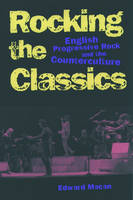
Few styles of popular music have generated as much controversy as progressive rock, a musical genre best remembered today for its gargantuan stage shows, its fascination with epic subject matter drawn from science fiction, mythology, and fantasy literature, and above all for its attempts to combine classical music's sense of space and monumental scope with rock's raw power and energy. Its dazzling virtuosity and spectacular live concerts made it hugely popular with fans during the 1970s, who saw bands such as King Crimson, Emerson, Lake and Palmer, Yes, Genesis, Pink Floyd, and Jethro Tull bring a new level of depth and sophistication to rock. On the other hand, critics branded the elaborate concerts of these bands as self- indulgent and materialistic. They viewed progressive rock's classical/rock fusion attempts as elitist, a betrayal of rock's populist origins. In Rocking the Classics, the first comprehensive study of progressive rock history, Edward Macan draws together cultural theory, musicology, and music criticism, illuminating how progressive rock served as a vital expression of the counterculture of the late 1960s and 1970s. Beginning with a description of the cultural conditions which gave birth to the progressive rock style, he examines how the hippies' fondness for hallucinogens, their contempt for Establishment-approved pop music, and their fascination with the music, art, and literature of high culture contributed to this exciting new genre. Covering a decade of music, Macan traces progressive rock's development from the mid- to late-sixties, when psychedelic bands such as the Moody Blues, Procol Harum, the Nice, and Pink Floyd laid the foundation of the progressive rock style, and proceeds to the emergence of the mature progressive rock style marked by the 1969 release of King Crimson's album In the Court of the Crimson King. This "e;golden age"e; reached its artistic and commercial zenith between 1970 and 1975 in the music of bands such as Jethro Tull, Yes, Genesis, ELP, Gentle Giant, Van der Graaf Generator, and Curved Air. In turn, Macan explores the conventions that govern progressive rock, including the visual dimensions of album cover art and concerts, lyrics and conceptual themes, and the importance of combining music, visual motif, and verbal expression to convey a coherent artistic vision. He examines the cultural history of progressive rock, considering its roots in a bohemian English subculture and its meteoric rise in popularity among a legion of fans in North America and continental Europe. Finally, he addresses issues of critical reception, arguing that the critics' largely negative reaction to progressive rock says far more about their own ambivalence to the legacy of the counterculture than it does about the music itself. An exciting tour through an era of extravagant, mind-bending, and culturally explosive music, Rocking the Classics sheds new light on the largely misunderstood genre of progressive rock.
 PDF (Adobe DRM)
Kopierschutz: Adobe-DRM
Adobe-DRM ist ein Kopierschutz, der das eBook vor Mißbrauch schützen soll. Dabei wird das eBook bereits beim Download auf Ihre persönliche Adobe-ID autorisiert. Lesen können Sie das eBook dann nur auf den Geräten, welche ebenfalls auf Ihre Adobe-ID registriert sind.
Details zum Adobe-DRM
Dateiformat: PDF (Portable Document Format)
Mit einem festen Seitenlayout eignet sich die PDF besonders für Fachbücher mit Spalten, Tabellen und Abbildungen. Eine PDF kann auf fast allen Geräten angezeigt werden, ist aber für kleine Displays (Smartphone, eReader) nur eingeschränkt geeignet.
Systemvoraussetzungen:
PC/Mac: Mit einem PC oder Mac können Sie dieses eBook lesen. Sie benötigen eine Adobe-ID und die Software Adobe Digital Editions (kostenlos). Von der Benutzung der OverDrive Media Console raten wir Ihnen ab. Erfahrungsgemäß treten hier gehäuft Probleme mit dem Adobe DRM auf.
eReader: Dieses eBook kann mit (fast) allen eBook-Readern gelesen werden. Mit dem amazon-Kindle ist es aber nicht kompatibel.
Smartphone/Tablet: Egal ob Apple oder Android, dieses eBook können Sie lesen. Sie benötigen eine Adobe-ID sowie eine kostenlose App.
Geräteliste und zusätzliche Hinweise
Buying eBooks from abroad
For tax law reasons we can sell eBooks just within Germany and Switzerland. Regrettably we cannot fulfill eBook-orders from other countries.