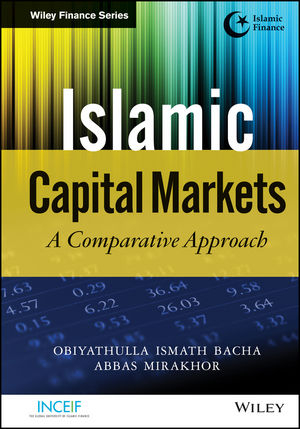
Islamic Capital Markets
John Wiley & Sons Inc (Verlag)
978-1-118-46514-1 (ISBN)
- Titel ist leider vergriffen;
keine Neuauflage - Artikel merken
Taking a comparative approach to the subject, this text looks at the similarities and differences between Islamic capital markets and conventional capital markets. The book explains each particular topic from both the conventional and the Islamic perspective, offering a full understanding of Islamic capital markets, processes, and instruments. In addition to a full explanation of Islamic products, this approach also ensures a holistic understanding of the dual markets within which Islamic capital markets operate.
Ideal for both students and current practitioners, The New Islamic Capital Markets fills a large gap in the current literature on the subject. Whereas most books in this field cover the topic only superficially, this book offers the depth of coverage and academic rigor needed by professionals and serious students.
Fills a gap in the current literature on the subject with comprehensive coverage and in–depth explanations
Takes a comparative and holistic approach to the subject and features case studies from Malaysia, Indonesia, the Middle East, and Europe
Written by a professor of finance at the International Centre for Education in Islamic Finance (INCEIF)
One of the few comprehensive, dedicated guides to the subject available, The New Islamic Capital Markets offers a full understanding of the subject for students and professionals alike.
PROFESSOR DR. OBIYATHULLA ISMATH BACHA is currently Professor of Finance and the Head of the Graduate Studies Department at the International Centre for Education in Islamic Finance ("INCEIF"), a post graduate university specialising in Islamic Finance, established by Bank Negara Malaysia. Prior to joining INCEIF, he was the Director of the International Islamic University Malaysia Management Center. Professor Obiyathulla began his working career as a Credit Officer at Maybank. Subsequent to completing his doctoral studies he was appointed an Assistant Professor of Finance at Boston University, where he taught at both the MBA and undergraduate levels and was awarded the Allen E. Beckwith Award for Teaching. Professor Obiyathulla is currently President of the Malaysian Finance Association. He has also been a trainer at several institutions such as the Securities Commission of Malaysia and the Central Bank of Malaysia. Internationally, he has conducted training programs in Islamic Capital Markets at the University of Luxembourg, The Chinese University of Hong Kong, Waseda University, Japan, IDB Jeddah and elsewhere. He has published scholarly articles in numerous local and international journals and has presented papers at several international and Islamic finance conferences .Professor Obiyathulla is a member of the Shari′ah panels of Great Eastern Assurance Corp. Malaysia , HSBC Amanah, Malaysia and Five Pillars, Singapore. He received his Doctor of Business Administration (Finance), Master of Business Administration (High Honours) and Master of Arts (Economics) from Boston University and Bachelor of Social Science from the Science University of Malaysia in Penang. DR ABBAS MIRAKHOR, born in Tehran, Islamic Republic of Iran, attended Kansas State University, where he received his PhD in economics in 1969. From 1969 to 1984, he taught in various universities in the U.S. and Iran. From 1984 until 1990, he served on the staff of the IMF, and from 1990 to present; he has been the Executive Director for Afghanistan, Algeria, Ghana, Islamic Republic of Iran, Morocco, Pakistan, and Tunisia. Dr Mirakhor is the co–editor of Essays on Iqtisad: Islamic Approach to Economic Problems (1989), and Theoretical Studies in Islamic Banking and Finance (1987). He has received several awards including "Order of Companion of Volta" for service in Ghana, conferred by the President of Ghana in 2005; Islamic Development Bank Annual Prize for Research in Islamic Economics, shared with Mohsin Khan in 2003, and "Quaid–e Azam" star for service to Pakistan, conferred by the President of Pakistan in 1997. He is currently the First Holder of the Chair of Islamic Finance in INCEIF.
Preface xv
Acknowledgments xvii
CHAPTER 1 Founding Thoughts Adam Smith, Capitalism, and Islamic Finance 1
Introduction and Overview 1
Chapter Topics 1
Chapter Objective 2
Key Terms 2
1.1 The Roots: The Economy, Real and Financial Sectors, Risk and Islamic Finance 2
1.2 Uncertainty and Risk 3
1.3 Why Is There Uncertainty and Risk? 4
1.4 Types of Risk 5
1.5 Risk in the Real Sector and in the Financial Sector 5
1.6 Financial System of Capitalism: The Foundations 6
1.7 Smith and Arrow 7
1.8 Smith and Ethical Rules 8
1.9 An Arrow–Debreu Economy 9
1.10 What Happened to the Smith–Arrow Risk–Sharing Ideal? 10
1.11 Can Economics Explain a Positive Predetermined Rate of Interest? 11
1.12 Islamic Finance: The Foundations 13
1.13 Islamic Rules Governing Exchange 15
1.14 Islamic Financial Markets and Instruments 20
1.15 Islamic Finance Industry at Present 22
1.16 What Does the Paper Economy Look Like Today, Some Five Years After the Crisis? 23
Summary 24
Questions and Problems 25
References and Further Reading 26
CHAPTER 2 The Capital Markets 37
Introduction and Overview 37
Chapter Topics 37
Chapter Objective 37
Key Terms 38
2.1 Introduction 38
2.2 Key Trends in Capital Market Development 41
2.3 Stock Exchanges of the Islamic World 45
2.4 The Debt Markets 50
2.5 The Money Markets 53
2.6 The Derivatives Market 53
2.7 Risks in Capital Markets 57
Summary 61
Questions and Problems 61
References and Further Reading 62
Websites 62
CHAPTER 3 Islamic Finance: Underlying Philosophy, Contracts, Instrument Design, and Requisites 63
Introduction and Overview 63
Chapter Topics 63
Chapter Objective 63
Key Terms 64
3.1 Introduction 64
3.2 Underlying Themes and Fundamentals of Fiqh Mu amalah 66
3.3 Requirements for Islamic Capital Market Instruments/Transactions 66
3.4 Shariah–Based Contracts for Financial Transactions 68
3.5 International Regulatory Institutions for Islamic Finance 77
Summary 79
Questions and Problems 80
References and Further Reading 80
Websites 81
CHAPTER 4 The Interbank Money Markets 83
Introduction and Overview 83
Chapter Topics 83
Chapter Objective 84
Key Terms 84
4.1 Introduction 84
4.2 Money Market Components 87
4.3 Money Market Instruments 90
4.4 The Pricing of Money Market Instruments 93
4.5 Determining the Yield of a Money Market Instrument 95
4.6 Interest Rates, Yields, and Price of Money Market Instruments 95
4.7 Malaysia Money Market Trading Performance 97
4.8 The Central Bank, Money Market, and Monetary Policy Operations 100
4.9 Commercial Banks and the Money Market 102
Summary 105
Questions and Problems 106
References and Further Reading 106
Websites 107
CHAPTER 5 The Islamic Interbank Money Market (IIMM) 109
Introduction and Overview 109
Chapter Topics 109
Chapter Objective 110
Key Terms 110
5.1 Introduction 110
5.2 The Islamic Interbank Money Market 112
5.3 Pricing the Mudarabah Interbank Investment Funds 113
5.4 The Islamic Interbank Cheque Clearing System (IICCS) 115
5.5 Islamic Money Market Instruments 115
5.6 Key Islamic Money Market Instruments 115
5.7 Pricing of Islamic Money Market Instruments 122
5.8 The Islamic Interbank Money Market and Issues of Risk 122
5.9 Trading Performance on IIMM 124
5.10 The Kuala Lumpur Islamic Reference Rate (KLIRR) 125
5.11 The Bursa Suq al Sila (BSaS) 128
5.12 The Commodity Murabahah 129
5.13 The Liquidity Management Centre (LMC) 131
Summary 133
Questions and Problems 134
References and Further Reading 135
Websites 135
CHAPTER 6 Bonds and Bond Markets 137
Introduction and Overview 137
Chapter Topics 137
Chapter Objective 138
Key Terms 138
6.1 Introduction 138
6.2 Bank Borrowing versus Bond Issuance 139
6.3 Debt versus Equity and Bond Features 141
6.4 Face Value and Par Value 142
6.5 The Pricing of Bonds 145
6.6 Bond Yields and Yield Curves 147
6.7 Yield Curve and Credit Spreads 148
6.8 What Constitutes a Yield? 149
6.9 Interest Rate Change, Bond Yields, and Duration 151
6.10 Risks Associated with Bonds 158
6.11 Types of Bonds 159
6.12 Bond Ratings 166
6.13 Ratings and Yield/Credit Spreads 167
Summary 168
Questions and Problems 168
References and Further Reading 169
CHAPTER 7 Sukuk and Sukuk Markets 171
Introduction and Overview 171
Chapter Topics 171
Chapter Objective 172
Key Terms 172
7.1 What Are Sukuk? 172
7.2 Sukuk Fundamentals 174
7.3 Underlying Islamic Contracts for Sukuk 176
7.4 Sukuk Structures 178
7.5 Sukuk Players 186
7.6 Risks Associated with Investing in Sukuk 187
7.7 Sukuk in Malaysia 191
7.8 Sukuk in Malaysia: Growth and Evolution 194
7.9 Underlying Asset and the Structuring of Sukuk 195
7.10 The Pricing of Sukuk 201
Summary 207
Questions and Problems 208
References and Further Reading 209
CHAPTER 8 Common Stocks and Equity Markets 211
Introduction and Overview 211
Chapter Topics 211
Chapter Objective 212
Key Terms 212
8.1 Introduction 213
8.2 The Evolution of Stocks 214
8.3 Why Companies Choose to List 217
8.4 Rights of Share Ownership 218
8.5 Equity Ownership and Shariah Compliance 219
8.6 The Valuation of Common Stocks 221
8.7 The Market Required Rate of Return 229
8.8 The Required Return and the Stock Price Dynamics 230
8.9 Dividend Growth and the Trade–off with Capital Gains 231
8.10 Stock Market Indices 235
8.11 Schools of Thought on Stock Price Behavior 236
Summary 243
Questions and Problems 244
References and Further Reading 245
CHAPTER 9 The Islamic Equities Market 247
Introduction and Overview 247
Chapter Topics 247
Chapter Objective 247
Key Terms 248
9.1 Introduction 248
9.2 Components of an Islamic Equities Market 249
9.3 The Screening of Stocks for Shariah Compliance 249
9.4 Components/Products of an Islamic Equities Market 254
9.5 Islamic Equity Indices 267
9.6 The Stock Exchanges of the Islamic World 269
Summary 272
Questions and Problems 273
References and Further Reading 274
Websites 274
CHAPTER 10 Derivative Instruments: Products and Applications 275
Introduction and Overview 275
Chapter Topics 275
Chapter Objective 276
Key Terms 276
10.1 Introduction 277
10.2 What Are Derivative Instruments? 277
10.3 Common Derivative Instruments 278
10.4 The Evolution of Derivative Instruments 279
10.5 Forward Contracts 280
10.6 The Need for Futures Contracts 280
10.7 The Need for Options 282
10.8 Options: Key Features and Trade–offs 283
10.9 Payoffs and Risk Profiles of Option Positions 284
10.10 Interest Rate Swaps (IRSs) 291
10.11 The Main Players in Derivative Markets 294
10.12 Commodities versus Financial Derivatives 295
10.13 Derivative Markets and the Role of the Clearinghouse 296
10.14 Applications: Using Derivatives to Manage Risk 297
10.15 What Derivative to Use? 303
10.16 Overview of Global Derivatives Trading 303
Summary 308
Questions and Problems 309
References and Further Reading 310
Websites 311
CHAPTER 11 Shariah–Compliant Derivative Instruments 313
Introduction and Overview 313
Chapter Topics 313
Chapter Objective 314
Key Terms 314
11.1 Introduction 314
11.2 Necessary Features for Islamic Financial Instruments 315
11.3 Islamic Finance Instruments with Features of Derivative Instruments 315
11.4 The Islamic Profit Rate Swap (IPRS) 321
11.5 How Is the IFI Hedged? 323
11.6 Sukuk with Embedded Options 323
11.7 Contemporary Derivative Instruments How Shariah Compliant Are They? 324
11.8 Shariah–Compliant Instruments for Managing Exchange Rate Risk 328
Summary 329
Questions and Problems 330
References and Further Reading 331
Website 331
CHAPTER 12 Exchange Rates and the Foreign Exchange Market 333
Introduction and Overview 333
Chapter Topics 333
Chapter Objective 334
Key Terms 334
12.1 Introduction 334
12.2 What Is an Exchange Rate? 335
12.3 Exchange Rate Risk 337
12.4 The Foreign Exchange Market 341
12.5 Foreign Exchange Market Players 345
12.6 Spot and Forward Markets 347
12.7 Bid–Ask Spreads 348
12.8 Cross Rates 349
12.9 The Forward Market for Exchange Rates 350
12.10 Forward versus Spot Rates 350
12.11 Forward Market Players 351
12.12 Nominal versus Real Exchange Rates 355
12.13 Shariah–Compliant Techniques for Managing Currency Exposure 356
Summary 360
Questions and Problems 361
References and Further Reading 363
Websites 363
CHAPTER 13 Capital Markets and Government Policy 365
Introduction and Overview 365
Chapter Topics 365
Chapter Objective 365
Key Terms 366
13.1 Risk Sharing 366
13.2 Islamic Finance and Risk Sharing: Role of Public Policy 377
Questions and Problems 391
References and Further Reading 392
Index 403
| Erscheint lt. Verlag | 21.10.2013 |
|---|---|
| Reihe/Serie | Wiley Finance Editions |
| Verlagsort | New York |
| Sprache | englisch |
| Maße | 186 x 257 mm |
| Gewicht | 978 g |
| Themenwelt | Sozialwissenschaften ► Soziologie ► Spezielle Soziologien |
| Wirtschaft ► Betriebswirtschaft / Management | |
| ISBN-10 | 1-118-46514-8 / 1118465148 |
| ISBN-13 | 978-1-118-46514-1 / 9781118465141 |
| Zustand | Neuware |
| Informationen gemäß Produktsicherheitsverordnung (GPSR) | |
| Haben Sie eine Frage zum Produkt? |
aus dem Bereich