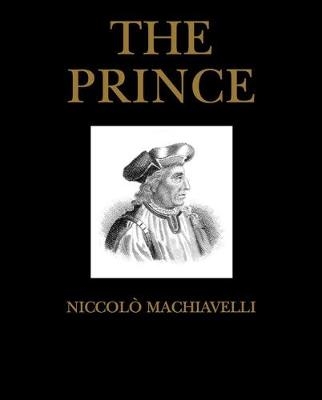
The Prince
Amber Books (Verlag)
978-1-908696-51-9 (ISBN)
- Titel erscheint in neuer Auflage
- Artikel merken

Napoleon, Mussolini, Voltaire, even Mafia man John Gotti – they all read Machiavelli’s The Prince. Philosophers such as Jean-Jacques Rousseau, David Hume and Adam Smith were influenced by it. And the book’s ideas led to the term Machiavellian entering the language. But the influence of The Prince has reached far beyond the world of politics, with business and management gurus applying Machiavelli’s ideas to corporate strategy: what was true for princes then, can be applied by leaders today. Machiavelli himself was a Florentine politician and diplomat who admired and knew Cesare Borgia, and was himself a victim of torture by the Medici family.
Written in the early 16th century, The Prince is a treatise is on how princes can not only best gain, but maintain power. He suggests how princes can avoid being hated but remain being feared by their people, he advocates pragmatic realism against political idealism, he encourages ambition, he defends evil and explains through classical and Renaissance examples which princes are the most successful. Of immense importance to politicians and corporate leaders, The Prince is a classic text richly deserving this exquisite edition.
Niccolò Machiavelli (1469–1527) was a Florentine politician and diplomat who is regarded as a founder of modern political science.
Chapters 1-2: The subject matter: new princedoms
3 “Mixed” princedoms: New conquests added to older states
4. “Mixed” princedoms: Conquered kingdoms
5. “Mixed” princedoms: Conquered Free States, with their own laws and orders 6. Totally New States: Conquests by virtue
7. Totally New States: Conquest by fortune (someone else virtue)
8. Totally New States: Conquests by “criminal virtue”
9. Totally New States: Becoming a prince by the selection of one’s fellow citizens), Being supported by the great (those who wish to command the people), Being supported by the people (those who wish not to be commanded by the great)
10. How to judge the strength of principates
11. Ecclesiastical principates
12-13. Defense and military
14. The Qualities of a Prince: A Prince’s Duty Concerning Military Matters
15. The Qualities of a Prince: Reputation
16. The Qualities of a Prince: Generosity vs. parsimony
17. The Qualities of a Prince: Cruelty vs. mercy
18. The Qualities of a Prince: In what way princes should keep their word
19. The Qualities of a Prince: Avoiding contempt and hatred
20. The Prudence of the Prince: Whether ruling conquests with fortresses works
21. The Prudence of the Prince: Gaining honors
22. The Prudence of the Prince: Nobles and staff
23. The Prudence of the Prince: Avoiding flatterers
24. Prudence and chance: Why the princes of Italy lost their states
25. Prudence and chance: Fortune
26. Prudence and chance: Exhortation to Seize Italy and to Free Her from the Barbarians
| Erscheint lt. Verlag | 15.7.2012 |
|---|---|
| Reihe/Serie | Chinese Bound |
| Sprache | englisch |
| Maße | 196 x 265 mm |
| Themenwelt | Geisteswissenschaften ► Philosophie ► Philosophie des Mittelalters |
| Sozialwissenschaften ► Politik / Verwaltung ► Politische Theorie | |
| Sozialwissenschaften ► Politik / Verwaltung ► Staat / Verwaltung | |
| ISBN-10 | 1-908696-51-6 / 1908696516 |
| ISBN-13 | 978-1-908696-51-9 / 9781908696519 |
| Zustand | Neuware |
| Informationen gemäß Produktsicherheitsverordnung (GPSR) | |
| Haben Sie eine Frage zum Produkt? |
aus dem Bereich