


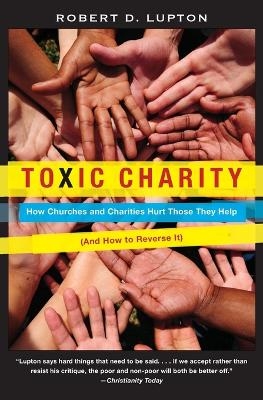
Toxic Charity
How Churches and Charities Hurt Those They Help (And How to Reverse It)
Seiten
2012
HarperOne (Verlag)
978-0-06-207621-2 (ISBN)
HarperOne (Verlag)
978-0-06-207621-2 (ISBN)
Churches and charities have fallen into the bad habit of creating programs to help the poor when in reality the only people they are helping are themselves, creating a toxic charity that needs to be reexamined and fixed. In this title,the author shows how good-intentioned people are actually hurting the very people they're trying to help.
Churches and charities have fallen into the bad habit of creating programs to help the poor when in reality the only people they are helping are themselves, creating a toxic charity that needs to be reexamined and fixed. In this groundbreaking book, Lupton shows how good-intentioned people are actually hurting the very people they're trying to help. The poor end up feeling judged, looked down upon, only worthy of charity and handouts that end up making them more dependent instead of learning skills to help themselves. Churches and charitable organizations, though good-intentioned, have missed the mark when it comes to serving the poor, creating a toxic form of charity. Lupton says that a better system would be to treat the poor as business partners, empowering them to start businesses, build houses, plan communities, etc. Lupton offers specific organizations that are following this healthier model of charity and gives practical ideas for how to get involved in service projects that truly help. Together, we can serve our world in a way that actually effects life-altering change.
Churches and charities have fallen into the bad habit of creating programs to help the poor when in reality the only people they are helping are themselves, creating a toxic charity that needs to be reexamined and fixed. In this groundbreaking book, Lupton shows how good-intentioned people are actually hurting the very people they're trying to help. The poor end up feeling judged, looked down upon, only worthy of charity and handouts that end up making them more dependent instead of learning skills to help themselves. Churches and charitable organizations, though good-intentioned, have missed the mark when it comes to serving the poor, creating a toxic form of charity. Lupton says that a better system would be to treat the poor as business partners, empowering them to start businesses, build houses, plan communities, etc. Lupton offers specific organizations that are following this healthier model of charity and gives practical ideas for how to get involved in service projects that truly help. Together, we can serve our world in a way that actually effects life-altering change.
ROBERT D. LUPTON is founder and president of FCS (Focused Community Strategies) Urban Ministries and author of Toxic Charity; Theirs Is the Kingdom; Return Flight; Renewing the City; Compassion, Justice, and the Christian Life; and the widely circulated "Urban Perspectives" newsletter. He has a Ph.D. in psychology from the University of Georgia. To learn more, visit www.fcsministries.org.
| Erscheint lt. Verlag | 22.10.2012 |
|---|---|
| Verlagsort | New York |
| Sprache | englisch |
| Maße | 135 x 203 mm |
| Gewicht | 159 g |
| Themenwelt | Religion / Theologie ► Christentum ► Pastoraltheologie |
| Sozialwissenschaften ► Pädagogik ► Sozialpädagogik | |
| Sozialwissenschaften ► Soziologie | |
| ISBN-10 | 0-06-207621-3 / 0062076213 |
| ISBN-13 | 978-0-06-207621-2 / 9780062076212 |
| Zustand | Neuware |
| Informationen gemäß Produktsicherheitsverordnung (GPSR) | |
| Haben Sie eine Frage zum Produkt? |
Mehr entdecken
aus dem Bereich



aus dem Bereich
das Christentum vor der religiösen Indifferenz
Buch | Hardcover (2024)
Verlag Herder
CHF 34,90
theologisch-diakoniewissenschaftliche Zugänge für Management, …
Buch | Softcover (2024)
Kohlhammer (Verlag)
CHF 43,90


