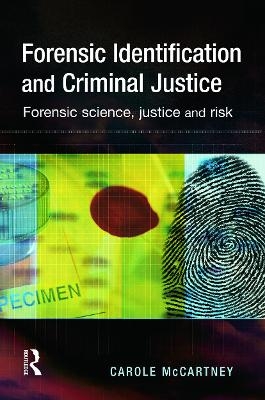
Forensic Identification and Criminal Justice
Routledge (Verlag)
978-0-415-62832-7 (ISBN)
This book uncovers the way in which this new reliance on forensic technologies has gained a foothold within the criminal justice system, and the risks and dangers that this can pose. The National DNA Database provides a particular focus of attention. The author seeks to move beyond an approach that has seen forensic DNA profiling as error free, situating her analysis within broader risk discourses.
Carole McCartney is a Senior Lecturer in the School of Law, Leeds University. Her research interests include Australian justice, innocence projects, and DNA and criminal justice.
Introduction 1. Forensic identification: the legal framework. Police investigations and forensic identity evidence. Fingerprints and DNA sampling: the legal framework 2. Forensic identification: the criminal investigation. DNA and police investigations. The DNA Expansion Programme. DNA and criminal detection rates. Forensic science and criminal investigation: a case for caution?. Conclusion: forensic identification and the criminal process 3. Forensic identification: the criminal trial. The criminal trial: fairness or truth?. Identity 'matches': acceptance of fingerprint and DNA evidence. The criminal trial: certainty and rectitude. Conclusion: forensic identification and the criminal trial. Forensic identification and criminal justice 4. The development of forensic identity databases. The development of forensic identity databases. Fingerprint databasing. A sceptical approach to forensic identity databases. Forensic identity databases: some new risks. Forensic identity databases: current problems, future risks. Conclusion: the endangerment of innocence in the pursuit of security 5. Forensic identification in other jurisdictions. Europe Pan-European developments. Interpol USA Canada New Zealand and Australia. Conclusion: England and Wales - leading the way? 6. The future of forensic identification: issues and prospects. Fingerprints and DNA in the 'fight against crime'. Future applications for forensic identification technologies. Forensic identification: human rights and civil liberties. Forensic identity databases: issues and prospects. The 'infallibility' of forensic identification. The information society: heading for 'information overload'?. Conclusion: Cause for optimism, pessimism, or scepticism?
| Erscheint lt. Verlag | 17.5.2012 |
|---|---|
| Verlagsort | London |
| Sprache | englisch |
| Maße | 156 x 234 mm |
| Gewicht | 500 g |
| Themenwelt | Naturwissenschaften ► Biologie |
| Recht / Steuern ► EU / Internationales Recht | |
| Recht / Steuern ► Strafrecht ► Kriminologie | |
| Recht / Steuern ► Strafrecht ► Strafverfahrensrecht | |
| Sozialwissenschaften | |
| Technik ► Bauwesen | |
| ISBN-10 | 0-415-62832-6 / 0415628326 |
| ISBN-13 | 978-0-415-62832-7 / 9780415628327 |
| Zustand | Neuware |
| Informationen gemäß Produktsicherheitsverordnung (GPSR) | |
| Haben Sie eine Frage zum Produkt? |
aus dem Bereich