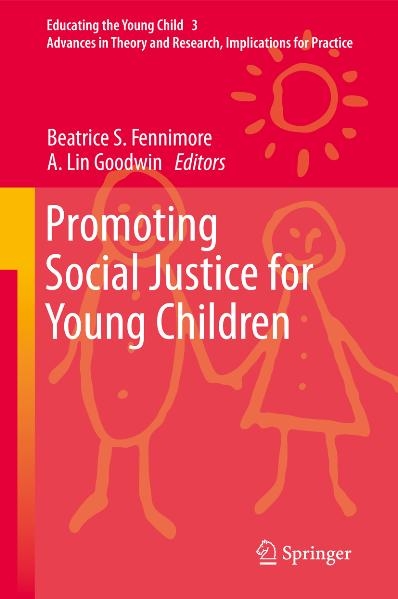
Promoting Social Justice for Young Children (eBook)
XVI, 180 Seiten
Springer Netherland (Verlag)
978-94-007-0570-8 (ISBN)
This book explores important current social justice issues that confront young children in America. A broad range of topics related to the fair treatment of young children and their families are approached with a fresh and hopeful energy. The central argument of this volume is that a fair and just society must protect the basic needs of all children so they are able to reach their full potential to learn, grow, and ultimately become productive democratic citizens. The book includes contributions from an impressive group of authors who have been consistent voices for the fair and equitable treatment of children in school and society. Each chapter examines a critical issue in child social justice with a focus on the current problem, historical importance of the issue, potential solutions, and a vision for the future. The book has been developed to reach a wide audience of professionals whose work involves children and who have grown concerned about social forces that cause child suffering and threaten the well-being or even the survival of children in the United States. Readers will come away with up to date information and a renewed commitment to being life-long advocates for children.
This book explores important current social justice issues that confront young children in America. A broad range of topics related to the fair treatment of young children and their families are approached with a fresh and hopeful energy. The central argument of this volume is that a fair and just society must protect the basic needs of all children so they are able to reach their full potential to learn, grow, and ultimately become productive democratic citizens. The book includes contributions from an impressive group of authors who have been consistent voices for the fair and equitable treatment of children in school and society. Each chapter examines a critical issue in child social justice with a focus on the current problem, historical importance of the issue, potential solutions, and a vision for the future. The book has been developed to reach a wide audience of professionals whose work involves children and who have grown concerned about social forces that cause child suffering and threaten the well-being or even the survival of children in the United States. Readers will come away with up to date information and a renewed commitment to being life-long advocates for children.
Preface 7
Contents 9
About the Contributors 11
Chapter 1 16
The Continuing Struggle for Social Justice for Children 16
Child Justice as an American Dilemma 17
What Must America Do? 17
A Window of Opportunity for Social Justice 18
Establishing Rights to Strengthen Social Justice 18
Building a New Consensus on the Rights of Children 19
Organization of This Volume 19
Safeguarding Child Welfare and Protecting Children’s Rights 20
Relevance and Meaningfulness in Early Learning Experiences 20
Children of the World in our Classrooms—Honoring Multiple Identities, Languages, and Knowledges 21
Educating Professionals for Social Justice Commitments 21
References 22
Safeguarding Child Welfare and Protecting Children’s Rights 23
Chapter 2 24
Child Poverty, Child Care, and Children’s Rights 24
Michael’s Story 24
Poverty and Social Toxicity 25
Child Poverty in the United States 26
Child Care: The Tipping Point 27
The Child Care Deficit 28
The Discourse of Cost-Benefits versus Rights 30
Child Care as a Human Right 31
Recommendations for the Future—What Would it Take? 32
References 35
Chapter 3 38
Objectified Self, Objectified Relationships: The Sexualization of Childhood Promotes Social Injustice 38
Popularity Equals Having the Right Clothes? 38
Teasing and Bullying in First Grade? 38
Sexual Harassment in Kindergarten? 39
What’s Going On? 39
Media Madness 39
Consuming Kids 40
Consuming by Marketers’ Design 40
Why Does It Matter? 41
Extremely Limiting Gender Stereotypes 41
Remote Control Childhood 42
Objectified Relationships 42
Sexualized Childhood and Social Injustice 43
What Citizens, Parents and Teachers Can Do 43
Adults Can be Thoughtfully Involved with the Media in Children’s Lives 43
Take a Proactive Role in Helping Children Make Sense of What They See and Influencing What They Learn from It 44
Conclusion: Working for Change 45
References 45
Chapter 4 47
Child Justice, Caregiver Empowerment, and Community Self-Determination 47
Child Justice Means Justice for Caregivers and Communities 47
The Intergenerational Transmission of Poverty and the Educational Achievement Gap 48
Brain Development Depends on the Social Determinants of Health and Parental Emotional Availability 49
Parental Emotional Availability Depends on Relationships to Community Supports 49
Characteristics of Programs That Promote Caregivers’ Emotional Availability 50
Parent Engagement in Programs Offering Social Connectedness and Empowerment 50
Professional Caregivers’ Emotional Availability to Children and Families 51
Collaboration Among Systems of Care 52
Realigning Professional Caregivers and Their Institutions with the Strengths and Needs of the Families They Serve 52
Culturally Adapted Programs 53
The Touchpoints Approach—An Example 53
Bolstering the Power of Attachment to Optimize Parent–Child Interactions 54
Integrating Developmental, Relational, Strengths-based, Collaborative, Culturally Adapted Approaches 54
Challenges and Opportunities for Child Justice 55
References 55
Chapter 5 59
Not in Harm’s Way. Or are They? War, Social Justice, and Young Children in the United States 59
A Peace and Social Justice Framework 60
The Effects of War on Young Children in the United States with Parents Deployed in Military Combat 61
The Impact of the Wars on All Young Children in the United States 63
The Structural Violence of War: Budget Priorities have Consequences for Young Children 64
Transformations: Promoting Social Justice 65
Counteracting the Impact of War on Children 66
Advocating for Social Justice on Behalf of Young Children 66
References 67
Relevance and Meaningfulness in Early Learning Experiences 69
Chapter 6 70
Playful Learning: Early Education that Makes Sense to Children 70
Introduction 70
The Problem: Sense-Making Is Hard to Find 70
Start Making Sense: Multiple Contexts for Children’s Play 72
Luisa in a Multilingual Head Start 73
Milesky and Her Friends in a Pressured PreK 74
Alicia and Mrs. Bee’s Kindergarteners 77
Toward a Playful Future 79
References 80
Chapter 7 82
Education That Is Multicultural and Promotes Social Justice: The Need 82
History and Context 83
Early Multicultural Models for Young Children 84
Multicultural Education: New Approaches 84
Multicultural and Social Justice Education in the Early Childhood Classroom: Definitions 85
Social Justice 86
Multiculturalism and Social Justice Education: The Focus Today 87
Reasons for the Decline of Multicultural and Social Justice Classrooms 87
How Adults Engage Children in Multicultural and Social Justice Education 88
Teachers Who Give Us Hope 88
Recommendations 89
References 90
Chapter 8 92
Revolutionary Pedagogy: Art, Culture, and Place-Based Education in an Era of Standardization 92
Social Justice for Children Through the Lens of the Arts 92
The Arts in Public Education 93
Culture in the Classroom 95
America’s Testing Machine 96
Place-Based Education 97
Revolutionary Pedagogy 98
Conclusion 99
References 99
Children of the World in Our Classrooms-Honoring Multiple Identities, Languages, and Knowledges 101
Chapter 9 102
Working with Immigrant Children of “Undocumented” and “Mixed” Families 102
The Study 103
Theoretical Framework 104
Undocumented Immigrants and Their Children in the United States 104
Special Needs of Children from Undocumented and Mixed Families 105
Structural Vulnerabilities 106
Psychological Stress 107
Language Transition 108
New Gateway State Factor 108
Recommendations 110
Provide In-Service Training for School Personnel 110
Create and Maintain a Welcoming and Friendly Human Environment in School 112
Overcome Language Barriers 112
Work with Families and Community 113
Advocate for Social Policies for Children of Undocumented Immigrant Families 114
Future Research on Children of Undocumented and Mixed Families 115
References 116
Chapter 10 119
Challenging the Text and Context of (Re)Naming Immigrant Children: Children’s Literature as Tools for Change 119
The Problem of (Re)Naming Young Children 120
Discourse in/of (Re)Naming 123
Reading and Representing Institutional Discourses: Children’s Books as Tools for Change 123
(Re)Naming in Children’s Literature 125
Applying the Critical Cycle to Collectively Negotiate a Possible Solution 125
Critical Dialog Toward Action 128
Toward Social Justice: Fostering a Broader View of Diversity and Naming 129
Implications 130
References 131
Chapter 11 133
Creating Meaningful Contexts in Schools for English Language Learners 133
The Problems of English Language Learners 134
Learning from My Professional Experience 136
Perspectives and Possible Solutions 138
Recommendations for Research and Implications for Practice 139
References 141
Educating Professionals for Social Justice Commitments 143
Chapter 12 144
Beyond Inclusion: Disability Studies in Early Childhood Teacher Education 144
Confronting Ableism in Theory and Practice 145
Adopting an Ethic of Belonging and Becoming 148
Honoring Disability Identity, Culture, and Politics 149
Conclusion 150
References 152
Chapter 13 154
Preparing Teachers of Young Children to be Social Justice-Oriented Educators 154
What is Social Justice-Oriented Teacher Education? 155
Definitions 155
Teaching a Capacity Approach to Young Children and Their Families 156
A Capacity Approach to Children with Disabilities 156
At Risk versus at Promise 156
A Rich Curriculum for Poor Children 158
Oppression, Inequity, and Equity Pedagogy 158
Practices for Social Justice Teacher Education 160
Inquiry 160
Multilevel–Multicultural Curriculum Planning 163
Looking Forward: Sharpening Understanding of Teaching for Social Justice 164
References 166
Chapter 14 169
Protecting the Rights of All Children: Using What We Know 169
Non-discrimination 170
Right to Life, Survival, and Development 171
Best Interests of the Child and Views of the Child 173
Conclusions 175
References 175
Author Index 176
Subject Index 180
| Erscheint lt. Verlag | 5.4.2011 |
|---|---|
| Reihe/Serie | Educating the Young Child | Educating the Young Child |
| Zusatzinfo | XVI, 180 p. |
| Verlagsort | Dordrecht |
| Sprache | englisch |
| Themenwelt | Geisteswissenschaften ► Psychologie ► Pädagogische Psychologie |
| Sozialwissenschaften ► Pädagogik ► Sozialpädagogik | |
| Sozialwissenschaften ► Pädagogik ► Vorschulpädagogik | |
| Sozialwissenschaften ► Politik / Verwaltung | |
| Sozialwissenschaften ► Soziologie | |
| Schlagworte | Democracy • equal educational opportunity • Learning and Instruction • school • Social Justice • social policy and children • Society • well-being • young children |
| ISBN-10 | 94-007-0570-0 / 9400705700 |
| ISBN-13 | 978-94-007-0570-8 / 9789400705708 |
| Informationen gemäß Produktsicherheitsverordnung (GPSR) | |
| Haben Sie eine Frage zum Produkt? |
 PDF (Wasserzeichen)
DRM: Digitales Wasserzeichen
Dieses eBook enthält ein digitales Wasserzeichen und ist damit für Sie personalisiert. Bei einer missbräuchlichen Weitergabe des eBooks an Dritte ist eine Rückverfolgung an die Quelle möglich.
Dateiformat: PDF (Portable Document Format)
Mit einem festen Seitenlayout eignet sich die PDF besonders für Fachbücher mit Spalten, Tabellen und Abbildungen. Eine PDF kann auf fast allen Geräten angezeigt werden, ist aber für kleine Displays (Smartphone, eReader) nur eingeschränkt geeignet.
Systemvoraussetzungen:
PC/Mac: Mit einem PC oder Mac können Sie dieses eBook lesen. Sie benötigen dafür einen PDF-Viewer - z.B. den Adobe Reader oder Adobe Digital Editions.
eReader: Dieses eBook kann mit (fast) allen eBook-Readern gelesen werden. Mit dem amazon-Kindle ist es aber nicht kompatibel.
Smartphone/Tablet: Egal ob Apple oder Android, dieses eBook können Sie lesen. Sie benötigen dafür einen PDF-Viewer - z.B. die kostenlose Adobe Digital Editions-App.
Buying eBooks from abroad
For tax law reasons we can sell eBooks just within Germany and Switzerland. Regrettably we cannot fulfill eBook-orders from other countries.
aus dem Bereich