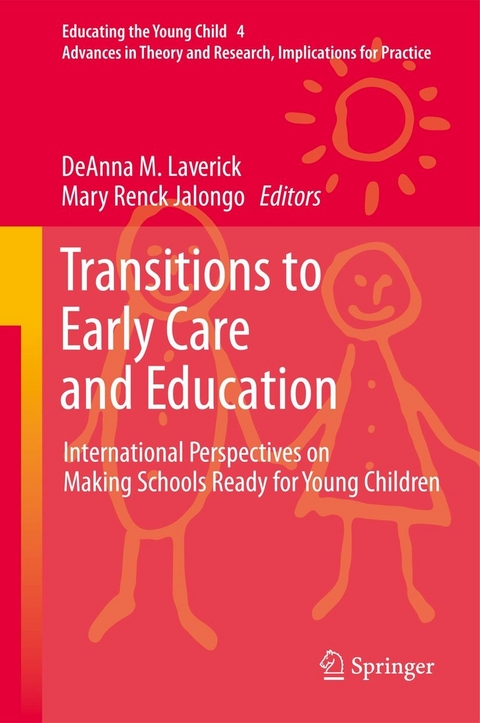
Transitions to Early Care and Education (eBook)
XVI, 204 Seiten
Springer Netherlands (Verlag)
978-94-007-0573-9 (ISBN)
Transitions to new educational experiences are a universal rite of passage encountered by children worldwide. This volume in the Educating the Young Child: Advances in Theory and Research, Implications for Practice series provides early childhood educators with a resource that focuses on the transitions that young children make to early care and education settings, along with the issues that surround this important time in their lives. New experiences, such as the start of formal schooling, mark important and exciting events that also evoke different reactions from children and their families. The diverse experiences, traits, and needs exhibited by young children provide early childhood educators with what may be a potentially challenging role. With an international focus, the purpose of Transitions to Early Care and Education: International Perspectives on Making Schools Ready for Young Children is to communicate an enlarged view of the transition process in order to appreciate and honor the promise and potential of all children worldwide. Contributing to this volume are a group of distinguished researchers, practitioners, and educators in the field of early childhood education. Their collective expertise is shared with those who are committed to educating and caring for young children and the families they serve.
Transitions to new educational experiences are a universal rite of passage encountered by children worldwide. This volume in the Educating the Young Child: Advances in Theory and Research, Implications for Practice series provides early childhood educators with a resource that focuses on the transitions that young children make to early care and education settings, along with the issues that surround this important time in their lives. New experiences, such as the start of formal schooling, mark important and exciting events that also evoke different reactions from children and their families. The diverse experiences, traits, and needs exhibited by young children provide early childhood educators with what may be a potentially challenging role. With an international focus, the purpose of Transitions to Early Care and Education: International Perspectives on Making Schools Ready for Young Children is to communicate an enlarged view of the transition process in order to appreciate and honor the promise and potential of all children worldwide. Contributing to this volume are a group of distinguished researchers, practitioners, and educators in the field of early childhood education. Their collective expertise is shared with those who are committed to educating and caring for young children and the families they serve.
Preface 6
Contents 10
Contributors 11
About the Contributors 12
About the Editors 11
Chapter 1 17
Introduction 17
Purpose of the Book 17
Overview of the Book 18
References 19
Part I Programs and Practices 20
Chapter 2 21
Transition to Group Care for Infants, Toddlers, and Families 21
The Nature of Transitions 22
Entering Early Care 22
The Developmental Meaning of Transition for Infants and Toddlers 23
Caregiver–Child Attachment: The Bottom Line 25
The Impact of Culture 26
Transition for Children Receiving Early Intervention Services 26
Family Concerns Unique to Early Intervention 28
Attachment: Children with Disabilities 29
All Infant/Toddler Care Teachers Need Support 30
Optimistic Outlook 31
References 32
Chapter 3 34
Examining the State of the Science 34
Chapter Goals 35
Caregiver Perspectives on Transition 35
Teacher Perspectives on Transition 37
Future Environment/Comparison of Preschool and Kindergarten Settings 37
Intervention Studies 38
Comprehensive Kindergarten Transition Preparation Interventions 39
Recommendations for Research 40
Recommendations for Practice 41
References 42
Chapter 4 45
Supporting and Sustaining Transition to Formal Schooling for Children on the Autism Spectrum 45
Defining Autism 45
The Role of the Teacher 46
Preparing for Transition into Formal Schooling 47
The Transition Plan 47
Professional Development 47
Ongoing Support 48
Families as Partners 48
Reciprocal Expertise 49
Family Diversity 49
Communication is Critical 49
Creating a Safe and Nurturing Learning Environment 50
The Sensory System 50
Sensory Oversensitivity 50
Perceptual Difficulties 51
Organizing Information 51
Organizing the Learning Space 52
Friendships, Relationships, and a Sense of Belonging 52
Building Communication Competencies 53
Defining How We Think About Behavior 54
Summary 55
References 55
Chapter 5 57
Early Literacy: Connections and Disconnections between Oral Language and Literacy 57
Oral Language as a Predictor of Early Literacy 57
Research into the Connections Between Prior to School/Home and School Literacies 59
Literacy and Funds of Knowledge 59
Literacy Using a Range of Modalities 60
New Literacies 61
Oral Language and Literacy 62
Discussion: Disconnections Between Oral Language and Learning to Read 63
Summary 64
References 65
Chapter 6 68
Teacher Outreach to Families Across the Transition to School: An Examination of Teachers’ Practices and Their Unique Contributions to Children’s Early Academic Outcomes 68
Teacher Outreach as an Asset for Child Development 68
Teacher Outreach Practices of Import 69
Frequency of Teacher Outreach 69
Stability in Outreach over the School Transition 70
Relations Between Outreach Practices 70
Associations Between Outreach and Child Outcomes 71
Research Questions 72
Method 72
Participants 72
Teachers 72
Children and Families 73
Measures 73
Academic Skills 73
Teacher Outreach 73
Classroom Instruction 74
Procedures 74
Data Collection 74
Results 75
Research Question 1 75
Extent, Nature, and Stability of Outreach Across the Transition to School 75
Correlations Among Teacher Outreach Practices 75
Research Question 2: Contributions of Teacher Outreach to Child Skills 77
Analytic Strategy 77
Literacy 77
Mathematics 78
Vocabulary 78
Discussion 78
Limitations and Future Research Directions 80
Implications for Practitioners 80
References 81
Part II Policies and Issues 83
Chapter 7 84
Critical Perspectives on Transition to School: Reframing the Debate 84
Terminology 85
Binary Constructions 85
Narrow Approaches to Transition 86
Theories and Pedagogies for Transition to School 88
Conclusion 92
Suggestions for Teachers 92
Suggestions for Teacher Educators 93
Suggestions for Policy Makers 93
References 94
Chapter 8 96
Transition in the Classroom: The Teacher 96
Introduction 96
Teachers’ Transition Histories 96
Transitional Strategies 98
Know Children’s Transitional Histories 98
Respond to Differences 99
Allow Transitional Objects 100
Foster Caring and Supportive Relationships 100
Conclusion 101
References 101
Chapter 9 102
Preparing Preschoolers for Kindergarten 102
Introduction 102
The Role of Teacher Belief Systems in Preparing Children for Formal Schooling 103
Data and Measures 106
Results 107
What Are the Beliefs of Early Educators in Public, Private, and Family-Based Programs About How Best to Prepare Children for Kindergarten? 107
Are There Differences in Beliefs Between Early Childhood Educators and Kindergarten Teachers? 108
Is Teacher Education Associated with Differences in Beliefs About Kindergarten Preparation and Do Patterns Related to Education Vary When Teaching Level (ECE Versus Kindergarten) is Taken into Account? 108
Discussion 109
References 112
Chapter 10 115
The School Readiness of Preschoolers from Urban Backgrounds 115
Introduction 115
Background 115
Literature Review 116
Methods 118
Sample 118
Instrument 118
Part 1: Personal Background Information 118
Part 2: Questions About School Readiness 118
Part 3: Questions About Professional Development 119
Part 4: Questions About Race and Culture 119
Data Analysis 119
Results 120
School Readiness Skills and the Transition to Kindergarten 120
Cultural Conflict Issues 120
Positive Approaches and Strategies for Working with Children of Color 120
Professional Development Techniques for Helping Staff Work Well with Children of Color 121
What Are the Issues White, Middle-Class Teachers Face When Working with Children from Economically and Racially Diverse Backgrounds? 121
What Are the Professional Development Models That are Most Effective in Addressing These Issues and Changing Teachers’ Practices? 121
What is the Impact of Changes in Teachers’ Practices on Urban Preschoolers’ School Readiness? 122
Recommendations and Conclusions 122
References 123
Chapter 11 124
Culture, Health, and School Readiness: An Integrated Approach to Transition 124
Theory and Approaches for Integrating Culture, Health, and School Readiness 124
No Universal Definition 124
Academic Emphasis 124
Balanced Curriculum 125
Interdisciplinary Approaches 126
Convergent Theoretical Perspective 126
Ecological Approaches 127
Culture and School Readiness 128
Impact of Sociocultural Contexts 128
Cognitive Development 129
Social and Emotional Development 129
Measuring Children’s School Readiness 130
Access to School Readiness Programs 131
Community Involvement 132
Health and School Readiness 132
Health and Transition to School 132
Obesity in Young Children 133
Obesity Widens Achievement Gaps 133
Early Prevention 134
Teachers and Parents as Models 134
Cultural Responsiveness 135
Implications 136
References 137
Part III International Perspectives 141
Chapter 12 142
Reconsidering Readiness: 142
Ready Schools Efforts in the United States and Northern Italy 142
Ready Schools Address Factors that Put Children at Risk for School Failure 142
Cultural Incongruity Between Home and School 143
Continuity Between Early Care and Education and Local Schools 143
Expecting Every Child to Be Successful 144
Efforts in the United States to Make Schools Ready for Children 144
Head Start’s Transition Mandate 145
Countdown to Kindergarten 146
Foundation-Supported Efforts 146
Efforts in Northern Italy to Make Schools Ready for Children 147
Reggio Emilia Pedagogy: Environment as Third Teacher 148
Reggio Emilia Pedagogy: Priming Events 148
Morning Meeting 148
Storia Personale 149
Group Literacy Projects 149
Field Trips 149
Similarities in United States and Northern Italian Approaches to Making Schools Ready for Children 150
Cultural Incongruity 150
Continuity Between Preschools and Local Schools 150
Expecting Every Child to Succeed 151
Implications and Recommendations 151
References 152
Chapter 13 154
Preparing Young Children for Schools in China 154
Overview 154
Foundations of Early Childhood Education in China 155
Historical Background 155
Theoretical Foundations 155
The Evolution of the Early Childhood Education Curricula 156
Top-Down Model of the Kindergarten Reform 156
Goals and Standards 157
Types of Early Childhood Programs 158
Full-Day Kindergarten Programs 158
Part-Day or Seasonal Programs 158
Boarding Programs 159
Pre-Primary Programs 159
Infants and Toddlers Programs 160
Private Early Childhood Programs 160
Early Childhood Transitions 161
From Home to Nursery 161
From Nursery to Kindergarten 162
Kindergarten to Primary 162
Pre-primary to Primary 163
Social and Cultural Influence in Preparing Young Children for Schools 163
Traditional Values 164
Western Standards 164
Political Priority 165
References 165
Chapter 14 167
The Socio-Cultural Contexts of Early Education in Caribbean Societies 167
Framing the Meaning of Transition in Caribbean Countries 168
Childrearing Practices and Transition 170
Parental Beliefs and Expectations of Young Children 171
School Readiness as an Emerging Transition Issue in Caribbean Countries 172
Recommendations and Conclusion 176
References 177
Chapter 15 180
Transition to School 180
Biological Basis of Early Development 181
School Readiness 181
Concurrent Determinants of Kindergarten Outcomes in Canada and Mexico 183
Does Parent Engagement Make a Difference for School Readiness? 185
Empirical Study of Parent Engagement and Children’s Kindergarten Outcomes 186
Home-Based Activities with Parents 187
Casual and Sessional Community Activities 187
Community Activities by Type 187
Overall Parent Engagement Results 188
Conclusions 188
References 189
Chapter 16 191
Schools as Integrated Hubs for Young Children and Families 191
Perspectives on “School Readiness” 191
A Universal Community Strategy for Improving Readiness: Schools as Integrated Hubs 192
The Toronto First Duty (TFD) Project: A Universal Model for Delivering Integrated Early Childhood Services 194
Policy Context: From Readiness to Population Health 195
TFD Evaluation Framework 196
Key Findings and Implications for Practice and Policy 197
Child Outcomes 197
Integrated Professional and Parental Pathways to Better Transitions 198
Implications for Integrated Practice 199
Policy Implications for School-as-Hub 200
Policy Implications for Universal Models of Transition 200
References 201
Index 205
| Erscheint lt. Verlag | 23.3.2011 |
|---|---|
| Reihe/Serie | Educating the Young Child | Educating the Young Child |
| Zusatzinfo | XVI, 204 p. |
| Verlagsort | Dordrecht |
| Sprache | englisch |
| Themenwelt | Geisteswissenschaften ► Psychologie ► Pädagogische Psychologie |
| Sozialwissenschaften ► Pädagogik ► Vorschulpädagogik | |
| Schlagworte | autism spectrum disorders (ASDs) • Canada • Caribbean • childhood educators • children's needs • China • Chinese children • Early childhood education • Elementary School • formal school • Functional Behavior Analysis (FBA) • Infants • International perspectives • Italy • Kindergarten • Mexico • parental involvement • Practice • school-age • School environment • School Readiness • school teachers • Teacher Education • transition to school • United States • young children |
| ISBN-10 | 94-007-0573-5 / 9400705735 |
| ISBN-13 | 978-94-007-0573-9 / 9789400705739 |
| Informationen gemäß Produktsicherheitsverordnung (GPSR) | |
| Haben Sie eine Frage zum Produkt? |
 PDF (Wasserzeichen)
DRM: Digitales Wasserzeichen
Dieses eBook enthält ein digitales Wasserzeichen und ist damit für Sie personalisiert. Bei einer missbräuchlichen Weitergabe des eBooks an Dritte ist eine Rückverfolgung an die Quelle möglich.
Dateiformat: PDF (Portable Document Format)
Mit einem festen Seitenlayout eignet sich die PDF besonders für Fachbücher mit Spalten, Tabellen und Abbildungen. Eine PDF kann auf fast allen Geräten angezeigt werden, ist aber für kleine Displays (Smartphone, eReader) nur eingeschränkt geeignet.
Systemvoraussetzungen:
PC/Mac: Mit einem PC oder Mac können Sie dieses eBook lesen. Sie benötigen dafür einen PDF-Viewer - z.B. den Adobe Reader oder Adobe Digital Editions.
eReader: Dieses eBook kann mit (fast) allen eBook-Readern gelesen werden. Mit dem amazon-Kindle ist es aber nicht kompatibel.
Smartphone/Tablet: Egal ob Apple oder Android, dieses eBook können Sie lesen. Sie benötigen dafür einen PDF-Viewer - z.B. die kostenlose Adobe Digital Editions-App.
Buying eBooks from abroad
For tax law reasons we can sell eBooks just within Germany and Switzerland. Regrettably we cannot fulfill eBook-orders from other countries.
aus dem Bereich