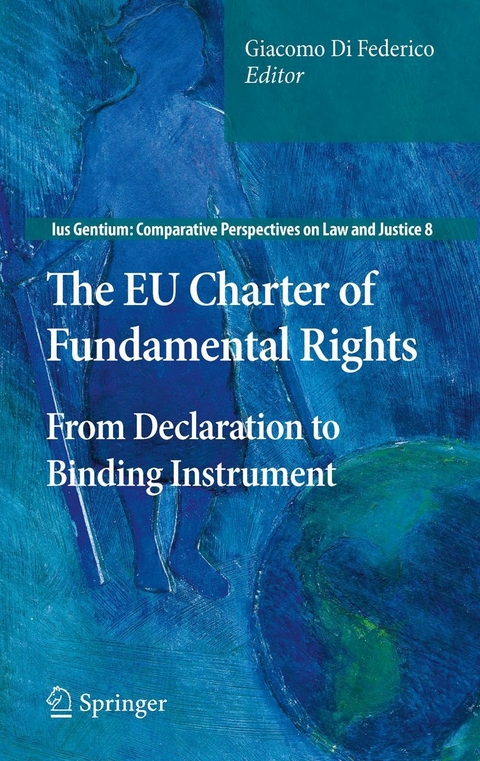
The EU Charter of Fundamental Rights (eBook)
XX, 320 Seiten
Springer Netherland (Verlag)
978-94-007-0156-4 (ISBN)
The first part of the book reviews the multi-level system of protection currently operating in Europe and its constitutional implications. The Charter is analysed from a legal, political and practical standpoint. The activity of the European Parliament as a fundamental rights actor will also be examined, as well as the right to a fair trial and to effective judicial protection before and by the EU Courts. The second part of the volume addresses the impact of a binding Charter on specific areas of EU Law. The order in which the contributions have been set out reflects the structure of the Treaty on the functioning of the European Union: free circulation of persons; the internal market; the area of freedom security and justice (civil and criminal aspects); social rights protection; environmental policy; enlargement; international trade and the Common Foreign and Security Policy.
Preface 5
Acknowledgments 9
Contents 10
Contributors 12
About the Contributors 14
Abbreviations 17
Part I The Charter of Fundamental Rights in a Broader Perspective 18
The Charter of Fundamental Rights and the European Res Publica 19
1 Preliminary Remarks 19
2 The Charter: A Brief Presentation of Its Anatomy and Treaty Location 19
3 The Background to the Charter 20
4 The Charter a Piece in the Larger Constitutional Picture 23
5 The Charter as a Part of the Res publica of the EU 24
5.1 Rights Protection and Democracy 24
5.2 Is There a Need for the Charter? 26
5.3 Problems Presented by the Charter 28
6 Final Remarks 29
Fundamental Rights in the EU: Legal Pluralism and Multi-Level Protection After the Lisbon Treaty 31
1 Preliminary Remarks 31
2 The Development and Consolidation of Human Rights Protection in Europe 32
2.1 The Lack of a Comprehensive Approach 32
2.2 A Multilevel System of Protection 38
3 The Relations Between the National, Supranational and International Dimensions 40
3.1 The Obligation to Respect the ECHR in the Legal Orders of the EU Member States 40
3.2 The Need to Comply with the ECHR in Matters Falling Within the Field of Application of EC/EU Law 41
3.3 Application of the ECHR by the European Court of Justice: Remedying Deficiencies Through Judicial Control and Interaction 48
4 The Protection of Fundamental Rights Under the Lisbon Treaty 54
4.1 A Binding Charter of Fundamental Rights 54
4.2 The Accession of the EU to the ECHR: Technical Arrangements, Judicial Interaction and Legal Consequences 61
5 Future Perspectives: Developing a Coherent System of Fundamental Rights Protection in Europe 68
The European Charter of Fundamental Rights and the Courts 71
1 Preliminary Remarks 71
2 The Advocates General and the First References to the Charter 73
3 The European Court of First Instance: The Forerunner in Using the Charter for Dispute Settlement 79
4 The Charter and the Court of Justice 82
5 The Charter and the European Court of Human Rights 84
6 The Charter and the Constitutional Courts of the Member States 86
7 National and Community Courts: Role and Power of Appraisal Under the Lisbon Treaty 91
The European Parliament and the EU Charter of Fundamental Rights 92
1 Preliminary Remarks 92
2 The European Parliament and Fundamental Rights 92
3 The European Parliament as a Fundamental Rights Actor 94
3.1 The Action of the European Parliament in the Field of Human Rights: External Relations 95
3.2 The Action of the European Parliament in the Field of Fundamental Rights: The ''Internal Dimension'' 99
4 A Possible New Partner of the EP: The Agency for Fundamental Rights 105
5 The Impact of a Newly Binding Charter of Fundamental Rights on the Activity of the European Parliament 107
Fair Trial, Due Process and Rights of Defence in the EU Legal Order 110
1 Preliminary Remarks 110
2 Art. 47 in the Case Law of the European Court of Justice 112
2.1 The Right to an Effective Judicial Protection 113
2.2 The Right to a Fair Trial 115
2.3 The Right to a Hearing Within a Reasonable Time 117
2.4 The Right of Defence and the Right to Be Heard 120
3 Future Perspectives Arising from the Reform Treaty 121
Candidate Countries Facing a Binding Charter of Fundamental Rights: Whats New? 123
1 Preliminary Remarks 123
2 Fostering Integration Through a Binding Charter 124
3 The Double Standard vis--vis Member States 127
4 The Charter and Candidate Countries: Old Acquis or New Burdens? 129
4.1 A Brief Excursus on Enlargement Conditionality 129
4.2 The True Scope of the Charter 132
5 The Impact of a Binding Charter of Fundamental Rights on Enlargement Conditionality 134
Part II The Charter of Fundamental Rights Applied 136
Free Movement of Needy Citizens After the Binding Charter. Solidarity for All? 137
1 From Market Citizenship to Union Citizenship 137
2 Union Citizenship and Access to Welfare 141
3 The Impact of Citizenship Provisions of the Lisbon Treaty 145
4 The Impact of Art. 45 CFR 147
5 The Impact of Solidarity on Free Movement of Citizens 150
5.1 Access to Public Benefits: Art. 34 CFR and the Limit of Sufficient Resources 152
5.2 Access to Health Care: Art. 35 CFR and the Limit of Sickness Insurance 154
6 Conclusions 155
Internal Market Derogations in Light of the Newly Binding Character of the EU Charter of Fundamental Rights 157
1 Preliminary Remarks 157
2 The Internal Market and Fundamental Rights Pre-Lisbon 159
3 A Right of Way for the Fundamental Freedoms? 160
4 From Schmidberger and Omega to Laval and Viking: A Balancing Act 162
5 The Internal Market and Fundamental Rights Post-Lisbon 166
6 The Effects of a Newly Binding Charter of Fundamental Rights 167
Article 47 of the EU Charter of Fundamental Rights and Its Impact on Judicial Cooperation in Civil and Commercial Matters 172
1 Preliminary Remarks 172
2 Effective Judicial Protection: An Old Concept with a New Vest 173
3 The Standing of Private Applicants in the EU and the Effective Access to Justice: A Second Round Forthcoming? 176
4 Effective Access to Justice and Judicial Cooperation in Civil and Commercial Matters 181
5 The Impact of a Binding Charter on Enforcement Policy in the Area of Freedom, Security and Justiceand Beyond. Some Brief Considerations de iure condendo 186
The European Charter of Fundamental Rights and the Area of Freedom, Security and Justice 187
1 Preliminary Remarks 187
2 The Area of Freedom, Security and Justice Before and After the Lisbon Treaty 187
2.1 Scope of Application and Competences 187
2.2 Sources of Law and Primacy 190
2.3 Judicial Review 193
3 Fundamental Rights Protection in Police and Judicial Cooperation in Criminal Matters: Legal Framework 195
4 Some Criticalities: Due Process, Judicial Review and Data Protection 198
5 The Effects of a Binding EU Charter of Fundamental Rights in the Area of Freedom, Security and Justice After Lisbon 204
Social Rights in the European Union: The Possible Added Value of a Binding Charter of Fundamental Rights 208
1 What Are Social Rights? 208
2 Social Rights in the Constitutions of the EU Member States 209
3 Social Rights in the EU Legal Order: Retrospective Analysis 211
4 The Open Method of Coordination 214
5 Social Rights and the EU Charter of Fundamental Rights 217
6 Social Rights vs. Economic Freedoms: The Balancing of Interests in the Case-Law of the European Court of Justice 220
7 The UK and Polish Protocol on the Charter: A Real Opt-Out? 222
8 Final Remarks 224
The Charter of Fundamental Rights and the Environmental Policy Integration Principle 225
1 Preliminary Remarks 225
2 The Protection of Environmental Law in the EU Legal Order: A Brief Overview 226
3 The Environmental Policy Integration (EPI) Principle in the Charter of Fundamental Rights (CFR) 227
3.1 The Drafting of Art. 37 CFR 228
3.2 Art. 37 of the Charter of Fundamental Rights: Substantive and Interpretative Issues 230
4 Art. 37 and the EPI Principle 233
5 The Legal Enforceability of the EPI Principle in the Light of ECJ Jurisprudence 234
6 The EPI Principle as a Method of Governance 235
6.1 The Horizontal Integration 236
6.2 The Vertical Integration 237
7 From Nice to Strasburg: A Missed Opportunity to Reform Art. 37 CFR? 239
8 The Integrated Approach Between Climate Change and EU Energy Law 240
9 The Impact of Climate Change Policies on EU External Relations 241
10 The Different Roles of the Fundamental Rights Agency and the European Environment Agency 242
11 and the Possible Inconsistencies in the Case Law of the Luxembourg and Strasbourg Courts 243
12 Some Final (But Not Conclusive) Remarks 247
The EU Charter of Fundamental Rights and the Social Dimension of International Trade 249
1 Preliminary Remarks 249
2 Social Dumping and the Debate on the Inclusion of a Social Clause in Multilateral Trade Agreements 250
3 The EU and the Promotion of Core Labour Standards 254
4 Workers Rights in the EU Charter 261
5 EU Charter Social Rights and Future Developments in EU Practice Relating to the International Promotion of Core Labour Standards: A Real Change After Lisbon? 266
5.1 The Effects of the Charter Rights Beyond EU Borders 267
5.2 The Charter as Parameter of Legality for the EU's Commercial Policy 269
5.3 Will the Charter be a Real Watershed? 270
6 Final Remarks 270
The European Charter of Fundamental Rights After Lisbon: A Timid Trojan Horse in the Domain of the Common Foreign and Security Policy? 273
1 Preliminary Remarks 273
2 The New Article 6 TEU and the Binding Nature of Charter 274
3 The CFSP After the Treaty of Lisbon (a Brief Outline) 275
4 The CFSP Practice on Restrictive Measures 276
5 Restrictive Measures Directed to States 277
6 Restrictive Measures Against Non-state Actors 279
6.1 Restrictive Measures Against Non-state Actors in Fighting Terrorism and the Listing Procedures 281
6.2 Weighing Security Against Fundamental Rights Protection in the Fight on Terrorism 283
6.3 The Case-Law 284
7 The Effects of a Binding Charter in the CFSP 289
8 The Ex Ante Mechanism 289
9 And the Ex Post Mechanism 291
10 The Binding Charter: A Trojan Horse Within CFSP? 293
Bibliography 294
Table of Cases 316
Index 323
| Erscheint lt. Verlag | 2.12.2010 |
|---|---|
| Reihe/Serie | Ius Gentium: Comparative Perspectives on Law and Justice | Ius Gentium: Comparative Perspectives on Law and Justice |
| Zusatzinfo | XX, 320 p. |
| Verlagsort | Dordrecht |
| Sprache | englisch |
| Themenwelt | Recht / Steuern ► EU / Internationales Recht |
| Recht / Steuern ► Öffentliches Recht ► Verfassungsrecht | |
| Sozialwissenschaften ► Politik / Verwaltung | |
| Schlagworte | Accession ECHR • Candidate countries • Consitutional Courts • Democracy • Due Process • EU Charter • EU Legal Order • eu member states • EU Policies • Europe • European Court of First Instance • European Court of Human Rights • European Parliament • fair trial • foreign policy • freedom • Fundamental Rights • International Trade • Justice • Legal Pluralism • Lisbon Treaty • Res Republica • Rights of Defence • Rights Protection • security • security policy • social rights • Union Citizenship |
| ISBN-10 | 94-007-0156-X / 940070156X |
| ISBN-13 | 978-94-007-0156-4 / 9789400701564 |
| Informationen gemäß Produktsicherheitsverordnung (GPSR) | |
| Haben Sie eine Frage zum Produkt? |
 PDF (Wasserzeichen)
DRM: Digitales Wasserzeichen
Dieses eBook enthält ein digitales Wasserzeichen und ist damit für Sie personalisiert. Bei einer missbräuchlichen Weitergabe des eBooks an Dritte ist eine Rückverfolgung an die Quelle möglich.
Dateiformat: PDF (Portable Document Format)
Mit einem festen Seitenlayout eignet sich die PDF besonders für Fachbücher mit Spalten, Tabellen und Abbildungen. Eine PDF kann auf fast allen Geräten angezeigt werden, ist aber für kleine Displays (Smartphone, eReader) nur eingeschränkt geeignet.
Systemvoraussetzungen:
PC/Mac: Mit einem PC oder Mac können Sie dieses eBook lesen. Sie benötigen dafür einen PDF-Viewer - z.B. den Adobe Reader oder Adobe Digital Editions.
eReader: Dieses eBook kann mit (fast) allen eBook-Readern gelesen werden. Mit dem amazon-Kindle ist es aber nicht kompatibel.
Smartphone/Tablet: Egal ob Apple oder Android, dieses eBook können Sie lesen. Sie benötigen dafür einen PDF-Viewer - z.B. die kostenlose Adobe Digital Editions-App.
Buying eBooks from abroad
For tax law reasons we can sell eBooks just within Germany and Switzerland. Regrettably we cannot fulfill eBook-orders from other countries.
aus dem Bereich