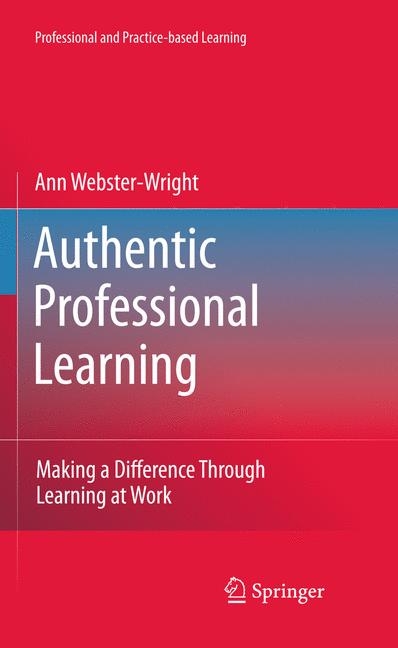
Authentic Professional Learning (eBook)
XVI, 260 Seiten
Springer Netherland (Verlag)
978-90-481-3947-7 (ISBN)
There is considerable and growing interest in professionals learning across their working lives. The growth in this interest is likely premised upon the increasing percentage of those who are being employed under the designation as professi- als or para-professional workers in advanced industrial economies. Part of being designated in this way is a requirement to be able to work autonomously and in a relatively self-regulated manner. Of course, many other kinds of employment also demand such behaviours. However, there is particular attention being given to the ongoing development of workers who are seen to make crucial decisions and take actions about health, legal and ?nancial matters. Part of this attention derives from expectations within the community that those who are granted relative autonomy and are often paid handsomely should be current and informed in their decisi- making. Then, like all other workers, professionals are required to maintain their competence in the face of changing requirements for work. Consequently, a volume that seeks to inform how best this ongoing learning can be understood, supported and assisted is most timely and welcomed. This volume seeks to elaborate professional learning through a consideration of the concept of authentic professional learning. What is proposed here is that, in contrast to programmatic approaches towards professional development, the process of continuing professional learning is a personal, complex and diverse process that does not lend itself to easy prescription or the realisation of others' intents.
Series Editors Foreword 6
Preface 8
Acknowledgements 10
Contents 11
List of Figure & Tables
Part I Introduction 16
1 Professional Learning at Work 18
1.1 A Morning at Work 19
1.2 Intent of This Book 20
1.3 Research Basis 22
1.4 Understanding Professional Learning 25
References 29
Part II Exploration 31
2 Mapping the Research Terrain 32
2.1 Exploring Professional Learning and Development 33
2.1.1 Learning Theories 33
2.1.2 Conceptions of Professional Knowing and Learning 34
2.1.3 Traditional and Innovative Professional Development 35
2.2 The Development of Professions 36
2.3 Pathways to Professionalism 38
2.3.1 Characteristics of a Profession 38
2.3.2 Developing Authoritative Experts 40
2.3.3 Defining Boundaries and Uniform Standards 41
2.3.4 Seeking Scientific Rigour and Evidence 44
2.3.5 Progressing Relentlessly Towards Excellence 47
2.3.6 Managing Uncertainty and Complexity 51
2.3.7 Valuing Possibilities of Professionalism 55
2.4 Tracing Professional Development 56
2.4.1 Threads of Inquiry 57
2.4.2 Patterns of Tensions 58
2.4.3 Professional Development Terrain 59
2.5 Setting the Scene 60
References 62
3 A Phenomenological Perspective 71
3.1 Wondering About Phenomenology 71
3.2 Phenomenology as a Conceptual Framework 72
3.2.1 Phenomenological Philosophy 72
3.2.2 Phenomenological Concepts 74
3.2.2.1 Life-World 74
3.2.2.2 Being-in-the-World 75
3.2.2.3 Embodied Knowing 76
3.2.2.4 Construction of Meaning 77
3.2.2.5 Understanding 79
3.2.3 Philosophical Assumptions of This Research 80
3.3 Phenomenology as a Methodological Approach 81
3.3.1 Principles of Phenomenological Research 81
3.3.1.1 Phenomenological Attitude 81
3.3.1.2 Phenomenological Essence 82
3.3.2 Empirical Phenomenology 83
3.3.2.1 Phenomenology as a Scientific Method 84
3.3.2.2 Phenomenology as Evocation of Lived Experience 85
3.3.2.3 Phenomenology as Rigorous Yet Evocative 86
3.4 Summary of Phenomenological Perspective 86
References 87
4 Delving into Methodology 90
4.1 Reflexive Methodology 90
4.2 Criteria of Quality in Research 92
4.3 Research Design 93
4.4 Rigour, Relevance and Reflexivity 95
4.5 Engaging with the Participants 97
4.6 Data Analysis 100
4.6.1 Dwelling with the Data 101
4.6.2 Transformation of Data 101
4.6.2.1 First Transformation 107
4.6.2.2 Second Transformation 107
4.6.2.3 Final Transformation 108
4.6.3 Developing the Structure 109
4.6.3.1 Determining the Constituents 109
4.6.3.2 Creating the Structure 110
4.6.3.3 Evoking the Structure 111
4.7 Looking Back 111
References 112
Part III Understanding 115
5 Authentic Professional Learning 116
5.1 Professional Life-World 116
5.1.1 Professional Affiliations 116
5.1.2 Employer Organisations 117
5.1.3 Local Workplaces 118
5.2 Situations Where Professionals Learn 119
5.3 Phenomenological Structure of APL 121
5.3.1 Overview of Authentic Professional Learning 121
5.3.2 Learning as Change in Professional Understanding 123
5.3.2.1 Change in Professional Understanding 124
5.3.2.2 Learning Transitions 125
5.3.2.3 Varying Types of Transitions 126
5.3.2.4 Vignette: A Whole New Way of Looking at Everything 127
5.3.3 Learning Through Engagement in Professional Practice 129
5.3.3.1 Active Engagement in Professional Practice 129
5.3.3.2 Caring About Practice 130
5.3.3.3 Uncertainty in Learning 131
5.3.3.4 Revealing the Novel 132
5.3.3.5 Vignette: Putting the Pieces Together 133
5.3.4 Learning Through Interconnection Over Time 134
5.3.4.1 Circuitous and Iterative Web 134
5.3.4.2 Imagination Draws Together 135
5.3.4.3 Dynamic Interaction with Others 136
5.3.4.4 Vignette: How Will I Do It Differently Next Time? 138
5.3.5 Learning as Circumscribed Openness to Possibilities 140
5.3.5.1 Openness to Possibilities 140
5.3.5.2 Opportunities and Constraints of Professional Context 142
5.3.5.3 Resolution of Tensions 145
5.3.5.4 Vignette: The Theoretical Framework Doesn't Match Reality 146
5.3.6 Summary of the Structure of APL 147
5.4 Learning as Part of Being a Professional 148
Part IV Integration 152
6 Rhetoric Versus Reality 154
6.1 Dealing with Dissonance 154
6.2 Problematic Issues in APL 157
6.2.1 Questioning Assumptions 158
6.2.2 Engaging with Uncertainty 160
6.2.3 Imagining Conversations 164
6.2.4 Voicing What Is Valued 166
6.3 Wider Context of Professional Dissonance 168
6.3.1 Competing Life-World Discourses 169
6.3.2 The Hidden Nature of Dissonance 171
References 173
7 Authenticity in Professional Life 179
7.1 Ontological Claims 179
7.1.1 What Does ?Being a Professional? Mean? 180
7.1.2 Being-in-the-Professional-World 182
7.1.3 Ontological Dimensions of Learning 183
7.1.3.1 Understanding of Being a Professional 183
7.1.3.2 Embodied Engagement in Practice 184
7.1.3.3 Expressing Shared Interconnection 185
7.1.3.4 Possibilities of Circumscribed Openness 186
7.1.3.5 Summary of Ontological Dimensions of APL 187
7.2 Authenticity in Professional Learning 188
7.2.1 Mavericks and Impostors 188
7.2.1.1 Vignette: I'm Never Sure if What I'm Learning Is the Truth 188
7.2.1.2 Being an Authentic Professional 189
7.2.2 Describing the Concept of Authenticity 190
7.2.2.1 Social Construction of Self 190
7.2.2.2 Public Professional World 191
7.2.2.3 Being Authentic 192
7.3 Transformation Through APL 194
7.3.1 Change Through APL Experiences 194
7.3.1.1 Vignette: Learning to Do What a Professional Does 194
7.3.1.2 Way of Being a Professional 195
7.3.2 Transformative Learning 197
7.4 Values in Professional Life 198
References 199
8 Finding a Way Forward 203
8.1 Scaffolding Authentic Professional Learning 204
8.1.1 Awareness as a Resource 205
8.1.2 Learning Relationships 206
8.1.3 Challenging Support 208
8.1.4 Critical Capability 209
8.1.5 Intelligent Accountability 210
8.1.6 Learning Ecologies 212
8.2 Creating Cultural Change 214
8.2.1 Culture of Inquiry 215
8.2.1.1 Celebration of Practice 216
8.2.1.2 Creative Dissent 217
8.2.2 Reflexive Authenticity 218
8.2.2.1 Standing Back 218
8.2.2.2 Standing Up 219
8.2.3 Sustainable Change 220
8.3 Professional Learning Pathways 222
8.3.1 Interconnected Matrix of Flexible Options 222
8.3.2 Authentic Professional Learning Groups 223
8.3.3 Existing Models for Supporting Learning 225
8.3.4 Existing Resources for Supporting Learning 227
8.4 Moving Forward 228
References 229
Part V Conclusion 236
9 Making a Difference 238
9.1 Revisiting the Research 239
9.1.1 Exploration of the Field 239
9.1.2 Key Findings of the Research 240
9.1.3 Continuation of Traditional PD 242
9.1.4 Finding What I Was Looking for 244
9.2 Philosophy and Practice 245
9.2.1 Contributions of Phenomenological Philosophy 245
9.2.2 What Matters in Professional and Public Life? 247
9.3 Making a Difference by Supporting APL 249
9.3.1 Making a Difference at Work 249
9.3.2 Making a Difference Beyond Work 251
9.4 Understanding Authentic Professional Learning 252
9.5 Reflections on the Day 254
9.5.1 In the Car 254
9.5.2 At Lunch Time 255
9.5.3 In the Car 256
References 256
Index 259
| Erscheint lt. Verlag | 5.8.2010 |
|---|---|
| Reihe/Serie | Professional and Practice-based Learning | Professional and Practice-based Learning |
| Zusatzinfo | XVI, 260 p. |
| Verlagsort | Dordrecht |
| Sprache | englisch |
| Themenwelt | Geisteswissenschaften |
| Sozialwissenschaften ► Pädagogik ► Berufspädagogik | |
| Sozialwissenschaften ► Pädagogik ► Erwachsenenbildung | |
| Schlagworte | Adult Education • authenticity • community-based education • continuing education • Phenomenology • professional learning • Work • workplace learning |
| ISBN-10 | 90-481-3947-3 / 9048139473 |
| ISBN-13 | 978-90-481-3947-7 / 9789048139477 |
| Informationen gemäß Produktsicherheitsverordnung (GPSR) | |
| Haben Sie eine Frage zum Produkt? |
 PDF (Wasserzeichen)
DRM: Digitales Wasserzeichen
Dieses eBook enthält ein digitales Wasserzeichen und ist damit für Sie personalisiert. Bei einer missbräuchlichen Weitergabe des eBooks an Dritte ist eine Rückverfolgung an die Quelle möglich.
Dateiformat: PDF (Portable Document Format)
Mit einem festen Seitenlayout eignet sich die PDF besonders für Fachbücher mit Spalten, Tabellen und Abbildungen. Eine PDF kann auf fast allen Geräten angezeigt werden, ist aber für kleine Displays (Smartphone, eReader) nur eingeschränkt geeignet.
Systemvoraussetzungen:
PC/Mac: Mit einem PC oder Mac können Sie dieses eBook lesen. Sie benötigen dafür einen PDF-Viewer - z.B. den Adobe Reader oder Adobe Digital Editions.
eReader: Dieses eBook kann mit (fast) allen eBook-Readern gelesen werden. Mit dem amazon-Kindle ist es aber nicht kompatibel.
Smartphone/Tablet: Egal ob Apple oder Android, dieses eBook können Sie lesen. Sie benötigen dafür einen PDF-Viewer - z.B. die kostenlose Adobe Digital Editions-App.
Buying eBooks from abroad
For tax law reasons we can sell eBooks just within Germany and Switzerland. Regrettably we cannot fulfill eBook-orders from other countries.
aus dem Bereich