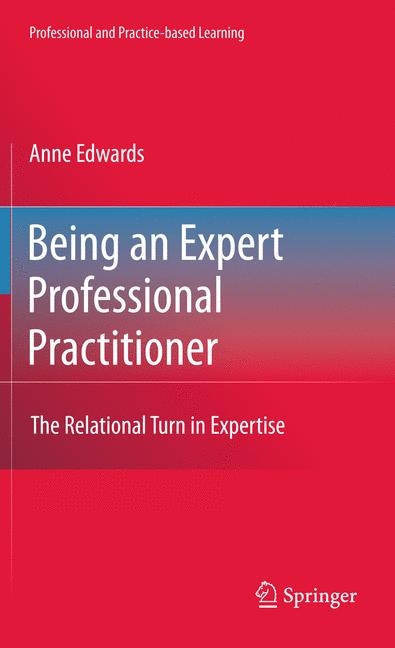
Being an Expert Professional Practitioner (eBook)
XII, 172 Seiten
Springer Netherland (Verlag)
978-90-481-3969-9 (ISBN)
Professionals deal with complex problems which require working with the expertise of others, but being able to collaborate resourcefully with others is an additional form of expertise. This book draws on a series of research studies to explain what is involved in the new concept of working relationally across practices. It demonstrates how spending time building common knowledge between different professions aids collaboration. The core concept is relational agency, which can arise between practitioners who work together on a complex task: whether reconfiguring the trajectory of a vulnerable child or developing a piece of computer software. Common knowledge, which captures the motives and values of each profession, is essential for the exercise of relational agency and contributing to and working with the common knowledge of what matters for each profession is a new form of relational expertise. The book is based on a wide body of field research including the author s own. It tackles how to research expert practices using Vygotskian perspectives, and demonstrates how Cultural Historical and Activity Theory approaches contribute to how we understand learning, practices and organisations.
Series Editors Foreword 6
Acknowledgements 8
Contents 9
1 Introducing the Resourceful Practitioner 12
1.1 What This Book Is About 12
1.2 Being a Professional 13
1.3 What Are Practices 16
1.4 Mediation and Knowledge in Practices 18
1.5 Professional Identity 21
1.6 Relational Expertise 24
1.7 The Evidence Base 27
1.8 Notes 28
References 29
2 Expertise: The Relational Turn 32
2.1 Expertise in Task Accomplishment 32
2.2 Psychological Accounts of Expertise and Environment 32
2.3 Starting with the Cultural 35
2.4 Distributed Expertise 37
2.5 Networking Without Knowledge 43
2.6 Collective Competence and Collaborative Intentions 45
2.7 Expertise as Purposeful Engagement in Practices 47
References 48
3 Knowledge Work at Practice Boundaries 52
3.1 Boundaries: Where Practices Intersect 52
3.2 Boundary Work 54
3.3 What Happens in the New Boundary Spaces 56
3.4 Alternative Envisioning at the Boundaries 59
3.5 Constructing Sites for Sustained Boundary Work 61
3.6 Knowledge Talk at the Boundaries 64
References 69
4 Relational Agency: Working with Other Practitioners 72
4.1 Relational Agency 72
4.2 Agency and Mutuality 73
4.3 Relational Agency and Cultural Historical Activity Theory 75
4.4 Motives and Relational Agency 79
4.5 Relational Agency and Demands on Practitioners 80
4.6 Systemic Responses to the Demands of Relational Agency 82
4.7 Relational Agency in Practice 84
References 88
5 Working Relationally with Clients 91
5.1 Personal Responsibility 91
5.2 Participation 93
5.3 Joint Work as Co-configuration 95
5.4 Externalisation Co-configuration and Relational Agency 99
5.5 Working with the Expertise of Those Who Use Services 105
References 106
6 Being a Professional 109
6.1 Working in Relation 109
6.2 Knowledge and Commitment in Professional Work 110
6.3 Expert Knowledge and Relational Agency 114
6.4 Knowledge in Practices 119
References 123
7 Working Upstream 126
7.1 Systemic Learning from Operational Practices 126
7.2 Distinctly Different Practices in Organisational Hierarchies 128
7.3 Differences in Engagement with Knowledge Between Hierarchical Practices 131
7.4 Differences in Temporalities 133
7.5 Representations that Work Across Boundaries 134
7.6 Upstream Learning and Resistance to Change in Organisations 135
7.7 Mediation and Relevance 138
7.8 Knowledge Flows from Research to Policy 141
References 144
8 Researching the Relational in Practices 146
8.1 Finding the Object of Enquiry 146
8.2 Background and Foreground in Research Design 151
8.3 Discursive Approaches to Researching Relational Aspects of Professional Practices 153
8.4 Narratives and Personal Trajectories 155
8.5 Interventionist Research 159
8.6 The Challenges of Researching the Relational Turn 161
References 162
Appendix A Activity Theory 166
A.1 What Is Activity Theory 166
A.2 Engestrm and Activity Theory 167
A.3 Developmental Work Research 169
A.4 Inside the DWR Sessions 171
A.5 Analysing the Data from the DWR Sessions 172
References 172
An Analytic Protocol for the Building of Common Knowledge: The D-Analysis 173
Reference 174
Index 175
| Erscheint lt. Verlag | 5.8.2010 |
|---|---|
| Reihe/Serie | Professional and Practice-based Learning | Professional and Practice-based Learning |
| Zusatzinfo | XII, 172 p. |
| Verlagsort | Dordrecht |
| Sprache | englisch |
| Themenwelt | Geisteswissenschaften |
| Sozialwissenschaften ► Pädagogik ► Berufspädagogik | |
| Sozialwissenschaften ► Pädagogik ► Erwachsenenbildung | |
| Schlagworte | Chat • cultural historical activity theory (CHAT) • Expertise • Knowledge work • organization • Profession • Professionalism • Professional Practice • relational agency • relational expertise • relational turn • workforce development |
| ISBN-10 | 90-481-3969-4 / 9048139694 |
| ISBN-13 | 978-90-481-3969-9 / 9789048139699 |
| Informationen gemäß Produktsicherheitsverordnung (GPSR) | |
| Haben Sie eine Frage zum Produkt? |
 PDF (Wasserzeichen)
DRM: Digitales Wasserzeichen
Dieses eBook enthält ein digitales Wasserzeichen und ist damit für Sie personalisiert. Bei einer missbräuchlichen Weitergabe des eBooks an Dritte ist eine Rückverfolgung an die Quelle möglich.
Dateiformat: PDF (Portable Document Format)
Mit einem festen Seitenlayout eignet sich die PDF besonders für Fachbücher mit Spalten, Tabellen und Abbildungen. Eine PDF kann auf fast allen Geräten angezeigt werden, ist aber für kleine Displays (Smartphone, eReader) nur eingeschränkt geeignet.
Systemvoraussetzungen:
PC/Mac: Mit einem PC oder Mac können Sie dieses eBook lesen. Sie benötigen dafür einen PDF-Viewer - z.B. den Adobe Reader oder Adobe Digital Editions.
eReader: Dieses eBook kann mit (fast) allen eBook-Readern gelesen werden. Mit dem amazon-Kindle ist es aber nicht kompatibel.
Smartphone/Tablet: Egal ob Apple oder Android, dieses eBook können Sie lesen. Sie benötigen dafür einen PDF-Viewer - z.B. die kostenlose Adobe Digital Editions-App.
Buying eBooks from abroad
For tax law reasons we can sell eBooks just within Germany and Switzerland. Regrettably we cannot fulfill eBook-orders from other countries.
aus dem Bereich