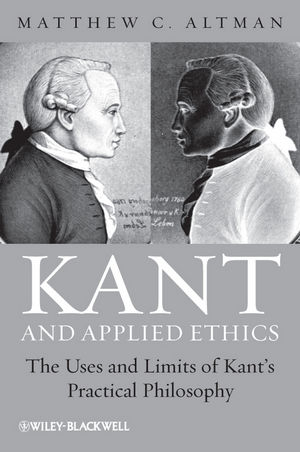
Kant and Applied Ethics
Wiley-Blackwell (Verlag)
978-0-470-65766-9 (ISBN)
Kant and Applied Ethics makes an important contribution to Kant scholarship, illuminating the vital moral parameters of key ethical debates.
Offers a critical analysis of Kant’s ethics, interrogating the theoretical bases of his theory and evaluating their strengths and weaknesses
Examines the controversies surrounding the most important ethical discussions taking place today, including abortion, the death penalty, and same-sex marriage
Joins innovative thinkers in contemporary Kantian scholarship, including Christine Korsgaard, Allen Wood, and Barbara Herman, in taking Kant’s philosophy in new and interesting directions
Clarifies Kant's legacy for applied ethics, helping us to understand how these debates have been structured historically and providing us with the philosophical tools to address them
MATTHEW C. ALTMAN The author is an assistant professor of philosophy and director of the William O. Douglas Honors College at Central Washington University. He is the author of A Companion to Kant's "Critique of Pure Reason" (2008) as well as many articles in ethics, applied ethics, social/political philosophy, and the history of philosophy.
Preface vi
Note on Sources and Key to Abbreviations viii
Introduction: Why Kant Now 1
Part I. Applying Kant’s Ethics 11
1. Animal Suffering and Moral Character 13
2. Kant’s Strategic Importance for Environmental Ethics 45
3. Moral and Legal Arguments for Universal Health Care 71
4. The Scope of Patient Autonomy 90
Part II. Kantian Arguments against Kant’s Conclusions 115
5. Subjecting Ourselves to Capital Punishment 117
6. Same-Sex Marriage as a Means to Mutual Respect 139
Part III. Limitations of Kant’s Theory 165
7. Consent, Mail-Order Brides, and the Marriage Contract 167
8. Individual Maxims and Social Justice 194
9. The Decomposition of the Corporate Body 217
10. Becoming a Person 241
Conclusion: Emerging from Kant’s Long Shadow 283
Bibliography 289
Index 311
| Verlagsort | Hoboken |
|---|---|
| Sprache | englisch |
| Maße | 163 x 241 mm |
| Gewicht | 644 g |
| Themenwelt | Geisteswissenschaften ► Philosophie ► Erkenntnistheorie / Wissenschaftstheorie |
| Geisteswissenschaften ► Philosophie ► Ethik | |
| Geisteswissenschaften ► Philosophie ► Geschichte der Philosophie | |
| Geisteswissenschaften ► Philosophie ► Philosophie der Neuzeit | |
| Sozialwissenschaften ► Politik / Verwaltung ► Politische Theorie | |
| ISBN-10 | 0-470-65766-9 / 0470657669 |
| ISBN-13 | 978-0-470-65766-9 / 9780470657669 |
| Zustand | Neuware |
| Informationen gemäß Produktsicherheitsverordnung (GPSR) | |
| Haben Sie eine Frage zum Produkt? |
aus dem Bereich