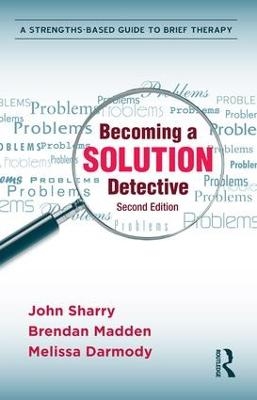
Becoming a Solution Detective
Routledge (Verlag)
978-0-415-89621-4 (ISBN)
- Lieferbar (Termin unbekannt)
- Versandkostenfrei
- Auch auf Rechnung
- Artikel merken
If you are interested in making your practice solution-focused quickly and effectively, look no further than this text. The authors, co-founders of the Brief Therapy Group, demystify the process of psychotherapy, making the concept of solution-based therapy accessible and relevant for newcomers to the field and for professionals seeking to apply SFBT principles in their own practices. The book’s hands-on approach allows practitioners to adopt the authors' simple, self-teaching style and apply it to their work with clients. Practical information is included on:
the differences between the solution-based approach and traditional therapy
establishing a successful therapeutic alliance with clients
determining detailed, meaningful goals for the client
mapping the client’s journey to a solution
possible “dead ends” in applying this type of therapy
and much more!
As an academic textbook, it is ideal for individual study in a variety of courses, including social work, counseling, nursing, psychology, education, and any other helping professions.
John Sharry, DPsych, is a family and child psychotherapist and works part-time as Principal Social Woker for the Mater Hospital and as a Director of the Parents Plus Charity. He co-founded the Brief Therapy Group in Dublin, Ireland, in 1998 with Brendan Madden and Melissa Darmody. Brendan Madden, MA, is a psychologist with over 20 years experience in the behavioral healthcare and employee assistance sectors. He is Chief Executive of Relationships Ireland, a not-for-profit counseling agency. Melissa Darmody, DPsych, is a counseling psychologist whose current role is Clinical Director of Towards Healing, the Catholic Church service for adult survivors of abuse in Ireland. She also has a successful clinical practice in supervision and training.
Furman, Foreword. Part I: Becoming a solution detective. Becoming a solution detective. Investigating solutions: A step-by-step model. Part II: Investigating solutions: Four stages. Stage 1: Where are you at? Stage 2: Where do you want to go? Stage 3: How far have you come? Stage 4: What is the next step? Part III: Managing setbacks and challenges. Managing setbacks and challenges–An overview. Attending to client motivation. Learning from your clients. Staying a customer as a therapist.
| Erscheint lt. Verlag | 11.1.2012 |
|---|---|
| Vorwort | Ben Furman |
| Zusatzinfo | 2 Tables, black and white; 2 Line drawings, black and white; 11 Illustrations, black and white |
| Verlagsort | London |
| Sprache | englisch |
| Maße | 138 x 216 mm |
| Gewicht | 362 g |
| Themenwelt | Medizin / Pharmazie ► Medizinische Fachgebiete ► Psychiatrie / Psychotherapie |
| Sozialwissenschaften ► Pädagogik ► Sozialpädagogik | |
| Sozialwissenschaften ► Soziologie ► Makrosoziologie | |
| ISBN-10 | 0-415-89621-5 / 0415896215 |
| ISBN-13 | 978-0-415-89621-4 / 9780415896214 |
| Zustand | Neuware |
| Informationen gemäß Produktsicherheitsverordnung (GPSR) | |
| Haben Sie eine Frage zum Produkt? |
aus dem Bereich