


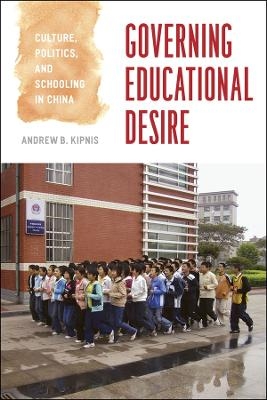
Governing Educational Desire
Culture, Politics, and Schooling in China
Seiten
2011
University of Chicago Press (Verlag)
9780226437552 (ISBN)
University of Chicago Press (Verlag)
9780226437552 (ISBN)
That parents in China greatly value higher education for their children is a well-known aspect of contemporary Chinese culture, but the intensity and effects of their desire to achieve this goal have largely gone unexamined. This title explores this universal desire for a college education and its vast consequences.
That parents in China greatly value higher education for their children is a well-known aspect of contemporary Chinese culture, but the intensity and effects of their desire to achieve this goal have largely gone unexamined - until now. "Governing Educational Desire" explores this universal desire for a college education and its vast consequences, which include household and national economic priorities, birthrates, ethnic relations, and patterns of governance. Where does this desire come from? Andrew B. Kipnis approaches this question in four different ways. First, he focuses in detail on one Chinese county, Zouping. Then, he widens his scope to examine the provincial and national governmental policies that affect educational desire. Digging into the history of education in East Asia, Kipnis moves on to explore the way contemporary governing practices were shaped by the Confucian examination system. Finally, to discover the universal in the local, he compares the social dynamics of a cross-section of Zouping communities.
In doing so, Kipnis provides not only an illuminating analysis of education in China but also a thought-provoking reflection on what educational desire can tell us about the relationship between culture and government.
That parents in China greatly value higher education for their children is a well-known aspect of contemporary Chinese culture, but the intensity and effects of their desire to achieve this goal have largely gone unexamined - until now. "Governing Educational Desire" explores this universal desire for a college education and its vast consequences, which include household and national economic priorities, birthrates, ethnic relations, and patterns of governance. Where does this desire come from? Andrew B. Kipnis approaches this question in four different ways. First, he focuses in detail on one Chinese county, Zouping. Then, he widens his scope to examine the provincial and national governmental policies that affect educational desire. Digging into the history of education in East Asia, Kipnis moves on to explore the way contemporary governing practices were shaped by the Confucian examination system. Finally, to discover the universal in the local, he compares the social dynamics of a cross-section of Zouping communities.
In doing so, Kipnis provides not only an illuminating analysis of education in China but also a thought-provoking reflection on what educational desire can tell us about the relationship between culture and government.
Andrew B. Kipnis is a senior fellow in the Departments of Anthropology and Political and Social Change at the Australian National University. He is the author of China and Postsocialist Anthropology: Theorizing Power and Society after Communism and Producing Guanxi: Sentiment, Self and Subculture in a North China Village.
| Erscheint lt. Verlag | 19.4.2011 |
|---|---|
| Sprache | englisch |
| Maße | 16 x 23 mm |
| Gewicht | 340 g |
| Themenwelt | Sozialwissenschaften ► Ethnologie |
| Sozialwissenschaften ► Pädagogik ► Erwachsenenbildung | |
| Sozialwissenschaften ► Soziologie | |
| ISBN-13 | 9780226437552 / 9780226437552 |
| Zustand | Neuware |
| Informationen gemäß Produktsicherheitsverordnung (GPSR) | |
| Haben Sie eine Frage zum Produkt? |
Mehr entdecken
aus dem Bereich



aus dem Bereich
Lernende in ihrem Lernprozess wirksam begleiten und unterstützen. Ein …
Buch | Softcover (2024)
WBV Media (Verlag)
CHF 27,95


