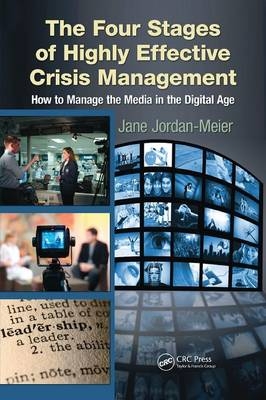
The Four Stages of Highly Effective Crisis Management
Crc Press Inc (Verlag)
9781439853733 (ISBN)

Unveiling the secrets of how to manage the media in a crisis, the book examines how rapidly evolving social media and Web 2.0 technologies have changed the crisis management landscape. It illustrates the four distinct stages of media reporting during a crisis and details the information that must be provided. The author provides readers with a wealth of helpful tips and tools—including guidelines, checklists, and case studies that illustrate best practices in crisis media management. Divided into five sections, the book:
Examines how the kingdom of news has changed and considers the new hybrid model that is emerging
Identifies the four distinct stages in which both old and new media report a crisis
Addresses the use of spokespeople according to the four stages, as well as when to use the chief executive officer
Discusses media interviews, including how to handle news conferences, bloggers, and the importance of media training
Considers the communication aspects of crisis management—including how to harness the power of Facebook, Twitter, YouTube, Digg, Wikipedia, Flickr, and social media releases
The book’s resource-rich appendices include a checklist for briefing a spokesperson, sample media release, a step-by-step flowchart for creating a crisis communication plan, and social media policy guidelines. Complete with a detailed guide on what tools to use and when to use them, this book provides the techniques and understanding required to communicate effectively and avoid any potential bad press and embarrassment that could result from information mismanagement.
Jane Jordan-Meier was interviewed about leadership in a crisis and the stages of a crisis in the wake of the Murdoch phone-hacking scandal. She also discusses crisis management planning in The Sydney Morning Herald and in Daily Ovation. She was interviewed in August 2011 by Globe and Mail.
Discover more about the book, including a video of the author explaining how to turn media questions into gold and visit smallbusinessadvocate.com for a series of recent interviews.
Jane Jordan-Meier appeared in a video interview with Crisis Manager Melissa Agnes on July 3, 2012.
A former journalist, Jane Jordan-Meier has been at the forefront of media training for 15 years, developing unique and powerful methodologies in crisis media management. From her base in the United States, she works with corporations, government departments, and non-profit agencies in North America, Australia, and New Zealand. She is recognized as one of the world’s top media and crisis management experts. Throughout her career, Jane has worked at the highest level of strategic planning and communication, including the Australian bi-centennial celebrations and the Sydney Olympic Games. Her clients range from experienced CEOs of global corporations to those doing their first media interviews. She works with organizations in crisis as well as those wanting to raise their profile with positive media interviews. Many of her programs and training have won awards from her peers in the public relations and communication professions. In the 1990s, recognizing the need for executives to be highly skilled in handling the media, Jane co-established Media Skills, a media training consultancy. With former journalist Susan Templeman, she created a suite of methods for developing and delivering strategic media messages. This led to the development of a unique approach to managing crisis communication. The methodology has been licensed and used by a network of trainers around the globe. Jane is a frequent guest speaker on crisis communication and media management at conferences in Australia, New Zealand, and North America. A licensed and accredited media trainer and coach, she holds a master’s degree in communication management. She has also taught communication, at both undergraduate and post-graduate levels in Australia’s top communication schools, as well as several professional development courses in Australia, New Zealand, and North America.
MEDIA, CRISIS, AND NEW REPORTING TOOLS. What Is a Crisis? The Role of Media in a Crisis. Social, Interactive, and Everywhere All the Time. Media Ethics? What Drives Traditional Media Behavior. Twitter: Is It a Fad or the "8 Bazillion Pound Gorilla"? STAGES OF A CRISIS. SPOKESPEOPLE—SPEED MATTERS AND PERCEPTION IS EVERYTHING. Who? To Chief Executive Officer or Not? Head and Heart. Role of the Frontline. Policy Guidelines for Social Media. MEDIA INTERVIEWS—RULES OF ENGAGEMENT IN A CRISIS. Understanding Journalists’ Questions. Techniques to Get Your Message Across. Dealing with Difficult Questions. Never Repeat the Poison; Avoid Negative Language. How the New Media Are Changing the Rules for Interviews. Lights, Camera, Action—The Interview. Media Training. COMMUNICATION—RULES AND TOOLS. Why Communicate in a Crisis? What to Communicate? To Apologize or Not. Language in a Crisis—Fall in Love with We. No Toxic Language Please. How to Get Your Message Across. Where? New Media Tools. Monitoring. Appendices: Guidelines for Briefing Spokespeople. Sample Media Contact Information Log. Sample News Release. Useful Resources. Social Media Policy Resources. Social Media Resources for Crisis Communicators. Things You Should Not Share on Social Media. Wordpress Statement. Social Media Embracing the Opportunities, Averting the Risks.
| Erscheint lt. Verlag | 25.3.2011 |
|---|---|
| Zusatzinfo | 22 Illustrations, black and white |
| Verlagsort | Bosa Roca |
| Sprache | englisch |
| Maße | 156 x 234 mm |
| Gewicht | 750 g |
| Themenwelt | Sozialwissenschaften ► Politik / Verwaltung ► Staat / Verwaltung |
| Sozialwissenschaften ► Soziologie | |
| Wirtschaft ► Betriebswirtschaft / Management ► Marketing / Vertrieb | |
| Wirtschaft ► Betriebswirtschaft / Management ► Unternehmensführung / Management | |
| ISBN-13 | 9781439853733 / 9781439853733 |
| Zustand | Neuware |
| Informationen gemäß Produktsicherheitsverordnung (GPSR) | |
| Haben Sie eine Frage zum Produkt? |
aus dem Bereich