


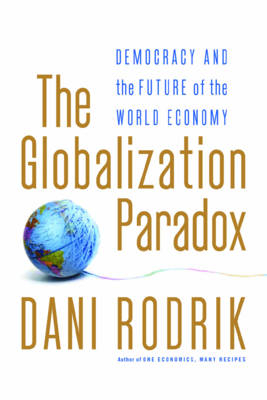
The Globalization Paradox
Democracy and the Future of the World Economy
Seiten
2011
WW Norton & Co (Verlag)
978-0-393-07161-0 (ISBN)
WW Norton & Co (Verlag)
978-0-393-07161-0 (ISBN)
- Titel erscheint in neuer Auflage
- Artikel merken
Zu diesem Artikel existiert eine Nachauflage
Surveying three centuries of economic history, a Harvard professor argues for a leaner global system that puts national democracies front and center.
From the mercantile monopolies of seventeenth-century empires to the modern-day authority of the WTO, IMF, and World Bank, the nations of the world have struggled to effectively harness globalization's promise. The economic narratives that underpinned these eras—the gold standard, the Bretton Woods regime, the "Washington Consensus"—brought great success and great failure. In this eloquent challenge to the reigning wisdom on globalization, Dani Rodrik offers a new narrative, one that embraces an ineluctable tension: we cannot simultaneously pursue democracy, national self-determination, and economic globalization. When the social arrangements of democracies inevitably clash with the international demands of globalization, national priorities should take precedence. Combining history with insight, humor with good-natured critique, Rodrik's case for a customizable globalization supported by a light frame of international rules shows the way to a balanced prosperity as we confront today's global challenges in trade, finance, and labor markets.
From the mercantile monopolies of seventeenth-century empires to the modern-day authority of the WTO, IMF, and World Bank, the nations of the world have struggled to effectively harness globalization's promise. The economic narratives that underpinned these eras—the gold standard, the Bretton Woods regime, the "Washington Consensus"—brought great success and great failure. In this eloquent challenge to the reigning wisdom on globalization, Dani Rodrik offers a new narrative, one that embraces an ineluctable tension: we cannot simultaneously pursue democracy, national self-determination, and economic globalization. When the social arrangements of democracies inevitably clash with the international demands of globalization, national priorities should take precedence. Combining history with insight, humor with good-natured critique, Rodrik's case for a customizable globalization supported by a light frame of international rules shows the way to a balanced prosperity as we confront today's global challenges in trade, finance, and labor markets.
Dani Rodrik, a prize-winning economist, is the Ford Foundation Professor of International Political Economy at Harvard's John F. Kennedy School of Government. He is the author of The Globalization Paradox and Economics Rules.
| Erscheint lt. Verlag | 1.3.2011 |
|---|---|
| Verlagsort | New York |
| Sprache | englisch |
| Maße | 165 x 244 mm |
| Gewicht | 659 g |
| Themenwelt | Sozialwissenschaften ► Soziologie |
| Wirtschaft ► Volkswirtschaftslehre ► Makroökonomie | |
| ISBN-10 | 0-393-07161-8 / 0393071618 |
| ISBN-13 | 978-0-393-07161-0 / 9780393071610 |
| Zustand | Neuware |
| Informationen gemäß Produktsicherheitsverordnung (GPSR) | |
| Haben Sie eine Frage zum Produkt? |
Mehr entdecken
aus dem Bereich
aus dem Bereich
Buch | Softcover (2024)
Schäffer-Poeschel (Verlag)
CHF 48,95
Makroökonomie, Wirtschaftspolitik und nachhaltige Entwicklung
Buch | Hardcover (2022)
Vahlen (Verlag)
CHF 69,70
Kontroversen, Daten und Fakten zur Nachhaltigkeit
Buch | Softcover (2025)
Kohlhammer (Verlag)
CHF 54,60


