


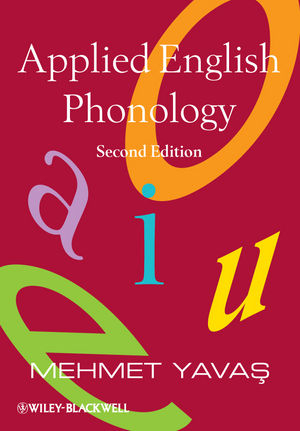
Applied English Phonology
Wiley-Blackwell (an imprint of John Wiley & Sons Ltd) (Verlag)
978-1-4443-3322-0 (ISBN)
- Titel erscheint in neuer Auflage
- Artikel merken
Applied English Phonology has been extensively revised and expanded, using an accessible style and numerous exercises to explore the fundamental aspects of the English sound system. * Covers the fundamental aspects of the English sound system, including basic phonetic elements; phonemics; allophonic rules of English consonants and vowels; phonotactics; and stress and intonation * Includes brand new sections on U.S. regional vowel shifts, sociophonetic variations, and the role of perception and Optimality Theory with reference to second language phonology * Accompanied by new sound files for numerous transcription exercises * Incorporates extensive exercises to aid students in understanding and assimilating the material more effectively * Supported by an Instructors Manual for lecturers, available on publication at www.wiley.com/go/yavas
Mehmet Yava is Professor of Linguistics at Florida International University. He has published numerous articles on Applied Phonology and is the principal author of Avaliacao Fonologica da Crianca, a phonological assessment procedure for Brazilian Portuguese. He is also author of Phonological Disorders in Children (1991) , First and Second Language Phonology (1994) , and Phonology: Development and Disorders (1998).
Preface to Second Edition. Preface. Note to the Instructor. Chapter 1: Phonetics. 1.1 Introduction. 1.2 Phonetic Transcription. 1.3 Description and Articulation of Sounds of English. 1.3.1 The vocal tract. 1.3.2 Voicing. 1.3.3 Places of articulation. 1.3.4 Manners of articulation. 1.3.5 Voice onset time. 1.3.6 Vowels and diphthongs. 1.4 Additional Sounds. 1.4.1 States of the glottis. 1.4.2 Places and manners of articulation. 1.4.3 Secondary articulations. 1.4.4 Consonants made with non-pulmonic airstream mechanisms. 1.4.5 Vowels. 1.5 Cardinal Vowels. 1.6 Syllables and Suprasegmentals Summary. Exercises. Chapter 2: Phonology. 2.1 Introduction. 2.2 Complementary versus Overlapping Distribution. 2.2.1 Overlapping distribution and contrast. 2.2.2 Complementary distribution. 2.3 Phonemic Analysis: A Mini-demo. 2.4 Free Variation. 2.5 Morphophonology. 2.6 Practical Uses of Phonological Analysis. Summary. Exercises. Chapter 3: English Consonants. 3.1 Stops. 3.2 Fricatives. 3.3 Affricates. 3.4 Nasals. 3.5 Approximants. 3.6 Sociophonetic Variation. Summary. Exercises. Chapter 4: English Vowels. 4.1 Introduction. 4.2 Vowel Set of American English. 4.2.1 Phonetic properties of vowels. 4.2.2 Tense lax. 4.2.3 Nasalized vowels. 4.2.4 Length. 4.2.5 Vowels before /@/. 4.2.6 Vowels before /l/. 4.3 Front Vowels. 4.4 Central Vowels. 4.5 Back Vowels. 4.6 Diphthongs. 4.7 Sociophonetic Variation. 4.8 Non-US Varieties. 4.9 Full Vowels Reduced Vowels. 4.10 Full (Strong) Forms versus Reduced (Weak). Forms of Function Words. Summary. Exercises. Chapter 5: Acoustics of Vowels and Consonants. 5.1 Introduction. 5.2 Vowels. 5.3 Diphthongs. 5.4 Consonants. 5.4.1 Stops. 5.4.2 Fricatives. 5.4.3 Affricates. 5.4.4 Approximants. 5.4.5 Nasals. 5.5 Putting It Together. 5.6 Context. 5.7 Practical Applications: Some Examples. Summary. Appendix. Exercises. Chapter 6: Syllables. 6.1 Introduction. 6.2 Number of Syllables. 6.3 Sonority. 6.4 Syllabification. 6.5 English Syllable Phonotactics. 6.5.1 Single onsets. 6.5.2 Double onsets. 6.5.3 Triple onsets. 6.5.4 Codas. 6.5.5 Double codas. 6.5.6 Triple codas. 6.6 Written Syllabification. 6.7 Syllable Weight and Ambisyllabicity. 6.8 Practical Applications. Summary. Exercises. Chapter 7: Stress and Intonation. 7.1 Introduction. 7.2 Noun and Adjective Stress. 7.3 Verb Stress. 7.4 Secondary Stress. 7.5 Affixes. 7.5.1 Stress-bearing (attracting) suffixes. 7.5.2 Stress-neutral suffixes. 7.5.3 Stress-shifting (fixing) suffixes. 7.6 Stress in Compounds. 7.7 Differences between American and British English. 7.8 Intonation. 7.9 Variations among the Varieties. Summary. Exercises. Chapter 8: Structural Factors in Second Language Phonology. 8.1 Introduction . 8.2 Mini Contrastive Analyses. 8.2.1 Spanish English. 8.2.2 Turkish English. 8.2.3 Greek English. 8.2.4 French English. 8.2.5 German English. 8.2.6 Arabic English. 8.2.7 Russian English. 8.2.8 Korean English. 8.2.9 Portuguese English. 8.2.10 Persian (Farsi) English. 8.3 Differential Treatment of Mismatches. 8.3.1 Basic vs. derived context. 8.3.2 Deflected contrast. 8.3.3 Hypercontrast. 8.4 Markedness. 8.5 Ontogeny Phylogeny Model (OPM). 8.6 Optimality Theory (OT). 8.7 Perception. Summary. Exercises. Chapter 9: Spelling and Pronunciation. 9.1 Irregularity of English Spelling. 9.2 Phoneme Grapheme Correspondences in English. 9.2.1 Consonants. 9.2.2 Vowels. 9.3 Morphological Basis of English Spelling. 9.4 American English vs. British English. Summary. Exercises. Recommended Readings. Appendix: List of Sound Files. Glossary. References. Index.
| Erscheint lt. Verlag | 7.1.2011 |
|---|---|
| Zusatzinfo | Illustrations |
| Verlagsort | Chichester |
| Sprache | englisch |
| Maße | 173 x 245 mm |
| Gewicht | 104 g |
| Themenwelt | Schulbuch / Wörterbuch ► Wörterbuch / Fremdsprachen |
| Geisteswissenschaften ► Sprach- / Literaturwissenschaft ► Sprachwissenschaft | |
| Sozialwissenschaften ► Pädagogik ► Bildungstheorie | |
| Schlagworte | Phonologie |
| ISBN-10 | 1-4443-3322-4 / 1444333224 |
| ISBN-13 | 978-1-4443-3322-0 / 9781444333220 |
| Zustand | Neuware |
| Informationen gemäß Produktsicherheitsverordnung (GPSR) | |
| Haben Sie eine Frage zum Produkt? |
aus dem Bereich


