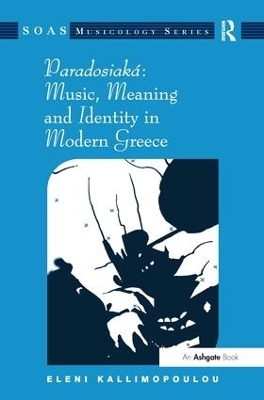
Paradosiaká: Music, Meaning and Identity in Modern Greece
Routledge (Verlag)
978-0-7546-6630-1 (ISBN)
Since the 1980s, musicians and audiences in Athens have been rediscovering musical traditions associated with the Ottoman period of Greek history. The result of this revivalist movement has been the urban musical style of 'paradosiaká' ('traditional'). Drawing from a varied repertoire that includes Turkish art music and folk and popular musics of Greece and Turkey, and identified by the use of instruments which previously had little or no performing tradition in Greece, paradosiaká has had to define itself by negotiating contrastive tendencies towards differentiation and a certain degree of overlapping in relation to a range of indigenous Greek musics. This monograph explores paradosiaká as a musical style and as a field of discourse, seeking to understand the relation between sound and meanings constructed through sound. It draws on interviews, commercial recordings, written musical discourse, and the author's own experience as a practising paradosiaká musician. Some main themes discussed in the book are the migration of instruments from Turkey to Greece; the process of 'indigenization' whereby paradosiaká was imbued with local meanings and aesthetic value; the accommodation of the style within official and popular discourses of 'Greekness'; its prophetic role in the rapprochement of Greek culture with modern Turkey and with suppressed aspects of the Greek Ottoman legacy; as well as the varied worldviews and current musical dilemmas of individual practitioners in the context of professionalization, commercialization, and the intensification of cross-cultural contact. The text is richly illustrated with transcriptions, illustrations and includes downloadable resources. The book makes a valuable contribution to ethnomusicology, cultural studies, as well as to the study of the Balkans and the Mediterranean.
Eleni Kallimopoulou completed her PhD in ethnomusicology at the School of Oriental and African Studies, University of London, in 2006, where she was subsequently employed as a teaching fellow in the music of the Near and Middle East. She is currently a lecturer in the Music Science and Art Department at the University of Macedonia in Thessaloniki, Greece
Contents: Introduction; Part I The 1970s: Setting the Scene: History of ideas. A brief overview; SÃmon Karás and the chanting milieu; The Eastern instruments. Part II The 1980s: the Early Actors: Ross Daly; Dynámeis tou AigaÃou; Encounters with Turkish culture: Bosphorus, Ottoman urban music and the RomioÃ. Part III The 1990s: Indigenization and Professionalization: Music schools for secondary education; The younger generation. Part IV The 2000s: Inter-Connections: Portrait of a musician: SofÃa Lampropoúlou; Paradosiaká and 'the world': international interfaces; In the Greek market; Epilogue: paradosiaká futures ; Bibliography; Discography; Index.
| Erscheint lt. Verlag | 20.7.2009 |
|---|---|
| Reihe/Serie | SOAS Studies in Music |
| Verlagsort | London |
| Sprache | englisch |
| Maße | 156 x 234 mm |
| Gewicht | 676 g |
| Themenwelt | Kunst / Musik / Theater ► Musik |
| Sozialwissenschaften | |
| ISBN-10 | 0-7546-6630-1 / 0754666301 |
| ISBN-13 | 978-0-7546-6630-1 / 9780754666301 |
| Zustand | Neuware |
| Informationen gemäß Produktsicherheitsverordnung (GPSR) | |
| Haben Sie eine Frage zum Produkt? |
aus dem Bereich