Mahjong
Amber Books (Verlag)
978-1-83886-654-9 (ISBN)
- Noch nicht erschienen (ca. Mai 2026)
- Portofrei ab CHF 40
- Auch auf Rechnung
- Artikel merken
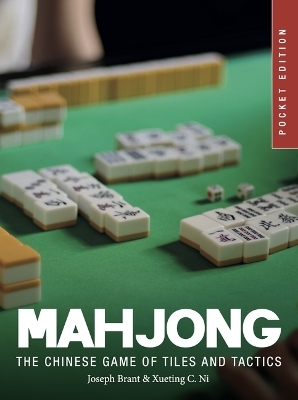
The clickety-clack of mahjong tiles being mixed by a group of friends is one of the most soothing and distinctive sounds found across East Asia and, increasingly, North America. First developed in southern China in the early 19th century, mahjong – meaning ‘sparrow’ – is a fun and popular game that tasks you with solving a tile-matching puzzle before you run out of moves. Played by four people using 144 tiles, mahjong is not just a game of luck; it requires strategy, pattern recognition, and an understanding of the other players’ tactics. Mahjong introduces this highly engaging and competitive game, which helps develop concentration and mental agility while at the same time building relationships and a sense of community. The book is divided into chapters designed for the beginner, offering a brief background history, with introductions to the tiles, rules, playing the game, and popular variants and competitions. Find out how to shuffle and stack tiles to start the game; learn the difference between a kong and a pong and how this can win you points; understand the significance of the honour tiles, including the four winds and the three coloured dragons; and find out what ‘winning from the wall’ means to complete a ‘legal hand’.
Joseph Brant is a British writer, editor, publicist and consultant based in London. After graduating in English Literature from University of London, Joseph worked as a writer for various newspapers, magazines, film and video game companies before heading to Beijing as part of a Sino-European funded exchange program, where they continued to write for prestigious Chinese publications. Notable projects have included award-winning mobile games, and genre fiction collections, as well as contributing to titles on Chinese mythology and street fashion. Joseph is an experienced Mahjong player, and has taught the game for over a decade to players of all ages. Xueting C. Ni has written extensively on Chinese culture for over a decade, working with companies, institutions and festivals, to help improve understanding of China’s heritage, culture and innovation. She is the author of Chinese Myths and From Kuanyin to Chairman Mao: An Essential Guide to Chinese Deities. Her curated anthology of Chinese science fiction, Sinopticon, won Best Anthology at the BFS Awards, 2022.
Contents to include:
1: A History of Mahjong Mahjong originated in China during the Qing Dynasty (around the mid-19th century), evolving from earlier card games and tile-based games. In Chinese, mahjong literally translates as ‘sparrows’. Sparrows are depicted on traditional sets of mahjong tiles, and there are several theories as to why the game is named after the birds – such as that the clattering of moving mahjong tiles resembles the chattering of sparrows. The game spread across China, with regional variations emerging. In the early 20th century, Mahjong gained global popularity, especially in the United States and Japan, where distinct versions developed. The game was often associated with social gatherings and entertainment. After World War II, Mahjong saw a resurgence, and its modern rules and styles continue to vary widely depending on location. ‘Mahjong’ in Traditional Chinese characters 麻將.
2: The Evolution of the Mahjong Set The tiles are categorized into three suits: dots, bamboos, and characters. Each suit consists of numbered tiles, ranging from 1 to 9. There are also honour tiles, which include winds (East, South, West, North) and dragons (Red, Green, White). In addition, there are two sets of bonus tiles: flowers and seasons, often used in more casual versions of the game. The canonical set has 144 tiles: • Three suits, each of 36 tiles – four of each number one through nine in the suits of bamboo (bams), characters (craks), and dots. • Twenty-eight honours – 12 dragons (four each green, red, and white) and 16 winds (four each east, south, west, and north). • Four flowers, normally bearing different pictures. • Four seasons, normally bearing different pictures.
3: Playing the Game Mahjong is a matching game with a simple set of rules: the aim of the game is to remove all tiles from play by matching identical pairs. A tile can only be used if it is open on the left or right side and is not underneath another tile. There are many highly varied versions of mahjong both in rules and tiles used. The game begins with players drawing and discarding tiles, aiming to form a complete hand of four sets (either a pong, a chow, or a kong) and a pair. • Choosing table positions and first dealer – Before the game can begin, players need to be assigned one of the wind positions at the table - those being (in counterclockwise order) East, South, West, and North. East will also be the first dealer. Play proceeds in this counterclockwise order. • Hands, rounds, and matches – A match consists of four rounds, each representing a "prevailing wind", starting with East. Once the first round is completed, a second round begins with South as the prevailing wind, and so on. • Shuffling tiles – All tiles are placed face down on the table and are shuffled. By convention all players should participate in shuffling using both hands moving the pieces around the table rigorously and loudly for a lengthy period. • Stacking tiles – Each player then stacks a row of 18 tiles, two tiles high in front of them (for a total of 36 tiles). Players then push each side of their stack together to form a square wall. • Drawing tiles – The dealer throws three dice in the square wall and sums up the total. Counting counter-clockwise so that the dealer is 1 (or 5, 9, 13, 17), so that south (player to the right) is 2 (or 6, 10, 14, 18), etc., a player's quarter of the wall is chosen. Each player in turn, in counter-clockwise direction, draws a tile from the wall; as long as the tile drawn is not one of the bonus tiles, the player proceeds to discard a tile (either the tile just drawn, or a tile in the hand) to maintain a hand of 13. The discarded tile is thrown into the centre and, if desired, the player announces out loud what the piece is. • Melds are groups of tiles within the player's hand, consisting of either a pong (three identical tiles), a kong (four identical tiles), a chow (three suited tiles in numerical sequence), or eyes (two identical tiles needed in a winning hand). • A pong is a set of three identical tiles. • A kong is a complete set of four identical tiles. • A chow is a meld of three suited tiles in sequence. • Eyes (also known as a pair) are two identical tiles which are an essential part of a legal winning hand.
4: Scoring The winner must have a legal hand that meets the minimum faan points agreed to in advance (not including any bonus points). Only the winner scores, and the other players pay the winner various sums. The game continues until one player completes a valid hand and declares ‘Mahjong.’ Scoring can be complex and depends on the combinations of tiles in a player's hand, the prevailing winds, and any special conditions set by the variant being played. The winner of each round earns points, and the game typically progresses through multiple rounds. Winning Hands In Mahjong, winning hands are typically composed of combinations of tiles that fulfill specific requirements. Here are five examples of winning hands: • Seven Pairs (7 Pairs): This hand consists of seven pairs of identical tiles, with no other sequences or sets. It's a rare and difficult hand to complete, requiring strategic tile collection. • Pong Hand (Pong of Pongs): A hand made up of four pongs (three identical tiles) and a pair. The player completes this hand by drawing the necessary tiles to form pungs and a final pair. • All Pongs (Pong Hand): A complete hand consisting solely of pongs and a pair. This hand doesn't use any sequences, making it a simple yet strong way to win, often fast-tracked by good tile draws. • Chow Hand (Pure Straight): A hand composed of three sequences (chows) of consecutive numbers in the same suit, along with a pair. A pure straight is valuable and can often form with common tiles, like 1-2-3, 4-5-6, and 7-8-9 – Full Flush (Pure Suit): A hand that consists entirely of tiles from one suit (bamboo, characters, or dots), including a pair and either pungs or chows. A pure flush is a high-value hand requiring a focus on one suit throughout the game. FEATURE: Competition Mahjong Competition mahjong is an international standard founded by All-China Sports Federation in July 1998 that some mahjong societies have adopted for competition play and in some cases for all play. It includes a large variety of different scoring rules in a way that emphasizes strategy and calculation ability.
5: Variations Mahjong has many regional variations, each with unique rules. Hong Kong style is fast-paced and widely played, using simple scoring. Japanese Riichi adds strategic depth with a "riichi" bet and "dora" bonus tiles. American Mahjong includes jokers, special hands, and a yearly card dictating valid combinations. Chinese Official (or MCR) is standardized for international play, with complex scoring. Taiwanese Mahjong uses 16-tile hands and multiple melds. Singaporean and Malaysian versions often add gambling elements. Each variant emphasizes different aspects—speed, strategy, or luck—creating diverse gameplay experiences while retaining the core mechanics of tile-matching and hand formation. • Richii or Mahjong? • How to play with two or three players FEATURE: American Mahjong American mahjong is a derivative of mahjong, standardized and regulated by the U.S.-based National Mah Jongg League, Inc. and the American Mah-Jongg Association.[15] Unlike other forms of Mahjong, permitted "legal" hands are changed annually through a published card that must be purchased by players from one of the sponsoring organizational bodies. It uses joker tiles, the Charleston, plus melds of five or more tiles, treats bonus tiles as honors, and eschews the chow and the notion of a standard hand.
6: Traditions and Taboos Common taboos include exposing incorrect tiles, declaring a false win, or miscalling a discard. Players may also face penalties for peeking at others' tiles or acting out of turn. Some variants consider speaking during play or slamming tiles rude. These taboos help maintain fairness, concentration, and decorum, ensuring the game remains respectful and enjoyable for all participants.
7: Mahjong in Film and TV This will include Hong Kong action and gambling films, Red Dragon, the showdown in Crazy Rich Asians, as well as anime like Legendary Gambler Tetsuya and Akagi, but may also just list its appearance in Seinfeld, Existenz etc.
| Erscheint lt. Verlag | 19.5.2026 |
|---|---|
| Reihe/Serie | Mini Encyclopedias |
| Zusatzinfo | Illustrations; Halftones, color |
| Sprache | englisch |
| Maße | 125 x 167 mm |
| Themenwelt | Sachbuch/Ratgeber ► Freizeit / Hobby ► Spielen / Raten |
| Sonstiges ► Geschenkbücher | |
| ISBN-10 | 1-83886-654-X / 183886654X |
| ISBN-13 | 978-1-83886-654-9 / 9781838866549 |
| Zustand | Neuware |
| Informationen gemäß Produktsicherheitsverordnung (GPSR) | |
| Haben Sie eine Frage zum Produkt? |
aus dem Bereich