


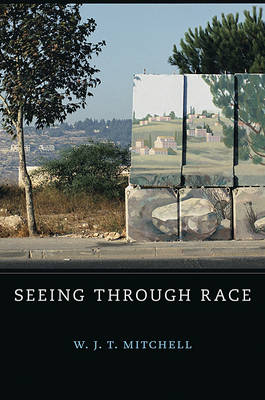
Seeing Through Race
Seiten
2012
Harvard University Press (Verlag)
978-0-674-05981-8 (ISBN)
Harvard University Press (Verlag)
978-0-674-05981-8 (ISBN)
According to Mitchell, a “color-blind” post-racial world is neither achievable nor desirable. Against claims that race is an outmoded construct, he contends that race is not simply something to be seen but is a fundamental medium through which we experience human otherness. Race also makes racism visible and is thus our best weapon against it.
According to W. J. T. Mitchell, a “color-blind” post-racial world is neither achievable nor desirable. Against popular claims that race is an outmoded construct that distracts from more important issues, Mitchell contends that race remains essential to our understanding of social reality. Race is not simply something to be seen but is among the fundamental media through which we experience human otherness. Race also makes racism visible and is thus our best weapon against it.
The power of race becomes most apparent at times when pedagogy fails, the lesson is unclear, and everyone has something to learn. Mitchell identifies three such moments in America’s recent racial history. First is the post–Civil Rights moment of theory, in which race and racism have been subject to renewed philosophical inquiry. Second is the moment of blackness, epitomized by the election of Barack Obama and accompanying images of blackness in politics and popular culture. Third is the “Semitic Moment” in Israel-Palestine, where race and racism converge in new forms of anti-Semitism and Islamophobia. Mitchell brings visual culture, iconology, and media studies to bear on his discussion of these critical turning points in our understanding of the relation between race and racism.
According to W. J. T. Mitchell, a “color-blind” post-racial world is neither achievable nor desirable. Against popular claims that race is an outmoded construct that distracts from more important issues, Mitchell contends that race remains essential to our understanding of social reality. Race is not simply something to be seen but is among the fundamental media through which we experience human otherness. Race also makes racism visible and is thus our best weapon against it.
The power of race becomes most apparent at times when pedagogy fails, the lesson is unclear, and everyone has something to learn. Mitchell identifies three such moments in America’s recent racial history. First is the post–Civil Rights moment of theory, in which race and racism have been subject to renewed philosophical inquiry. Second is the moment of blackness, epitomized by the election of Barack Obama and accompanying images of blackness in politics and popular culture. Third is the “Semitic Moment” in Israel-Palestine, where race and racism converge in new forms of anti-Semitism and Islamophobia. Mitchell brings visual culture, iconology, and media studies to bear on his discussion of these critical turning points in our understanding of the relation between race and racism.
W. J. T. Mitchell is Gaylord Donnelley Distinguished Service Professor at University of Chicago.
| Erscheint lt. Verlag | 28.6.2012 |
|---|---|
| Reihe/Serie | The W. E. B. Du Bois Lectures |
| Zusatzinfo | 16 halftones, 3 line illustrations |
| Verlagsort | Cambridge, Mass |
| Sprache | englisch |
| Maße | 140 x 210 mm |
| Themenwelt | Kunst / Musik / Theater ► Kunstgeschichte / Kunststile |
| Sonstiges ► Geschenkbücher | |
| Sozialwissenschaften ► Ethnologie | |
| Sozialwissenschaften ► Kommunikation / Medien | |
| Sozialwissenschaften ► Politik / Verwaltung | |
| Sozialwissenschaften ► Soziologie | |
| ISBN-10 | 0-674-05981-6 / 0674059816 |
| ISBN-13 | 978-0-674-05981-8 / 9780674059818 |
| Zustand | Neuware |
| Informationen gemäß Produktsicherheitsverordnung (GPSR) | |
| Haben Sie eine Frage zum Produkt? |
Mehr entdecken
aus dem Bereich


aus dem Bereich
kleine Kulturgeschichte einer brillanten Allianz
Buch | Softcover (2025)
Iudicium (Verlag)
CHF 33,90


