Michel Thomas Method
John Murray Learning (Verlag)
978-0-340-97171-0 (ISBN)
- Titel ist leider vergriffen;
keine Neuauflage - Artikel merken
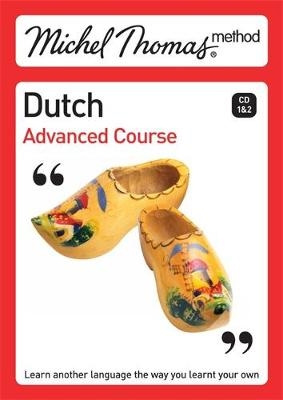
Learn another language the way you learnt your own You learnt your own language naturally and enjoyably: now you can learn Dutch in the same way. You'll stick with it because you'll love it Use the unique method perfected over fifty years by the celebrated psychologist and linguist Michel Thomas. This method works with your brain, helping you to build up your Dutch in manageable, enjoyable steps by thinking out the answers for yourself. You learn through listening and speaking without the pressure of writing or memorising. You pick up the language naturally and unforgettably. The NEW Dutch Advanced Course A five-hour, 100% audio method for taking your Dutch to an advanced level. Join teacher Els Van Geyte and two students in a live lesson and within five hours you will be speaking advanced Dutch proficiently and easily. You will rapidly improve your Dutch with the students, hearing both their successes and their mistakes to keep you motivated and involved throughout the course. Join the millions of people worldwide who have learnt a new language with the Michel Thomas Method Contents: 4 CDs plus booklet with Dutch phrases in English translation
Cobie Adkins-de Jong and Els Van Geyte are native Dutch speakers and experienced teachers of Dutch. Cobie additionally used to teach German to adults at the Brasshouse Language Centre in Birmingham, while Els also teaches English as a Foreign Language at the University of Birmingham.
Introduction Stressed object pronouns: with you/with them: met jou/voor hen Expressing possession: mine/whose: van mij, jou, van wie Let's, shall we: laten we, zullen we Past plural tenses of modal verbs: mochten, zouden Expressing specific position: to lie, to stand: liggen, staan Positive v negative determiners: wel>niet Phrases with fixed prepositions: I am looking forward to it: ik kijk ernaar uit Inversion: not starting a sentences with the subject: Dat weet ik al Starting sentences with sub-clauses: het is goed, denk ik/als je wil, wacht ik Expressing 'might': ik doe het misschien Clauses with separable verbs: I hope he'll collect it: Ik hoop dat hij het ophaalt Expressing 'used to/in the past': Alles was beter vroeger Expressing: 'I remember when': Ik weet nog toen Comparatives: better (than you): beter (dan jij) Superlatives: het was de warmste dag Past tense; perfect tense with 'to have': ik heb het gezegd/gemaakt Pluperfect: I had learnt it: ik had het geleerd Past participles of verbs starting with unstressed syllables, eg 'her, ont, be' do not have 'ge' in front of them Perfect tense with detachable and non-detachable prefixes: herhaald, opgehaald Irregular past participles (the 'geven' box): gegeven, gewassen Vowel patterns in past verb forms: 'i' to 'o' beginnen>begonnen Perfect tense with modals: ik heb het willen/kunnen/moeten/mogen doen Pluperfect with modals: ik had het niet willen/kunnen/moeten/ mogen doen Expressing prediction/expectation: Hij zal het (wel) doen Passives: it is/was beautifully made: het is/ was mooi gemaakt Two ways of expressing 'would have' (conditional perfect): Ik had het gevraagd/ik zou het gevraagd hebben Expressing 'should/need to', using 'moeten': je moet het proberen Expressing 'should have': je had het moeten doen Expressing: 'not having to/not needing to': 'niet hoeven te' - je hoeft het niet te doen Would be able /could = Ik zou het morgen kunnen kopen Would have been able to/could have: -ik had het kunnen kopen/Would have been allowed: had mogen/Would have had to: had moeten/Would have wanted: had willen To become/to get: 'worden' Het wordt warm Past tense of worden ("became/got"): werd/werden Perfect tense with 'to be' (verbs of motion, change): ik ben gegaan Word order: ik geef het hem vs ik geef hem het boek Polite commands: Gaat u zitten There is: er ligt, er staat It is/they are: het is/het zijn Gender: het, hij Pronouns: het, hem Who: een man die, een kind dat... Using verbs as nouns: eten (het-words) Adjective endings after 'a' or no 'a': een leuke dag, een leuk dagje, leuke dagen To live: wonen vs leven Simple past (imperfect) -- I lived/used to live: Ik woonde Passive structures with 'zijn' and 'worden' e.g.: it has become -- het is geworden, het wordt/werd gewassen/is gewassen
| Erscheint lt. Verlag | 1.5.2009 |
|---|---|
| Reihe/Serie | Michel Thomas Series |
| Sprache | englisch |
| Maße | 136 x 196 mm |
| Gewicht | 328 g |
| Themenwelt | Schulbuch / Wörterbuch ► Wörterbuch / Fremdsprachen |
| Geisteswissenschaften ► Sprach- / Literaturwissenschaft ► Sprachwissenschaft | |
| ISBN-10 | 0-340-97171-1 / 0340971711 |
| ISBN-13 | 978-0-340-97171-0 / 9780340971710 |
| Zustand | Neuware |
| Informationen gemäß Produktsicherheitsverordnung (GPSR) | |
| Haben Sie eine Frage zum Produkt? |
aus dem Bereich