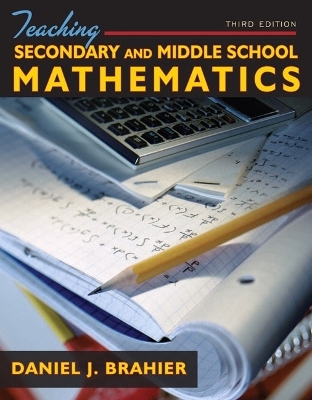
Teaching Secondary and Middle School Mathematics
Pearson (Verlag)
978-0-205-56919-9 (ISBN)
- Titel erscheint in neuer Auflage
- Artikel merken
I. WHAT DOES IT MEAN TO “DO,” “TEACH,” AND “LEARN” MATHEMATICS?
1. Mathematics as a Process
National and International Assessment Data
How would You React?
The Need for Reform
“Doing” Mathematics
- Problem Solving
- Reasoning and Proof
- Spotlight on Technology
- Communication
- Connections
- Classroom Dialogues
- Representation
Conclusion
Glossary
Discussion Questions and Activities
Bibliographical References and Resources
2. Principles of Mathematics Education
The Six Principles
- Equity
How Would You React?
- Curriculum
- Teaching
Spotlight on Technology
- Learning
- Assessment
- Technology
Classroom Dialogues
Connecting the Principles
Conclusion
Glossary
Discussion Questions and Activities
Bibliographical References and Resources
3. Learning Theories and Psychology in Mathematics Education
Research in Mathematics Education
- Quantitative and Qualitative Methods
- How Would You React?
- Experimental and Descriptive Research
Learning Theories in Mathematics
- Bruners’ Stages of Representation
- The van Hiele Model
- The Inquiry Approach and Constructivist Model
- Spotlight on Technology
- Inductive versus Deductive Teaching
- Classroom Dialogues
- Motivation
Conclusion
Glossary
Discussion Questions and Activities
Bibliographic References and Resources
II. THE MATHEMATICS CURRICULUM
4. Curricular Models
NCTM Curriculum Standards
NCTM Focal Points and Related Documents
How Would You React?
State Models
The Core Curriculum
Spotlight on Technology
Traditional versus Integrated Sequence
Classroom Dialogues
Conclusion
Glossary
Discussion Questions and Activities
Bibliographic References and Resources
5. Implementing a Course of Study
The Course of Study
How Would You React?
Writing Goals and Objectives
- Classifying Objectives
- Affective Objectives
- Cognitive Objectives
Spotlight on Technology
Selection and Organization of Resources
- Textbooks
- Print Resources
- Classroom Dialogues
- The Internet
- Organizing a Resource File
Conclusion
Glossary
Discussion Questions and Ctivities
Bibliographical References and Resources
Sample Recommended Resource Books
COMAP “Hi-Map” (High School Mathematics) Teaching Modules.
NCTM Navigation Series
NSF-Funded Curricular Materials
III. TEACHING MATHEMATICS
6. Planning for Instruction
Unit Planning
How Would You React?
Lesson Planning
- General Considerations
- Goals and Objectives
- Materials and Resources
- Motivation
- Lesson Procedure
- Closure
- Extension
- Assessment
- Spotlight on Technology
- Sample Lesson Plans
Classroom Dialogues
Lesson Imaging versus Lesson Planning
Reflecting on a Lesson
Conclusion
Glossary
Discussion Questions and Activities
Bibliographical References and Resources
Activities—Selected Lesson Plan Ideas from The Mathematics Teacher
7. Teaching Tools and Strategies
Teaching Standards and Principle
- The NCM Standards for Teaching and Learning Mathematics Knowledge
- The Teaching and Learning Principles
Selecting Activities and Problems
- How Would You React?
Classroom Tools
- Hands-On Manipulative Materials
- Use of Technology
- Spotlight on Technology
- Diagrams, Graphs, and Other Discussion Starters
Learning Environment
Classroom Discourse
- The Role of Discourse
- Questioning Skills
- Classroom Dialogues
- Cooperative Learning Skills
Reflective Practices
Conclusion
Glossary
Discussion Questions and Activities
Bibliographical References and Resources
8. Teaching Specific Mathematics Content
The Teaching of Algebra
- Algebra- Sample Lesson Plan
- Algebra- Activities Sampler
- How Would You React?
The Teaching of Geometry
- Geometry- Sample Lesson Plan
- Geometry- Activities Sampler
- Spotlight on Technology
The Teaching of Data Analysis and Probability
- Data Analysis and Probability- Sample Lesson Plan
- Data Analysis and Probability- Activities Sampler
The Teaching of Discrete Mathematics
- Discrete Mathematics- Sample Lesson Plan
- Classroom Dialogues
- Discrete Mathematics- Activities Sampler
A Word on Pre-Calculus and Calculus
Conclusion
Glossary
Discussion Questions and Activities
Bibliographical References and Resources
IV. ASSESSMENT IN MATHEMATICS
9. The Role of Assessment
What Is Assessment?
Purposes for Assessment
Test Construction
- Preparing Items
- Ensuring Validity and Reliability
- How Would You React?
- Scoring Student Work
- Including Review Items
- Limitations to Written Tests
Alternate Strategies for Assessing Student Progress
- Journals
- Open-Ended Questions and Rubrics
- Spotlight on Technology
- Individual and Team Projects
- Observations and Checklists
- Interviews
- Self-Assessment
- Classroom Dialogues
- Portfolios
Conclusion
Glossary
Discussion Questions and Activities
Bibliographical References and Resources
10. Principles of Assessment Practices
NCTM Recommendations on Assessment
- The Assessment Standards
- How Would You React?
- The Assessment Principle
Equity and Assessment
Homework Assignments
- Homework Amount and Frequency
- Spotlight on Technology
- Checking Homework Assignments
- Using Homework Assignments in Assessment
- Classroom Dialogues
Evaluation: Determining and Maintaining Final Grades
Conclusion
Glossary
Discussion Questions and Activities
Bibliographical References and Resources
V. MEETING INDIVIDUAL STUDENT AND TEACHER NEEDS
11. Meeting the Needs of All Students
Defining and Achieving Equity
- Students with Special Needs
- How Would You React?
- Gender
- Spotlight on Technology
- Ethnic and Cultural Issues
Classroom Dialogues
Ideas for Meeting Diverse Student Needs
- Differentiated Instruction
- General Suggestions for the Classroom
Conclusion
Glossary
Discussion Questions and Activities
Bibliographical References and Resources
12. The Teacher of Mathematics in the School Community
Working with Parents
How Would You React?
The Supervision and Evaluation of Teachers
Functioning in a Department
Ongoing Professional Development
- Making the Case for Long-term Development
- Classroom Dialogues
- Opportunities for Professional Development
- The Professional Development Plan
Conclusion
Glossary
Discussion Questions and Activities
Bibliographical References and Resources
Appendix: Recommended Web Sites
Professional Organizations
Curriculum Projects
Activities and Lesson Plan Idea
General Mathematics Education Sites
Index
| Erscheint lt. Verlag | 27.8.2010 |
|---|---|
| Sprache | englisch |
| Maße | 216 x 276 mm |
| Gewicht | 821 g |
| Themenwelt | Schulbuch / Wörterbuch |
| Sozialwissenschaften ► Pädagogik ► Berufspädagogik | |
| Sozialwissenschaften ► Pädagogik ► Schulpädagogik / Sekundarstufe I+II | |
| ISBN-10 | 0-205-56919-6 / 0205569196 |
| ISBN-13 | 978-0-205-56919-9 / 9780205569199 |
| Zustand | Neuware |
| Informationen gemäß Produktsicherheitsverordnung (GPSR) | |
| Haben Sie eine Frage zum Produkt? |
aus dem Bereich