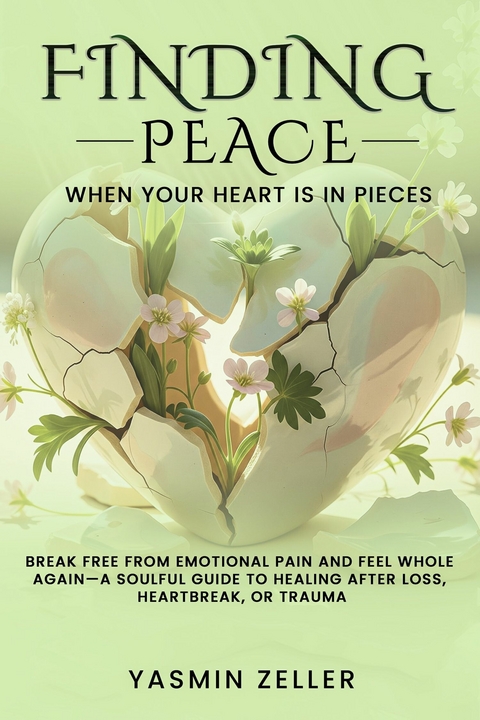
Finding Peace (eBook)
144 Seiten
Publishdrive (Verlag)
978-1-918223-06-4 (ISBN)

Find Peace. Heal Your Heart. Rebuild Your Life.
When your world feels shattered-whether from loss, heartbreak, or trauma-it can seem impossible to feel whole again. But healing is possible, and peace is closer than you think.
Finding Peace When Your Heart Is in Pieces is a compassionate, soulful guide that takes you step by step through the journey of emotional healing. Instead of rushing past the pain, this book helps you understand it, work through it, and gently rebuild your life with strength, hope, and clarity.
Inside, you'll discover:
✅ Understanding the pain - why heartbreak, grief, and trauma affect mind, body, and soul
✅ The inward journey - guided reflection, mindfulness practices, and emotional release techniques
✅ Rebuilding from the inside out - strategies for self-love, resilience, and regaining confidence
✅ Moving forward with peace - practical steps to create joy, acceptance, and wholeness in everyday life
Whether you're healing from the loss of a loved one, a broken relationship, or a difficult life chapter, this book offers comfort, guidance, and hope. With gentle wisdom and practical tools, it becomes your companion on the road to inner peace.
✨ Perfect for anyone seeking emotional healing, grief recovery, or a soulful reset after life's hardest seasons.
Your heart may feel broken, but within the pieces lies the path to peace. Take the first step today.
Find Peace. Heal Your Heart. Rebuild Your Life.When your world feels shattered-whether from loss, heartbreak, or trauma-it can seem impossible to feel whole again. But healing is possible, and peace is closer than you think.Finding Peace When Your Heart Is in Pieces is a compassionate, soulful guide that takes you step by step through the journey of emotional healing. Instead of rushing past the pain, this book helps you understand it, work through it, and gently rebuild your life with strength, hope, and clarity.Inside, you'll discover:? Understanding the pain - why heartbreak, grief, and trauma affect mind, body, and soul? The inward journey - guided reflection, mindfulness practices, and emotional release techniques? Rebuilding from the inside out - strategies for self-love, resilience, and regaining confidence? Moving forward with peace - practical steps to create joy, acceptance, and wholeness in everyday lifeWhether you're healing from the loss of a loved one, a broken relationship, or a difficult life chapter, this book offers comfort, guidance, and hope. With gentle wisdom and practical tools, it becomes your companion on the road to inner peace.? Perfect for anyone seeking emotional healing, grief recovery, or a soulful reset after life's hardest seasons.Your heart may feel broken, but within the pieces lies the path to peace. Take the first step today.
Chapter 1
Understanding the Pain
When your heart shatters from loss, betrayal, or the end of something deeply cherished, it feels like the world has stopped making sense. This kind of pain isn’t just emotional—it winds through your mind, body, and spirit, leaving invisible wounds that others might not see but that you live with every day. Understanding the rawness of your suffering is the first step toward healing, even though it often feels overwhelming and endless. Healing doesn’t mean forgetting or “getting over it” as some might suggest; it means facing the truth of your pain, recognizing how profoundly it’s shaped your experience, and gently beginning to make room for hope. It’s important to acknowledge that healing is never linear nor quick—it’s messy, complicated, and deeply personal. What you’re going through is real, and this journey requires patience, kindness to yourself, and the courage to stay present with all the feelings that come up. This is not about rushing past the pain but learning to live with it until one day, it softens enough to let peace bloom in its place.
When Life Breaks You Open
There’s a moment—often sudden, sometimes slow—when life shatters the illusion of control we cling to. This breaking open isn’t just a metaphor; it’s the raw, exposed reality of emotional pain demanding your full attention. When life breaks you open, it exposes parts of yourself you’ve either kept hidden or never fully understood. The ache that follows a breakup, betrayal, or loss rends through your heart and soul, leaving you feeling vulnerable, disoriented, and often, utterly alone. Yet, paradoxically, this breaking open is the doorway to deeper healing and transformation.
It’s important to recognize that this rupture in your emotional armor isn’t a sign of weakness or failure. It’s a profoundly human experience signaling that something significant has shifted in your life. When the familiar structure dissolves—whether that’s a relationship, a trusted friendship, or a dream you held dear—it leaves behind a cavernous space inside you. That space may feel like a vacuum at first, and it can be terrifying to face. But it also invites you to rediscover who you are beneath the pain, beneath the loss.
At times, the breaking open can feel relentless, like a storm battering your soul with wave after wave of grief and confusion. This intensity is disorienting, and your mind may scramble to make sense of what’s happening. You might find yourself replaying moments, wondering what could have been different, or trying to grasp at some control over an uncontrollable situation. It’s normal to resist this process; after all, no one wants to be stripped of their stability and certainty. But resistance often prolongs suffering. The more you allow yourself to be present even to the most unbearable emotions, the more you create room for healing to begin.
Imagine, for a moment, that the breaking open is like a seed cracking through the soil. Beneath the surface, something new is ready to grow—something that couldn’t have blossomed without that initial breaking. This doesn’t mean you’re expected to leap happily beyond your pain or quickly “move on.” Instead, the fracture invites you into a deeper relationship with yourself. It calls you to feel your feelings honestly, to lean into your vulnerability without judgment, and to recognize your capacity for resilience and renewal.
The process of being broken open sheds light on hidden wounds you might have carried silently for years. These wounds are often not visible to the outside world, but they shape how you view yourself and your ability to trust again. Beneath the immediate hurt, there might be old fears of abandonment, self-doubt, or an aching loneliness. When life breaks you open, it pulls these layers to the surface, sometimes unexpectedly. Though painful, this exposure offers a chance to confront these wounds rather than bury them deeper.
It’s essential to honor this breaking open as a sacred, albeit painful, rite of passage. It can feel impossible to imagine peace in the midst of such rawness, but the paradox is that through embracing the pain rather than fleeing from it, you slowly reclaim your power. The breaking open dismantles the protective walls you built, but in doing so, it also makes way for authentic connection—with yourself and others. This renewed connection is the foundation of true healing.
One of the hardest truths to accept in this space is that healing doesn’t follow a neat, linear path. When you’re broken open, your emotions might swing wildly from numbness to despair, from anger to moments of fragile hope. This unpredictability can feel discouraging, but it’s a sign that your inner world is shifting. There’s no timeline for when the storm will pass or how it will reshape you. The only commitment that matters is to stay with yourself through it all.
During this time, self-compassion becomes your greatest ally. Instead of judging yourself for feeling vulnerable, scared, or overwhelmed, extend kindness inward. When life breaks you open, you deserve patience—not only from others but especially from yourself. The voice inside that criticizes or urges you to “get over it” isn’t grounded in your best interest. Instead, listen to the small, gentle parts of you that whisper words of comfort.
It’s also helpful to remember that being broken open doesn’t mean you have to face everything alone. Though it may feel isolating, reaching out for support can provide much-needed relief. Sometimes a conversation with a trusted friend, a therapist, or a support group can remind you that your pain is valid and that others have walked similar paths. Transparent, compassionate connection is a powerful antidote to the loneliness this pain often breeds.
In the silence after the breaking, you might discover unexpected strengths. Pain has a strange way of teaching endurance, patience, and a deeper empathy for others. You may start to see your story in a new light—not just as one of loss, but as part of a larger narrative of growth and awakening. The cracks in your heart become places where light can enter in, illuminating parts of your soul that remained in shadow before.
When life breaks you open, it demands that you reimagine what peace means for you. Peace isn’t the absence of pain or struggle. Instead, it’s more like a quiet center within the chaos—a place where you can sit with your whole experience without needing to fix or escape it. Cultivating this kind of peace takes courage because it means inviting discomfort instead of resisting it. Yet in this courageous invitation, healing begins to take root.
The breaking open also challenges you to examine old stories you’ve told yourself about who you are, what you deserve, and what love looks like. These stories may have consoled you once, but they can become barriers when they no longer serve your healing. Pain uncovers these narratives and offers a chance to rewrite them with more truth and compassion. Over time, what was shattered makes way for a more authentic and empowered sense of self.
Remember, this experience is not a sign you’re broken beyond repair. It’s evidence that your spirit is alive and demanding attention. The cracks are not failures; they’re invitations to rediscover your capacity for hope, for love, and for joy—even when your heart feels in pieces. Life breaking you open is a difficult but profound turning point that can lead to a richer, fuller engagement with yourself and the world.
So, as you sit with this section of your journey, know that the pain isn’t the end. It’s the opening chapter of your new story. Healing is not about erasing the breaking, but rather weaving it into the fabric of who you become—a person deeply human, resilient, and beautifully alive in every imperfect way.
Recognizing Loss, Heartbreak, and Emotional Trauma
Loss is one of the most profound experiences we face in life, often arriving without warning and shaking the very foundation of our emotional world. Whether it’s the end of a relationship, the death of a loved one, or a deep betrayal, these moments leave a mark that feels both heavy and overwhelming. It’s important to recognize that loss isn’t just about an event; it’s about the way that event fractures our inner reality. When the familiar is suddenly gone, it creates a rupture that takes time and care to mend.
Heartbreak, in all its forms, isn’t always visible to the outside world. Unlike physical wounds, emotional injuries don’t have a cast or a scar that others can see. Instead, they manifest quietly in the crevices of our daily lives—through restless nights, an aching chest, or a numbness that seeps into even joyful moments. This pain can feel isolating. Many find themselves wondering if they’re the only one suffering this deeply, if anyone else has been through this kind of heartbreak and survived intact.
Emotional trauma tied to loss and heartbreak often goes unrecognized, even by those experiencing it. We’re conditioned to expect grief to follow a certain script: maybe a week of crying, some support from friends, and then a return to normal life. But trauma isn’t linear. Its effects are messy, unpredictable, and sometimes chronic. Recognizing that what you’re feeling is a legitimate emotional trauma is the first step toward healing. It validates your pain and reminds you that what you’re going through is significant — worthy of attention and empathy.
It’s natural to want to push away the pain or distract yourself from it. After all, pain can...
| Erscheint lt. Verlag | 22.7.2025 |
|---|---|
| Sprache | englisch |
| Themenwelt | Schulbuch / Wörterbuch ► Lernhilfen |
| Sozialwissenschaften ► Pädagogik | |
| Schlagworte | books about finding peace after heartbreak grief • emotional healing book to find inner peace self • grief recovery and healing book to rebuild Life • healing guide to find peace in broken pieces traum • soulful self help book finding peace after lose |
| ISBN-10 | 1-918223-06-8 / 1918223068 |
| ISBN-13 | 978-1-918223-06-4 / 9781918223064 |
| Informationen gemäß Produktsicherheitsverordnung (GPSR) | |
| Haben Sie eine Frage zum Produkt? |
 EPUB (Ohne DRM)
Digital Rights Management: ohne DRM
Dieses eBook enthält kein DRM oder Kopierschutz. Eine Weitergabe an Dritte ist jedoch rechtlich nicht zulässig, weil Sie beim Kauf nur die Rechte an der persönlichen Nutzung erwerben.
Dateiformat: EPUB (Electronic Publication)
EPUB ist ein offener Standard für eBooks und eignet sich besonders zur Darstellung von Belletristik und Sachbüchern. Der Fließtext wird dynamisch an die Display- und Schriftgröße angepasst. Auch für mobile Lesegeräte ist EPUB daher gut geeignet.
Systemvoraussetzungen:
PC/Mac: Mit einem PC oder Mac können Sie dieses eBook lesen. Sie benötigen dafür die kostenlose Software Adobe Digital Editions.
eReader: Dieses eBook kann mit (fast) allen eBook-Readern gelesen werden. Mit dem amazon-Kindle ist es aber nicht kompatibel.
Smartphone/Tablet: Egal ob Apple oder Android, dieses eBook können Sie lesen. Sie benötigen dafür eine kostenlose App.
Geräteliste und zusätzliche Hinweise
Buying eBooks from abroad
For tax law reasons we can sell eBooks just within Germany and Switzerland. Regrettably we cannot fulfill eBook-orders from other countries.
aus dem Bereich