Future of Learning with Large Language Models
CRC Press (Verlag)
978-1-032-93432-7 (ISBN)
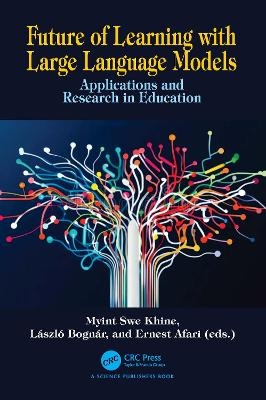
The book covers theoretical foundations on how LLMs can enhance learning, cognitive reinforcement, improving learning efficiency, and personalization in learning, applications across the curriculum, teacher training and support for LLM integration, using in assessment and evaluation, and measuring the impact and affordances of LLMs. It acknowledges the challenges that come with integrating LLMs into education and will address the responsible development and deployment strategies to ensure that the models become powerful tools for good in the hands of educators. It explores potential research directions, such as the development of domain-specific models, and the creation of ethical frameworks for LLM use in education. As education enters an era of AI-enablement, this visionary book equips teachers, administrators, technologists, and policymakers with an authoritative guide to harnessing the power of large language models. Readers will discover how these advanced systems can expand access to quality education, tailor learning experiences, and nurture the innovators and critical thinkers of tomorrow, and glimpse into the future of learning and education with LLMs.
Myint Swe Khine holds Master's degrees from the University of Southern California, USA, and the University of Surrey, UK, as well as a Doctor of Education from Curtin University, Australia. He has worked at the National Institute of Education at Nanyang Technological University, Singapore, and was a Professor at Emirates College for Advanced Education in the United Arab Emirates. He currently teaches at the School of Education, Curtin University, Australia. László Bognár is a distinguished professor of Applied Statistics at the University of Dunaújváros, Hungary, with a focus on Statistics in Educational Sciences, Six Sigma, and Quality Statistics. Dr. Bognár has served in various leadership roles, including rector, director-general, deputy director-general, and the President of the Chamber of Engineers of Fejér County, contributing significantly to the engineering and academic communities. Ernest Afari holds a PhD in Mathematics Education from Curtin University, Australia, and an MSc (Mathematics) from the University of British Columbia, Vancouver, Canada. His research focuses on structural equation modeling, psychometrics, and the application of statistical procedures to education. He currently teaches at the University of Bahrain, Kingdom of Bahrain.
PART I: FOUNDATIONS, FRAMEWORKS, AND ETHICAL CONSIDERATIONS. Responsible, Ethical, and Effective Use of LLMs in Higher Education. Prompting Learning: The EPICC Framework for Effective Prompt Engineering in Education. Improving Large Foundation Models in Education for Multi-cultural Understanding. Engagement Dynamics in AI-Augmented Classrooms: Factors and Evolution. Engagement Diversity in AI-Enhanced Learning: Demographic and Disciplinary Perspectives. PART II: PRACTICAL TOOLS AND APPLICATIONS FOR EDUCATORS. vTA: How an Instructor Leverages Large Language Models for Superior Student Learning. A Step Towards Adaptive Online Learning: Exploring the Role of GPT as Virtual Teaching Assistants in Online Education. Leverage LLMs on Knowledge Tagging for Math Questions in Education. The Educator’s Co-Pilot: Leveraging Generative AI and OERs for Learning Path Design. PART III: STUDENT-CENTERED LEARNING AND EMERGING TRENDS WITH AI. CHAPTER 10: Examining Graduate Students’ Experiences in Using Generative AI for Academic Writing: Insights from Cambodian Higher Education. Generating Feedback for Programming Exercises with OpenAI’s o1-preview. From Algorithms to Classrooms: The Future of Education with Large Language Models.
| Erscheinungsdatum | 17.10.2025 |
|---|---|
| Zusatzinfo | 29 Tables, black and white; 13 Line drawings, color; 38 Line drawings, black and white; 2 Halftones, color; 15 Illustrations, color; 38 Illustrations, black and white |
| Verlagsort | London |
| Sprache | englisch |
| Maße | 156 x 234 mm |
| Gewicht | 650 g |
| Themenwelt | Schulbuch / Wörterbuch ► Unterrichtsvorbereitung ► Unterrichts-Handreichungen |
| Informatik ► Theorie / Studium ► Künstliche Intelligenz / Robotik | |
| Sozialwissenschaften ► Pädagogik | |
| ISBN-10 | 1-032-93432-8 / 1032934328 |
| ISBN-13 | 978-1-032-93432-7 / 9781032934327 |
| Zustand | Neuware |
| Informationen gemäß Produktsicherheitsverordnung (GPSR) | |
| Haben Sie eine Frage zum Produkt? |
aus dem Bereich